“Diesel Is the Blood of the Economy”: U.S. Prices Just Hit an All-Time High of $5.848 a Gallon
Diesel just shattered a record while crude oil sits well below its peak, and the gap between those two numbers explains why your grocery bill may keep climbing long after any ceasefire.


Energy analyst Jaime Brito put it plainly this week: “Diesel is the blood of the economy. It’s the engine in which you move goods, food, agricultural goods from the farm to the supermarket”. That line landed with unusual weight because US retail diesel just set an all-time high. Reuters reported on September 3 that US diesel prices hit a record as overlapping conflicts intensified a global supply crunch. The full-day national average reached $5.848 a gallon, eclipsing the previous peak.
Why a Fuel Most Americans Never Buy Runs Their Grocery Bill
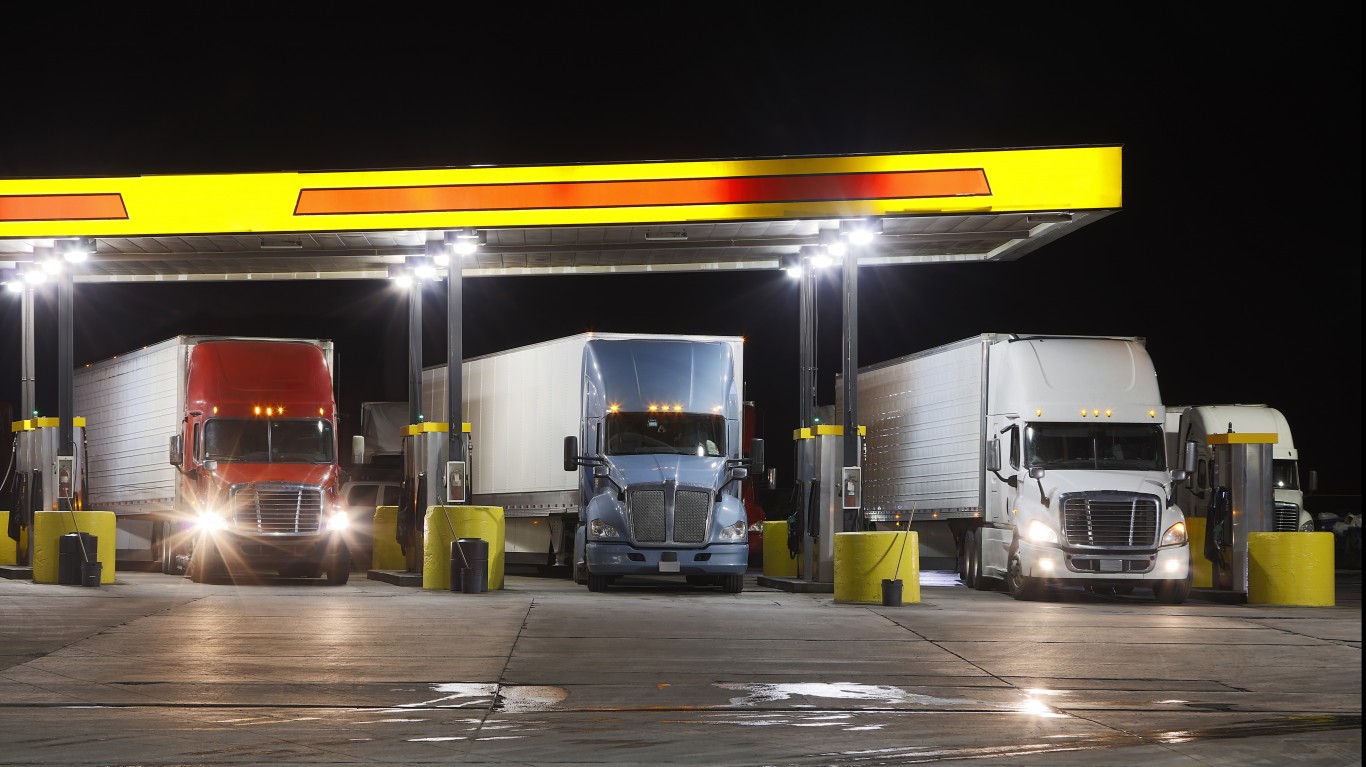
Diesel rarely registers with households at the pump, yet it powers freight trucks, school buses, farm tractors and combines, construction equipment, and the rail network. Every one of those is an input into things consumers do buy. When the trucker hauling produce out of California or the combine harvesting Iowa corn burns pricier fuel, that cost travels down the receipt to cereal, milk, and diapers. Patrick De Haan, head of petroleum analysis at GasBuddy, framed the mechanism directly: “when diesel drives the supply chain and that cost goes up, there’s going to be a trickle down”.
Gasoline has moved the opposite direction. The national average for regular unleaded sits at $4.07 per gallon, actually down slightly over the past month. Diesel has broken away.
Two Wars, Two Different Mechanisms
NBC News framed the record on September 4 as the product of the Iran and Ukraine wars simultaneously constricting global supply, and the mechanisms are worth separating.
The Iran conflict, which erupted in late February, put shipping through the Strait of Hormuz at risk. That chokepoint carries a large share of global crude exports. The price signal was immediate. WTI crude traded at $65.62 a barrel on February 24, and within roughly a week had jumped to $94.65 on March 9.
The Russia-Ukraine war is a separate problem with a separate mechanism. Ukrainian drone strikes have taken multiple Russian refineries offline, forcing Moscow, per Radio Free Europe/Radio Liberty on September 1, to “turn abroad to process its oil”, sourcing fuel from India, Kazakhstan, and Belarus to cover domestic shortfalls. Moscow has extended a formal ban on diesel exports through the end of September. Asian refiners have also limited diesel exports. That pulls barrels off the world market that would otherwise reach US buyers indirectly.
Refining Capacity Is the Binding Constraint
Here is the sharpest evidence in the whole story. Brent crude peaked at $138.21 a barrel on April 7 and now trades at $96.02 as of September 1. Crude is well off its highs. Diesel is at a record. The diesel crack spread, the refining margin, has hit record levels, and finance.biggo.com reported alongside diesel topping $5.80 that US stockpiles have plunged, raising winter supply concerns.
Compounding the squeeze, US refiners have been shifting capacity toward jet fuel, currently more profitable than diesel. That shift is happening exactly as fall harvest ramps and winter heating oil demand approaches. Even a ceasefire tomorrow would not fix the throughput problem quickly.
Politics and What Comes Next
Vice President JD Vance credited the administration, saying, “Gas, frankly, could have been much, much higher were it not for our efforts”. Separately, Politico reported on September 3 that the record could feed inflation concerns ahead of the November midterms as the “Trump administration brandishes energy policies”, against a headline Consumer Price Index reading of 333.918 in July. Some outlets are framing today’s high specifically as beating a Biden-era record, a framing choice by those outlets rather than an economic fact.
The path to relief is narrow. Goldman Sachs put it bluntly: “With little spare refining capacity, meaningful relief requires recovery in Persian Gulf and/or Russian flows.” Both are largely beyond Washington’s near-term reach. Watch weekly Energy Information Administration distillate stock draws and Russian export volumes: those are the two dials that decide whether trucking rates, and eventually grocery prices, keep climbing into winter.
Contact [email protected] for any questions or corrections.
AJ spent 10 years writing about financial markets at The Motley Fool. His coverage centers on technology stocks and the broader macroeconomic trends, from interest rates to geopolitics, that shape where markets are headed next. AJ is drawn to the stories where big-picture economics and individual companies collide.