10 Once-in-a-Lifetime Investments That Created Massive Fortunes
A janitor, a street artist, a retired IRS agent, and a pool builder all stumbled into decisions that quietly turned modest sums into staggering fortunes. Their paths to wealth look nothing like conventional financial advice.

This post may contain links from our sponsors and affiliates, and Flywheel Publishing may receive compensation for actions taken through them.

Most fortunes built in the market take decades of steady saving and patient investing. Every so often, however, one unusually well-timed decision produces a result that resembles a winning lottery ticket.
The people on this list include a janitor, a legal secretary, a street artist, a pool builder, and several investors who risked their reputations on ideas almost nobody else believed. Their investments ranged from three shares purchased for $180 to an early stake in a social network operating out of a cramped startup office. Some amassed wealth slowly, while others watched their accounts gain millions almost overnight.
These extraordinary outcomes involved unusual timing, immense risk, or decades of patience. They may be nearly impossible to repeat, but they remain among the most remarkable investment wins in recent history.
10. The Secretary Whose $180 Stock Purchase Became $7 Million

Grace Groner paid $180 for three shares of Abbott Laboratories in 1935, when she was a 25-year-old secretary at the company. Then she did something almost unnaturally difficult: she left the investment alone. Stock splits multiplied her shares, reinvested dividends bought more, and Abbott kept growing. Groner lived in a modest one-bedroom cottage, bought clothes at rummage sales and never advertised her wealth. When she died in 2010 at age 100, the shares were worth about $7 million. She left the fortune to Lake Forest College, creating a foundation that funds internships, study abroad and other opportunities for students. Her result took 75 years, so it was hardly overnight wealth. Still, turning the price of a household appliance into a multimillion-dollar legacy may be the purest small-ticket win on this list.
9. The Janitor Who Quietly Built an $8 Million Portfolio

Ronald Read spent much of his working life pumping gas and later worked as a janitor at a JCPenney in Vermont. He drove an old Toyota, wore a coat held together with safety pins and gave almost no hint that he owned a formidable stock portfolio. Read steadily bought shares in businesses he understood, favored established dividend payers and held many positions for decades. At his death in 2014, his estate was valued at nearly $8 million and reportedly contained at least 95 stocks. He left $4.8 million to Brattleboro Memorial Hospital and $1.2 million to the local library. There was no single moonshot behind Read’s fortune. His improbable win came from ordinary paychecks, patient compounding and refusing to interrupt the process. That makes his story less flashy than an options jackpot, but much more relatable.
8. The Engineer Who Rode Tesla to an $11.5 Million Portfolio

Cloud engineer Jason DeBolt began buying Tesla shares in 2013, when the electric-car maker was still viewed by many investors as a fragile, money-burning experiment. He kept adding through violent rallies and crashes, eventually concentrating virtually his entire portfolio in the company. In January 2021, DeBolt publicly shared that his Tesla holdings were worth roughly $11.5 million and that he planned to retire at 39. He also said about $100,000 in pretax 401(k) contributions had grown to around $5 million. The figures were self-reported and represented a paper value at a moment when Tesla shares were surging, not a guaranteed cash payout. DeBolt’s account could swing by seven figures in a day. That volatility is the other half of the fairy tale: a concentrated bet can create life-changing wealth, but it never stops being a concentrated bet.
7. The Pool Builder Who Turned $10,775 Into $18 Million

Dan Zanger was a contractor and swimming-pool builder, not a Wall Street insider, when the late-1990s technology boom caught fire. He sold his Porsche to fund a trading account and used price-and-volume chart patterns to chase fast-moving growth stocks. Trading records and his 1999 tax return reviewed by Fortune showed the astonishing result: roughly $10,775 became $18 million in about 18 months. Zanger later said the account reached $42 million, although that later figure was not part of the same verification. His run was fueled by relentless concentration, frequent trading and one of the most speculative markets in modern history. It was an extraordinary feat, but not a recipe with a dependable sequel. When the dot-com bubble burst, countless traders using similar tactics were wiped out. Zanger happened to catch the wave and, crucially, took money off the table.
6. The Retired IRS Auditor Who Grew $5,000 Into $22 Million

When Anne Scheiber retired from the IRS in 1944, she had a $5,000 nest egg and a deep frustration with a career in which she believed discrimination had held her back. She poured her analytical energy into common stocks instead. Scheiber studied companies, bought shares, reinvested dividends and rarely sold. One especially lucrative holding was Schering-Plough: a $10,000 purchase in 1950 grew through splits into 60,000 shares worth about $4 million by 1994. She lived alone in a rent-controlled Manhattan studio and remained so frugal that few people understood the scale of her wealth. When she died in 1995 at 101, her estate was worth about $22 million. She left most of it to Yeshiva University to support scholarships for women. Her fortune was built slowly, but the ending stunned everyone.
5. The $53,000 GameStop Bet That Briefly Hit $48 Million

Keith Gill saw value where Wall Street saw a dying mall retailer. Beginning in 2019, the financial educator known online as Roaring Kitty and DeepF—ingValue built a GameStop position worth about $53,000 and posted his research publicly. He argued that the company had cash, a recognizable brand and more turnaround potential than its heavily shorted share price implied. In January 2021, a stampede of retail buying collided with enormous short interest and sent GameStop into one of the wildest squeezes ever seen. Screenshots Gill posted showed his position briefly worth nearly $48 million. That was peak account value, not the same thing as a fully realized profit, and the stock’s price swung violently afterward. Gill was also more experienced than the average message-board trader. Even with those caveats, few individual trades have ever become such a public spectacle.
4. The Contrarian Who Made $100 Million From the Housing Crash

Michael Burry was a doctor-turned-investor who spent months reading the fine print inside mortgage bonds while the rest of the market celebrated the housing boom. He concluded that a wave of risky adjustable-rate mortgages would begin failing and persuaded major banks to sell him credit-default swaps that paid off if selected bonds collapsed. The position bled cash for years, clients demanded their money back and Burry restricted withdrawals to keep the trade alive. Then the housing market cracked. By the end of the wager, Burry had earned about $100 million personally and roughly $725 million for the investors who remained with his fund. This was not a tiny retail gamble, but its drama was intensely personal: one analyst staking his reputation on data almost everyone else dismissed. The payoff made him a central figure in The Big Short.
3. The Artist Whose Facebook Murals Were Reportedly Worth $200 Million
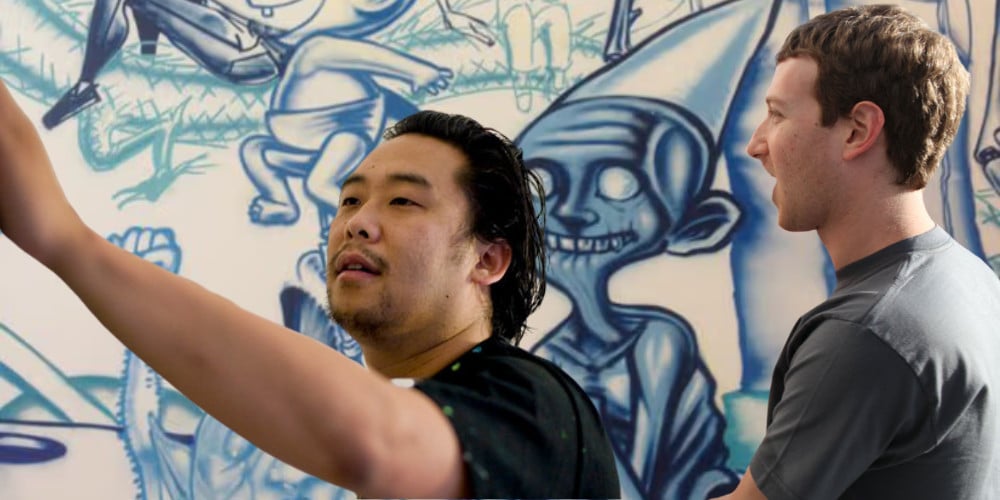
In 2005, street artist David Choe painted murals at Facebook’s first offices in Palo Alto. The company was young, strange and far from a guaranteed winner. Choe was reportedly offered about $60,000 in cash but accepted Facebook stock instead, even though he later joked that he thought the business was ridiculous. Seven years later, Facebook filed to go public. News reports estimated Choe’s stake at roughly $200 million around the IPO. The exact amount he ultimately realized has never been publicly documented, so the famous figure is an estimated paper value, not a confirmed cash haul. Even so, the choice became Silicon Valley legend: a freelance art job transformed into a stake in one of the defining companies of the internet age. Few people have ever been paid so spectacularly for decorating an office.
2. The $70,000 Retirement Account That Grew to $264 Million

Ted Weschler’s retirement account stood at $70,384 by the end of 1989. Over the next several decades, he used it to buy publicly traded stocks, often concentrating on companies he believed were dramatically mispriced and holding plenty of cash when opportunities were scarce. The account reached about $131 million by 2012, when he converted it to a Roth IRA and paid roughly $29 million in federal income tax from other funds. By the end of 2018, tax data obtained by ProPublica showed the Roth at $264.4 million. Weschler was no random novice—Warren Buffett hired him as a Berkshire Hathaway investment manager in 2011—but the account still ranks among the most startling examples of personal compounding ever disclosed. It turned a five-figure retirement balance into nine figures without founder shares, a private-company windfall or a corporate pension jackpot.
1. Peter Thiel’s $500,000 Facebook Bet Paid Out More Than $1 Billion
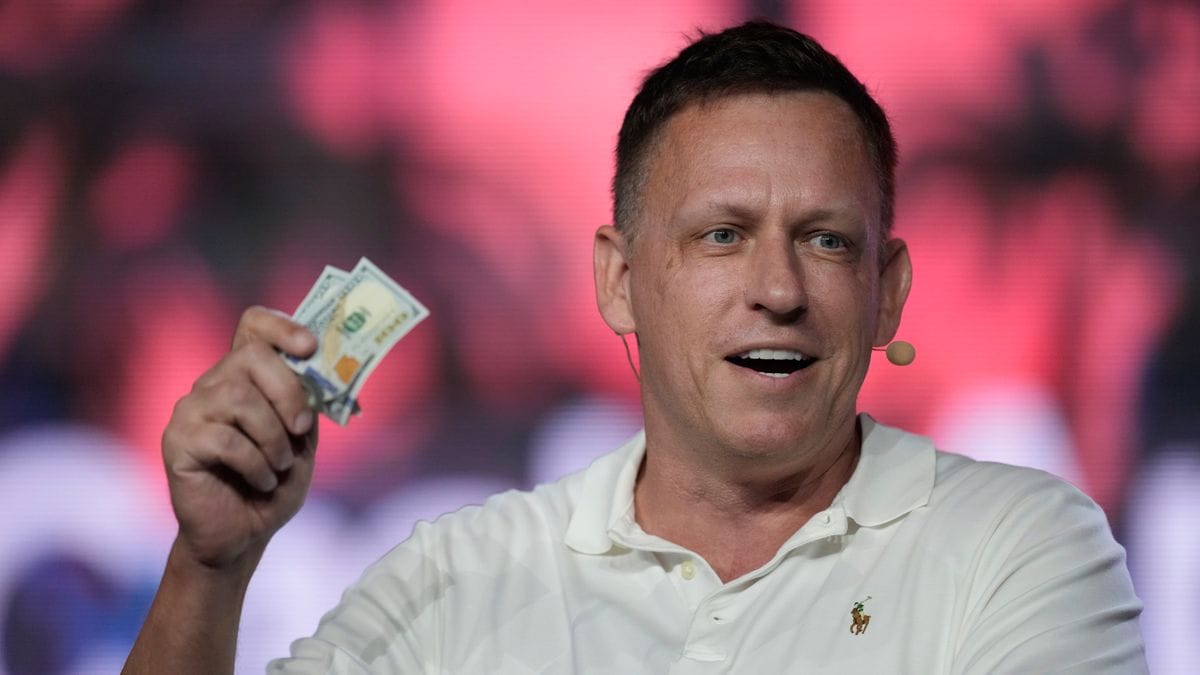
In 2004, PayPal co-founder Peter Thiel wrote Facebook its first major outside check: $500,000 for a stake of roughly 10 percent in what was still a tiny social network. The deal was structured as a convertible note, and there was no guarantee that a website connecting college students would become a global advertising machine. Facebook did exactly that. When the company went public in 2012, Thiel sold shares in the offering and unloaded most of the remainder after the lockup expired. Contemporary reports put his total proceeds at more than $1 billion in cash. Dilution and earlier sales mean the math is more complicated than simply multiplying his original ownership by the IPO valuation, but the core result remains extraordinary. A half-million-dollar angel bet became a billion-dollar exit in about eight years—roughly a 2,000-fold return.
Contact [email protected] for any questions or corrections.