Is $4 Gas About to Get More Expensive, Again?
Gas prices were already bleeding American households dry before this weekend's strikes sent oil markets into crisis mode, and the government data set to drop this week will not capture a single cent of what just happened.


One of the main drivers of inflation in the economy has been elevated energy prices, and it’s rearing its head at the gas pump once again. At 8:00 AM ET on September 8, the NYSE floor advisory delivered by Kristen Scholer put ICE Brent crude at roughly $98 a barrel, a move she tied directly to U.S.-Iran strikes over the weekend. Headlines caught up fast: CBS News flagged an analysis pointing to oil at $120 and a $100 billion fuel hit to American households, while NBC reported that Saudi Arabia said its energy infrastructure had been attacked. The market did what markets do in a Gulf crisis. The problem is that American drivers were already bleeding at the pump before any of this happened.
A Summer Already Stuck Above $4
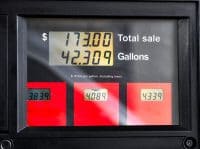
The national average for regular gasoline was $4.07 a gallon in the week ending August 31, 2026. That is a level the U.S. Energy Information Administration (EIA) series has spent the entire summer at or above, after peaking at $4.50 on May 11. The January starting point shows the dramatic swings: the same series bottomed at $2.779 on January 12, 2026. That is roughly a $1.29-per-gallon jump in eight months, and it happened before a single missile flew over the weekend.
Crude was already climbing into the military strikes. West Texas Intermediate (WTI) closed at $91.48 per barrel on September 1, up 9.0% in a single week and 6.2% over the month. Consumers are feeling it, as evidenced by weakening consumer sentiment, with the University of Michigan index falling to a reading of 51 from 55.2 in July. When gas eats the household budget, discretionary spending is usually the first thing to go.
Government Data Is Pointed the Wrong Way
Here is the bureaucratic blind spot. The Bureau of Labor Statistics (BLS) releases August Producer Price Index (PPI) data on Thursday and sensitive Consumer Price Index (CPI) data on Friday. Both reports cover a survey period that closed before the weekend strikes. The July all-items CPI already sat at 333.918, up from 323.048 in July 2025. Whatever Friday’s data shows, it will not contain a single cent of the oil spike now unfolding.
The Federal Reserve’s preferred underlying gauge, the core Personal Consumption Expenditures Price Index, already hit its series high of 130.658 in July. Core PCE strips out energy by design, which is exactly why an oil shock does not show up there until it seeps into airfares, delivery costs, and packaged goods. That can take months. Meanwhile, an FOMC event is on the calendar for September 8 at 14:00 ET, boxing Kevin Warsh into a familiar corner: cut into an oil shock, or hold the line while household budgets tighten.
What to Watch Next
Two signals will decide whether $4 gas becomes $4.50 gas by October. First, EIA’s next weekly retail gasoline report, released the following Monday, will show how quickly refiners passed the crude move through to the pump. Second, whether Brent crude oil holds above the $95 threshold traders are now watching, or slips back as the Strait of Hormuz shipping status becomes clearer. For anyone on a fixed income, the numbers on Friday’s CPI release will already be stale by the time they hit the wire. The real reckoning arrives in October, and consumers will be the first to feel it.
Contact [email protected] for any questions or corrections.
Gerelyn Terzo is the author of dividend investing handbook "Dividend Investing Strategies: How to Have Your Cake & Eat It Too." A veteran financial journalist, she covers agri-finance for outlets like Global AgInvesting and the broader stock market and personal finance for 24/7 Wall Street. She began at CNBC and later helped launch Fox Business in New York. Gerelyn currently resides in Woodland Park, Colorado and dabbles in nature photography as a hobby.