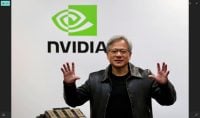
Jim Cramer Called the Magnificent Seven Cheap but the Three Building AI Factories Are All Trailing the S&P
Jim Cramer says buy the Magnificent Seven before the AI payoff hits, but one market strategist argues the group has already fractured into winners and losers, and the 2026 scoreboard is starting to prove him right.


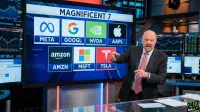
Jim Cramer used his platform last week to make a straightforward case: the Magnificent Seven is cheap, the AI capex cycle is turning into profit, and investors should stop discounting the group ahead of 2027 monetization. Cramer called on viewers to “buy buy buy” on the argument that the market had unfairly priced these names before the payoff arrives.
On CNBC’s air the very next trading day, Plexo Capital founding managing partner Lo Toney offered a different frame. AI is fracturing the Magnificent Seven into distinct risk-return profiles, he argued, presenting a two-by-two lens built on infrastructure control and monetization ability. That framework splits the group into hyperscalers (Google, Microsoft, Amazon), aggregators (Meta, Apple), specialists (Tesla), and a pure-play beneficiary (NVIDIA). The full segment aired September 8, 2026.
2026 Scoreboard Validates the AI Split
The three hyperscalers pouring capex into AI factories are all trailing the benchmark year-to-date, while the picks-and-shovels supplier is running well ahead. The buildout is also lifting a wider bench of power, cooling, and networking suppliers that sit outside the chipmakers (we profiled seven of them in a free AI infrastructure report).
| Company | YTD Return |
|---|---|
| NVIDIA (NASDAQ:NVDA | NVDA Price Prediction) | +20.1% |
| Apple (NASDAQ:AAPL) | +14.8% |
| S&P 500 ETF (SPY) | +12.54% |
| Amazon (NASDAQ:AMZN) | +8.7% |
| Alphabet (NASDAQ:GOOGL) | +5.1% |
| Microsoft (NASDAQ:MSFT) | +1.7% |
| Meta Platforms (NASDAQ:META) | -0.95% |
Capex Bill Behind the Hyperscaler Underperformance
The hyperscaler gap ties directly to the size of the infrastructure buildout. Microsoft guided full-year FY26 capex to $115.95 billion, and CFO Amy Hood said calendar-2026 investment is now expected around $175 billion after a shift toward operating leases. Alphabet spent $44.92 billion on capex in Q2 alone and raised roughly $70 billion in combined equity and debt to fund AI expansion, pushing long-term debt from $46.5 billion to $98.2 billion. Amazon booked $54.21 billion of Q2 capex, and CEO Andy Jassy conceded the company “will encounter free cash flow headwinds until these data centers come online.” Meta narrowed its 2026 capex guide to $130 to $145 billion as free cash flow collapsed to $784 million from $8.55 billion a year earlier.
Why NVIDIA Sits Outside the Group
Toney’s framework treats NVIDIA as fundamentally different because it gets paid while everyone else proves the economics. The Q2 FY27 earnings report supports that read. NVIDIA reported revenue of $96.22 billion, up 105.8% year over year, with data center revenue of $89.02 billion (+117%). Management guided Q3 to $108 billion, plus or minus 2%, and expects fiscal 2028 revenue growth of approximately 70% under supply-constrained conditions.
The Q2 FY27 8-K filed with the SEC also disclosed supply obligations surging to $279 billion tied to memory procurement for the Vera Rubin platform. Trading at a P/E of 28.5, NVIDIA is selling into every hyperscaler capex line at the exact moment those hyperscalers are being penalized for the spending.
Alphabet Irony to Close
Toney called Alphabet “the most interesting” name in the Magnificent Seven because it owns AI infrastructure through TPUs and data centers not to mention multiple monetization paths across search, YouTube, Cloud, and Waymo. Google Cloud revenue accelerated to $24.77 billion, up 82% year over year, and CEO Sundar Pichai noted nearly 90% of the Fortune 100 using Gemini Enterprise. Alphabet trades at a P/E of 15, the cheapest multiple in the group. The stock most closely matching Toney’s ideal profile is also the one the market has rewarded the least in 2026, giving investors either a value setup or a warning that Wall Street sees AI monetization drifting further out than Cramer’s timeline suggests.
Contact [email protected] for any questions or corrections.
Gerelyn Terzo is the author of dividend investing handbook "Dividend Investing Strategies: How to Have Your Cake & Eat It Too." A veteran financial journalist, she covers agri-finance for outlets like Global AgInvesting and the broader stock market and personal finance for 24/7 Wall Street. She began at CNBC and later helped launch Fox Business in New York. Gerelyn currently resides in Woodland Park, Colorado and dabbles in nature photography as a hobby.