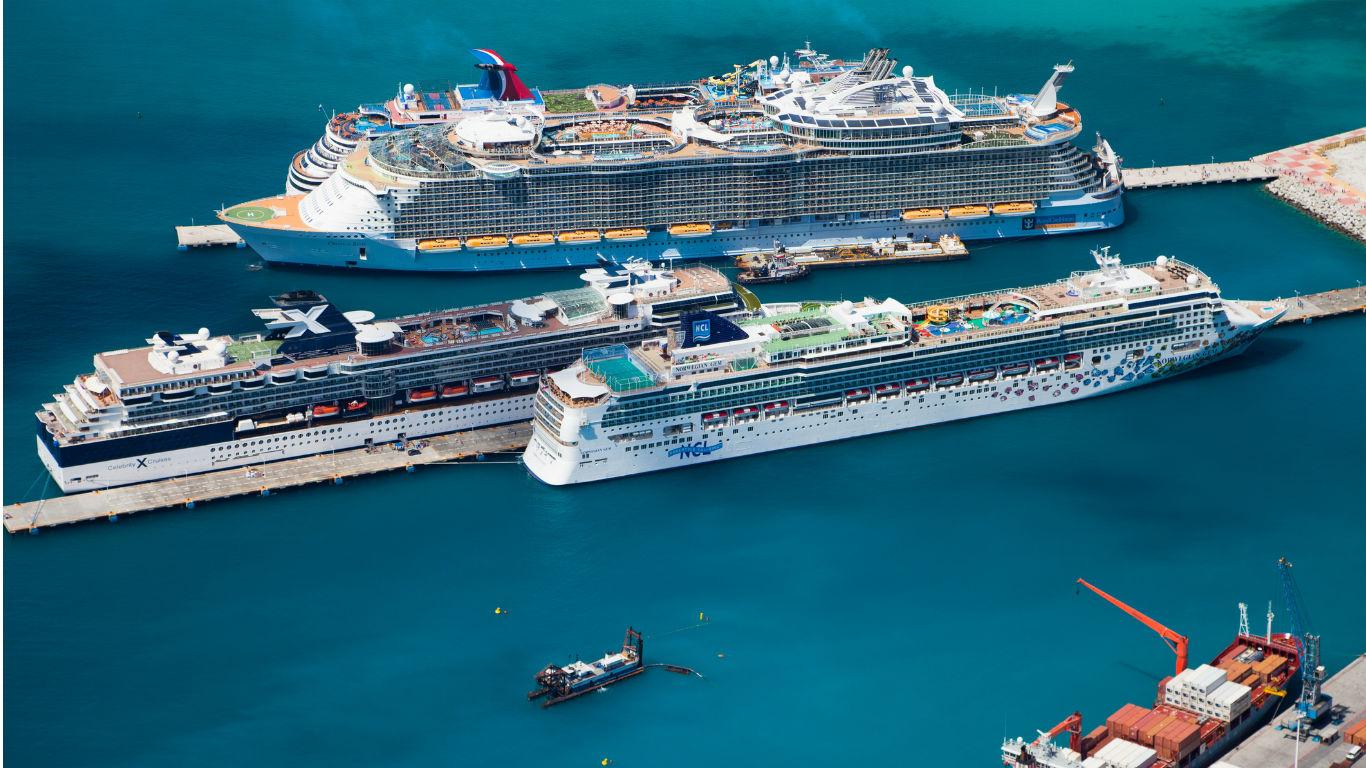
Norwegian Slides 3% as Rising Oil Undercuts Fuel-Cost Relief Hopes; Carnival and Royal Caribbean Trail
Cruise stocks are sinking midday as a surprise surge in oil prices flips the fuel-cost thesis that bulls were counting on, and Norwegian is absorbing the hit harder than its rivals for reasons tied directly to its balance sheet.


Shares of Norwegian Cruise Line Holdings (NYSE:NCLH | NCLH Price Prediction) are sliding midday Wednesday as firmer crude oil undercuts the fuel-cost relief thesis that’s been circulating among cruise bulls. Norwegian stock is down 3% to $14.91, the sharpest drop among the three majors.

Carnival Corporation (NYSE:CCL) stock is also lower, dropping 1% to $22.89 after touching a 52-week low last week. Meanwhile, Royal Caribbean Group (NYSE:RCL) stock is down 2% to $260.46, extending its retreat from last month’s highs.
Notably, the Energy Select Sector SPDR ETF (NYSEARCA:XLE) is up 0.6% on the same tape, with the fund’s holdings led by Exxon Mobil and Chevron. The SPDR S&P 500 ETF Trust (NYSEARCA:SPY) is down 0.4%, meaning energy is one of the few groups rising while the broad market drifts lower. The setup is a mirror image of the cheap-fuel trade cruise bulls were positioning for.
Rising Oil Flips the Fuel Thesis
Fuel is one of the largest controllable costs in cruise operations, and a firmer energy tape works against cruise margins. Retail traders in cruise names had been arguing Norwegian shares should rally on the premise that easing fuel would lift profitability across the group, alongside gripes about elevated short interest and Middle East risk. Today’s split between rising energy prices and falling cruise stocks pushes back on that thesis directly.
Recent disclosures make the fuel sensitivity concrete. In its July 30 update, Norwegian reported fuel price per metric ton net of hedges rose to $888 from $659 year over year (YoY), a headwind flagged by CEO John W. Chidsey. Carnival’s Q2 FY2026 report noted nearly 30% higher fuel costs, partially offset by a 5.6% improvement in fuel consumption per ALBD. Royal Caribbean is 59% hedged for the remainder of 2026 at below-market rates, which softens the impact while leaving material exposure.
WTI crude oil is up 3% over the past 24 hours to $95.73 per barrel. Prices have stayed firm in recent sessions, keeping pressure on fuel-sensitive operators, and today’s XLE strength suggests that the oil bid remains intact for now.
Selloff Concentrates in the Softest Balance Sheet
Norwegian stock’s drop stands out because the company carries the heaviest leverage and the smallest scale of the three. Its balance sheet shows $15 billion in total debt and net leverage of 5.3x, versus Carnival’s $24.9 billion in debt spread across a much larger revenue base and Royal Caribbean’s leverage below three times. That gap matters when a variable cost line moves against the sector, since the smallest operator has the least room to absorb it.
Fresh guidance underscored the drag. The operator flagged softer demand at its namesake Norwegian brand, with full-year 2026 net yield expected to decline 5% in constant currency and Q3 2026 net yield expected down 8.9%. Chidsey identified an additional $100 million in annualized cost savings and described the company as being in the early stages of a turnaround.
Carnival, by contrast, is 93% booked for 2026 at record prices and guides to full-year 2026 adjusted EPS of $2.22. Royal Caribbean raised its full-year 2026 adjusted EPS guidance to $17.73 to $17.87 and delivered a 110% load factor in Q2 2026. Both operators offer more insulation than Norwegian if crude stays elevated.
The three stocks have also diverged year to date (YTD). Norwegian stock is down 33% YTD, Carnival stock is down 24% YTD, and Royal Caribbean stock is down 6% YTD. XLE, by comparison, is up 48% YTD, a near-inversion of the cruise trade.
What to Watch
The immediate cue is crude direction. If the WTI crude oil price keeps climbing, fuel-cost relief remains off the table and cost pressure could persist into next quarter’s guidance updates from all three operators. The next round of cruise-line updates, along with any OPEC+ headlines and weekly EIA inventory data, could reset the narrative quickly in either direction.
Investors may want to keep an eye on whether the cruise-stock group holds today’s levels into the close and whether energy-price strength broadens beyond the majors. A single session doesn’t establish a fuel trend, so the cost pressure here should be treated as a live risk. Traders can size their exposure accordingly while the crude signal develops.
Contact [email protected] for any questions or corrections.
David Moadel is financial writer specializing in stocks, ETFs, options, precious metals, and Bitcoin. David has written well over 1,000 articles for leading online publications, helping investors understand markets, income strategies, and risk.His work has appeared in The Motley Fool, InvestorPlace, U.S. News & World Report, TipRanks, ValueWalk, Benzinga, Market Realist, TalkMarkets, Finmasters, 24/7 Wall St., and others.With a master’s degree in education, David has taught at the elementary, high school, and college levels. That teaching background shapes his writing style: clear, educational, and practical. David has also built a loyal social-media audience by providing trustworthy financial content on YouTube, X/Twitter, and StockTwits.