‘US Consumption of Alcoholic Beverages Is at Historic Lows’: Heineken Hires GLP-1 Pitchwoman to Sell Beer
Heineken just hired a GLP-1 pitchwoman to sell beer while admitting American drinking is at historic lows. What that contradiction reveals about the entire US beer industry should worry SAM and TAP shareholders.


Heineken’s US chief executive Maggie Timoney went on Bloomberg this week to explain why Serena Williams was named the first global ambassador for Heineken 0.0 while simultaneously fronting a GLP-1 weight-loss brand, the drug class investors have blamed for suppressing alcohol demand. Her answer: “studies show that people who are on GLP1s also drink alcohol. They say, do they drink less alcohol or more alcohol? It’s inconclusive.” The interview opened with the acknowledgment that “US Consumption of alcoholic beverages is at historic lows right now” per a recent Gallup poll, citing declining sales at Brown-Forman, Molson Coors, and Boston Beer as evidence.
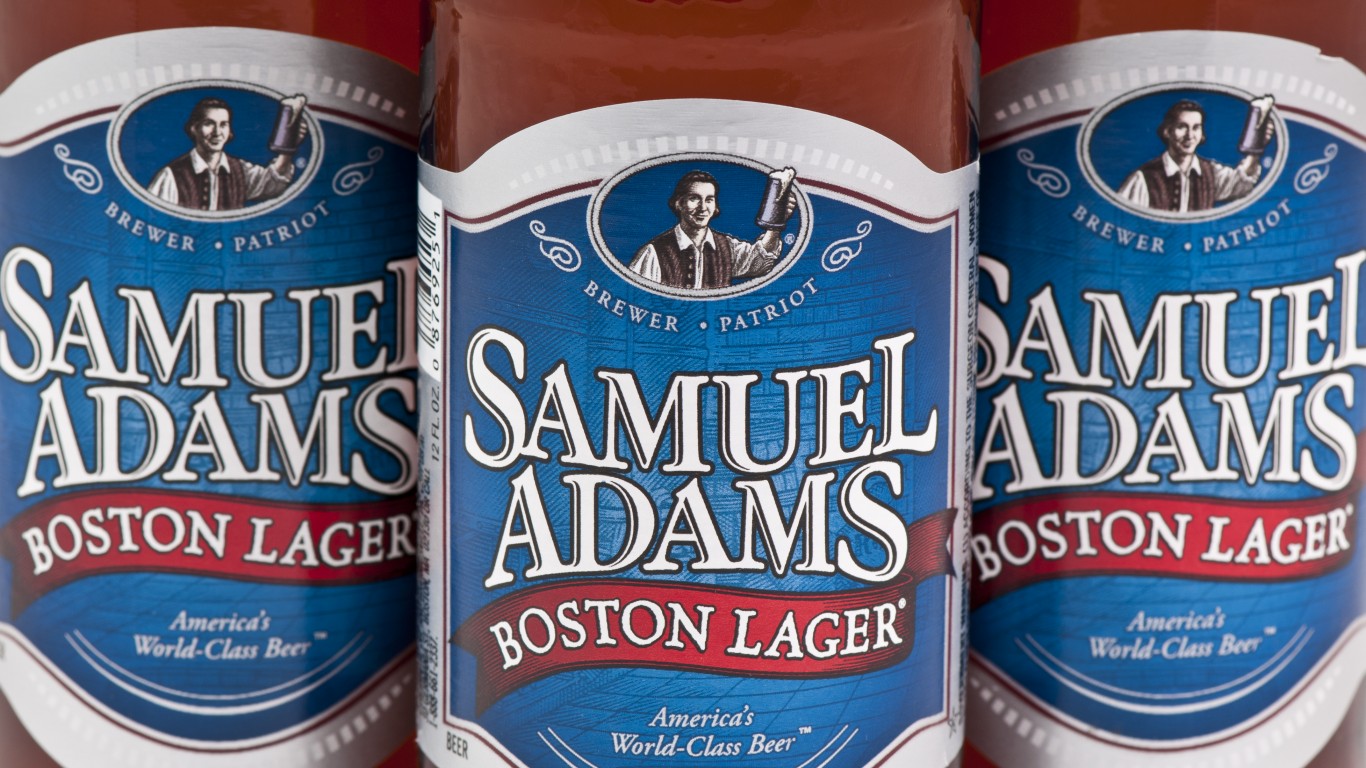
For US-listed beer investors, the exchange crystallizes a question investors have been asking for two years. Two brewers with heavy exposure to the domestic beer aisle, Boston Beer (NYSE:SAM | SAM Price Prediction) and Molson Coors (NYSE:TAP), have watched volumes and share prices decline in tandem.
Boston Beer: Depletions Down, Ad Spend Up
Boston Beer reported Q2 FY2026 adjusted EPS of $3.65 versus $4.83 consensus, missing expectations by 24.36%, on revenue of $568.34M, down 3.3% year over year. Depletions fell 6% in the quarter, with weakness concentrated in Twisted Tea, Truly, Samuel Adams, Hard Mountain Dew, and Dogfish Head. Only Sun Cruiser and Angry Orchard grew. Advertising, promotional and selling expense jumped 16.4% as management leaned into brand marketing to defend share.

On the earnings call, founder Jim Koch offered a demand read that echoes the Heineken narrative. “To me, all alcoholic beverages are under some pressure. Beer is certainly in that category,” he said, estimating “1% or 2% chronic long-term downward pressure on per capita consumption, somewhat offset by continuing premiumization.” Koch also flagged that “the drumbeat of health issues, beer causes cancer, that’s been a little bit lessened with the new dietary guidelines.” Notably, GLP-1 medications went unmentioned on the call.
Shares reflect the strain. SAM trades at $162.33, down 27.21% over one year and 70.1% over five. Full-year 2026 guidance calls for non-GAAP EPS of $8.50 to $10.50 with depletions down low- to mid-single digits, per the company’s Q2 8-K filing.

Molson Coors: Beyond Beer as a Hedge
Molson Coors posted Q2 non-GAAP EPS of $1.58 versus $1.51 consensus and net sales of $3.10 billion, down 3.3% YoY. Financial volume fell 5.4% and US domestic shipments dropped 7.3%. Management pegged the US beer industry decline at 4.2% in the quarter. Underlying EBITDA fell to $624.6M from $763.9M.

CEO Rahul Goyal, who took over October 1, 2025, is pushing a “beyond beer” pivot through the Fever-Tree partnership and the $275M Monaco Cocktails acquisition completed in Q1 2026. “The category will stay volatile,” Goyal said on the Q2 call, adding that premium-oriented drinkers remain resilient while broader consumers pulled back on fuel prices and macro anxiety. The company reaffirmed 2026 guidance for underlying EPS decline of 11-15% and absorbed a $3.65B goodwill impairment on the Americas unit in Q3 2025.
TAP trades at $38.60, off 18.42% over one year and 50.29% over the past decade.

What to Watch Next
The macro backdrop remains hostile to discretionary spending. University of Michigan consumer sentiment printed 55.2 in July 2026, still below the 60 recessionary threshold after bottoming at 44.8 in May. Heineken’s own answer to the volume problem, Heineken 0.0, grew 86% from 2023 through 2025, yet Timoney projects the non-alcoholic category will top out at 3% of total beer long-term. Timoney also introduced “zebra striping” to describe drinkers alternating between alcoholic and non-alcoholic beer in the same session.
For SAM and TAP holders, the key signal will be whether US industry volumes hold at management’s forecast of better than the minus 5% of 2025 and whether the RTD spirits and beyond-beer investments can offset the core-brand slide before the GLP-1 debate resolves one way or the other.
Contact [email protected] for any questions or corrections.
After two decades of patrolling the dark corners of suburbia as a police officer, Rich Duprey hung up his badge and gun to begin writing full time about stocks and investing. For the past 20 years, he’s been cruising the markets looking for companies to lock up as long-term holdings in a portfolio while writing extensively on the broad sectors of consumer goods, technology, and industrials. Because his experience isn’t from the typical financial analyst track, Rich is able to break down complex topics into understandable and useful action points for the average investor. His writings have appeared on The Motley Fool, InvestorPlace, Yahoo! Finance, Money Morning, and, of course, 24/7 Wall St. He has been featured in both U.S. and international publications, including MarketWatch, Financial Times, Forbes, Fast Company, and USA Today.