“You’ll See A Sell Off.” Jeremy Siegel Says Warsh Will Be Forced To Raise Rates And Predicts What Happens To Stocks Next
Wharton professor Jeremy Siegel sees a collision coming between a new Fed chair, a bond market demanding action, and stocks caught in the crossfire at next week's FOMC meeting.


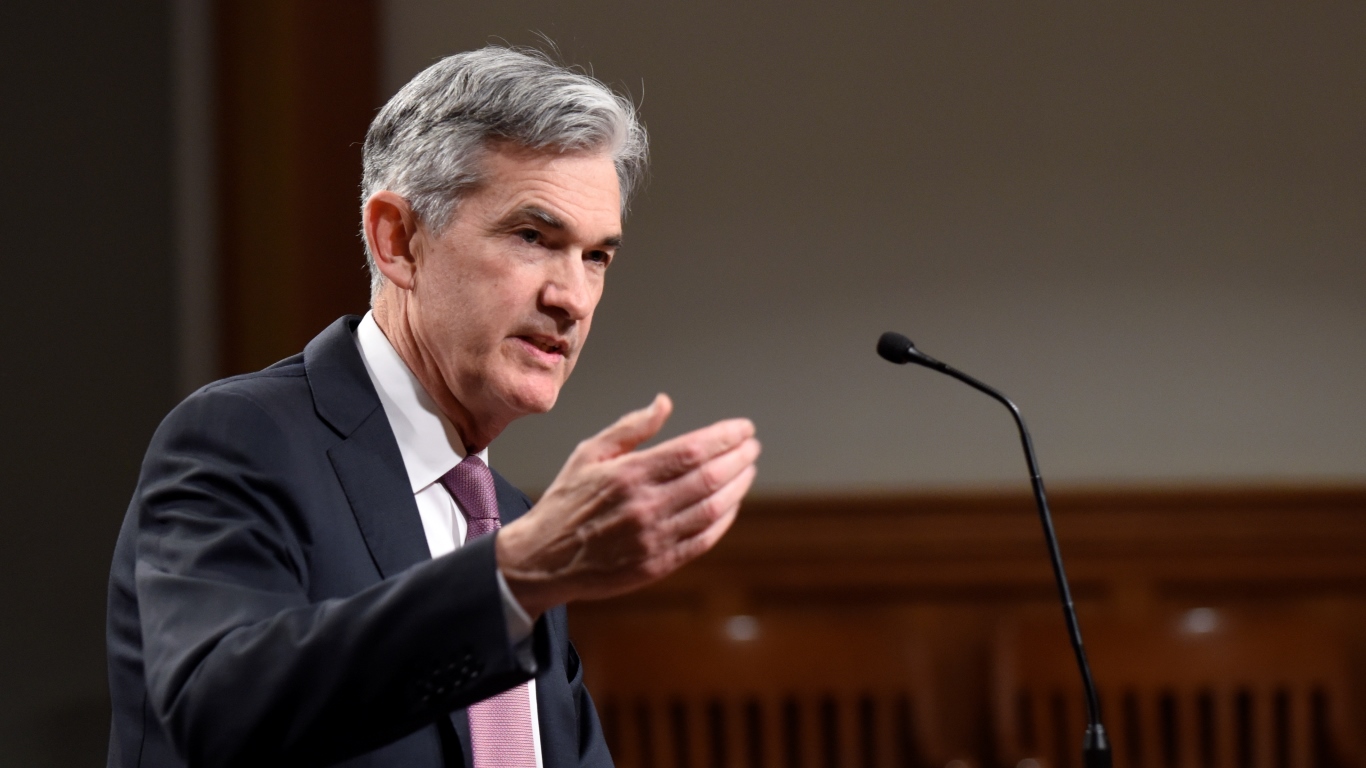
Wharton professor Jeremy Siegel told CNBC’s Closing Bell on Thursday that new Fed Chair Kevin Warsh will have to “bite the bullet and raise rates” at next week’s FOMC meeting, warning that a hold could trigger “4 or 5 or maybe six dissents, which would be, you know, unprecedented.” Siegel framed the decision as “the test for Kevin Warsh” as bond and commodity markets pressure the central bank to defend its credibility.
The federal funds target upper bound sits at 3.75% as of September 11, 2026, unchanged for a month and down 0.75% from a year ago. Siegel argues that easing streak has run out of room.
Two Numbers Driving The Call
Pump prices are the most visible piece of the story. The national average for regular gasoline hit $4.16 per gallon in the week ended September 7, 2026, up $0.086 in a week and sitting at the 88.5 percentile of the past year’s range. Siegel cited “records in gasoline futures signaling another 20 to $0.30 potential rise in gasoline,” adding that this “is not good for consumer sentiment.”
The bond market is the second signal. The 10-year Treasury yield closed at 4.83% on September 9, 2026, the highest reading in the past year and up 0.11% in a month. The 10Y-2Y spread has narrowed to 0.39%, still positive but down 18.7% from a month earlier. Core PCE, the Fed’s preferred gauge, rose to 130.66 in July 2026, its highest reading in the supplied series.
Siegel’s Two-Stage Playbook For Stocks
Siegel expects equities to “first shudder and you’ll see a sell off,” then rally if the long bond treats the hike as “credible at fighting inflation.” He sees “range bound” trading in the weeks that follow. His view of Warsh’s political box: the chair “would love to be able to hold off until after the midterms” yet faces a market demanding action.
An August 28 Halftime Report panelist, discussing Warsh’s Jackson Hole remarks, framed the same dilemma: “He’s in A hard position. He has to be hawkish. I don’t think anybody’s expecting him not to be hawkish, but then the question is, does he deliver?”
Why Oracle Holders Should Care
Few names embody the rate-sensitivity question like Oracle (NYSE:ORCL | ORCL Price Prediction). The database giant reported Q1 FY2027 results after the close on September 10, 2026, posting revenue of $19.34B, up 29.6% YoY, with cloud infrastructure revenue rocketing 121% YoY to $7.39B. Remaining performance obligations swelled to $664B, aided by more than $30B in new AI cloud contracts booked in the quarter. The full 8-K exhibit is on file with the SEC.
The catch is capital intensity. Q1 capex reached $28.5B, free cash flow was negative $5.40B, and Oracle completed a $20B at-the-market equity program while planning to raise roughly $40B in FY2027. Higher long yields raise the price of every dollar Oracle borrows to build data centers (we mapped seven of the suppliers powering that buildout, from electricity to cooling, in a free AI infrastructure report).
Shares are trading at $153.11, up 5.24% over one month and down 20.68% year to date, with the stock down 52.83% from a year ago. Related Oracle securities OCCLL and ORCL-PD carry the same CIK and inherit the same rate exposure through the parent’s balance sheet.
What To Watch Next Week
The August CPI print lands tomorrow, and the FOMC decision follows next week. Siegel’s thesis rests on the long bond validating any Warsh hike. If the 10-year holds near its 4.83% high after a move, expect the shudder he described. If yields ease, the second act of his call, a stock recovery grounded in restored Fed credibility, becomes the base case.
Contact [email protected] for any questions or corrections.
AJ spent 10 years writing about financial markets at The Motley Fool. His coverage centers on technology stocks and the broader macroeconomic trends, from interest rates to geopolitics, that shape where markets are headed next. AJ is drawn to the stories where big-picture economics and individual companies collide.