The Tesla Network Is Dead: JPMorgan’s Bombshell Note Reveals Nearly All Robotaxi Billions Flow to TSLA, Not You
JPMorgan just rewrote the Tesla robotaxi story in a way that changes everything individual owners thought they stood to gain, and the numbers behind it are harder to dismiss than the hype ever was.


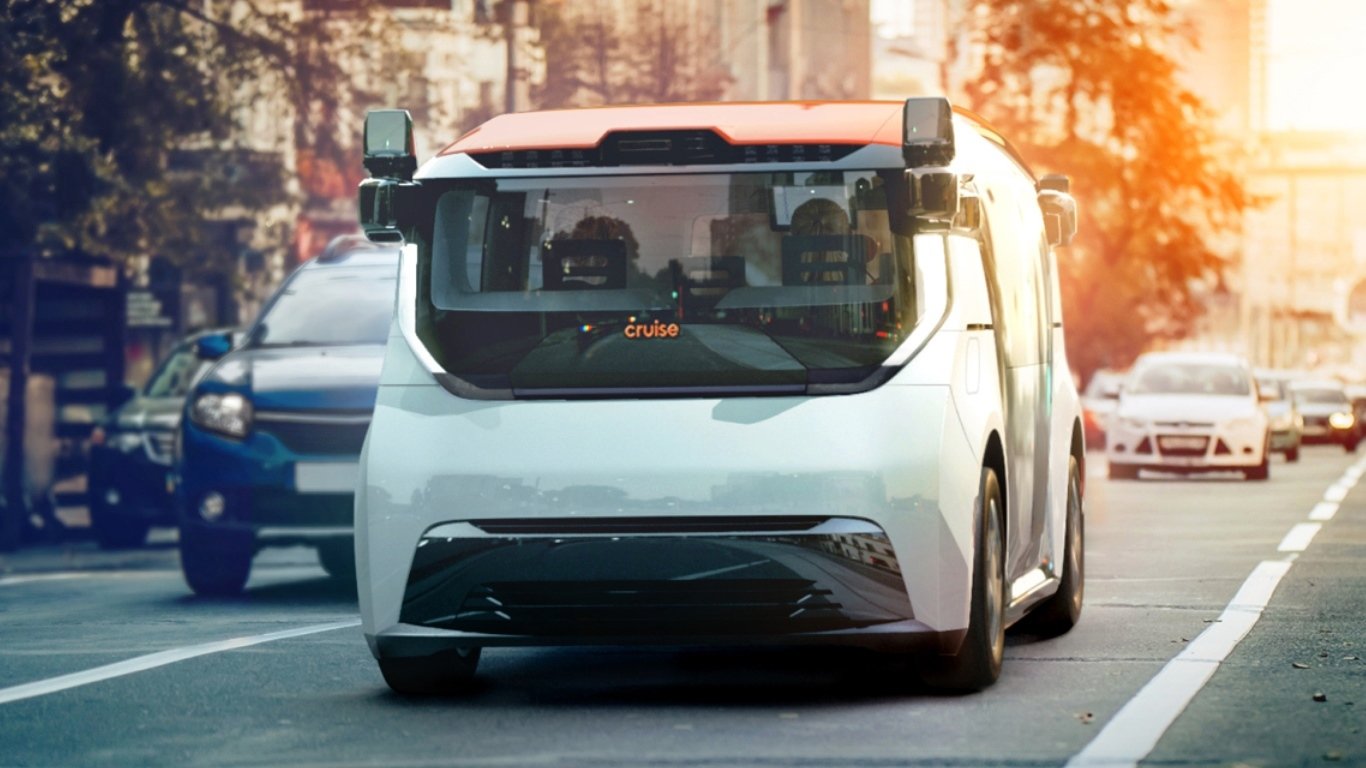
JPMorgan analyst Rajat Gupta circulated a note last week projecting Tesla robotaxi revenue of roughly $320 billion by 2035, with nearly all of it (~$314 billion) coming from a Tesla-owned and -operated fleet rather than a customer-owned “Tesla Network.” The framework effectively retires the long-standing pitch that individual owners would earn passive income by enrolling personal cars in a shared ride network. For long-term holders of Tesla (NASDAQ:TSLA | TSLA Price Prediction) stock, the note reframes the robotaxi opportunity as a capital-heavy mobility operator business, closer to a scaled-up Waymo than an asset-light software platform.

| Ticker | Company | Firm | Action | Old Rating | New Rating | Old Target | New Target |
|---|---|---|---|---|---|---|---|
| TSLA | Tesla | JPMorgan | Robotaxi Revenue Model Update | Underweight | Neutral | N/A | N/A |
Analyst’s Case
Online models put owner-network contribution at only about $5 billion versus ~$314 billion from company-owned vehicles by 2035. Under that math, Tesla keeps essentially all ride revenue instead of sharing with vehicle owners, lifting take rates but raising capital intensity. The upside hinges on rapid Cybercab production scaling, falling operating costs, and widespread unsupervised approvals. Tesla management reinforced the vertically integrated framing on its Q2 2026 call, where CEO Elon Musk said “we expect to be vertically integrated with Robotaxi as we are in the rest of our business” and that “demand will outstrip our ability to service the demand.”
Company Snapshot
Tesla reported Q2 FY2026 revenue of $28.24B, +25.5% YoY, while non-GAAP EPS of $0.33 missed the $0.54 consensus. Robotaxi service now spans seven U.S. metros, with 1.48 million active FSD subscriptions, up 56% YoY. Cybercab production has begun at Gigafactory Texas, and CFO Vaibhav Taneja guided 2026 capital expenditures above $25 billion to fund fleet expansion.

Why the Move Matters Now
Tesla stock last traded at $365.44, down 18.74% year-to-date but up 11.58% over the past month, with a forward P/E of 152. The Street’s 2026 EPS consensus has drifted from 2.11 two months ago to 1.77 today, absorbing 18 downward revisions against 7 upward over the trailing 30 days. Q2 operating margin compressed to 1.4% and free cash flow swung to -$1.09B, evidence that the investment cycle Gupta is modeling is already hitting reported results.

What It Means for Your Portfolio
The revised JPMorgan thesis raises the long-term ceiling on Tesla stock but also the execution bar. If Cybercab volumes ramp and unsupervised approvals broaden, revenue capture from an owned fleet is transformative on a $94.83B FY2025 base. If production or regulation slips, the $320B figure compresses meaningfully. For research purposes, the robotaxi contribution reads more as a scenario than a booked line item, and the near-term margin and cash flow reality remains the more measurable signal versus the 2035 outcome.

Contact [email protected] for any questions or corrections.
After two decades of patrolling the dark corners of suburbia as a police officer, Rich Duprey hung up his badge and gun to begin writing full time about stocks and investing. For the past 20 years, he’s been cruising the markets looking for companies to lock up as long-term holdings in a portfolio while writing extensively on the broad sectors of consumer goods, technology, and industrials. Because his experience isn’t from the typical financial analyst track, Rich is able to break down complex topics into understandable and useful action points for the average investor. His writings have appeared on The Motley Fool, InvestorPlace, Yahoo! Finance, Money Morning, and, of course, 24/7 Wall St. He has been featured in both U.S. and international publications, including MarketWatch, Financial Times, Forbes, Fast Company, and USA Today.