From Industrial Revolution to AI Revolution: Cathie Wood’s Bold Thesis on Why Global GDP Could Double
Cathie Wood says you need to rewind to the Industrial Revolution to grasp what AI and four other converging technologies are about to do to global economic growth, and her target makes the IMF's forecast look like a rounding error.


Cathie Wood, the chief executive of ARK Invest, opened her firm’s September market commentary with a claim designed to jolt readers out of ordinary business-cycle thinking. “We have to go back to the Industrial Revolution to understand what’s going on today,” she wrote, arguing that the convergence of AI, robotics, energy storage, blockchains, and multi-omic sequencing could at least double the long-run rate of global real GDP growth. She also called a far higher figure that Elon Musk has cited reachable. You can read the commentary on ARK’s site.
Why a Doubling Would Reshape Everything
Real GDP growth measures how much more stuff and services an economy produces after stripping out inflation. Global growth has hovered around 3% for well over a century. The IMF expects more of the same. Doubling that would reshape the world: faster wage growth, faster corporate earnings, and a very different path for interest rates than any retirement plan currently assumes.
For context, U.S. real GDP grew at just 1.5% annualized in the most recent reading, below the 2-3% range typically considered healthy trend growth. Wood is looking through today’s soft print to a decade-long acceleration.
Bull Case: Platforms Compounding at Once
Wood’s argument rests on multiple technologies compounding simultaneously rather than one invention arriving alone. The clearest evidence that AI is monetizing comes from the most recent quarter at NVIDIA (NASDAQ:NVDA | NVDA Price Prediction), which reported revenue of $96.22 billion, up 105.8% year over year, with data-center revenue of $89.02 billion. Jensen Huang told analysts that “AI is now doing productive and useful work” and that customer forecasts point to NVIDIA’s growth doubling next year, though supply constraints will hold reported growth to roughly 70%. Top-five hyperscaler capex is projected at nearly $800 billion in 2026 and $1.3 trillion in 2027.

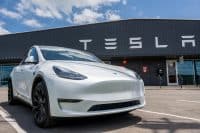
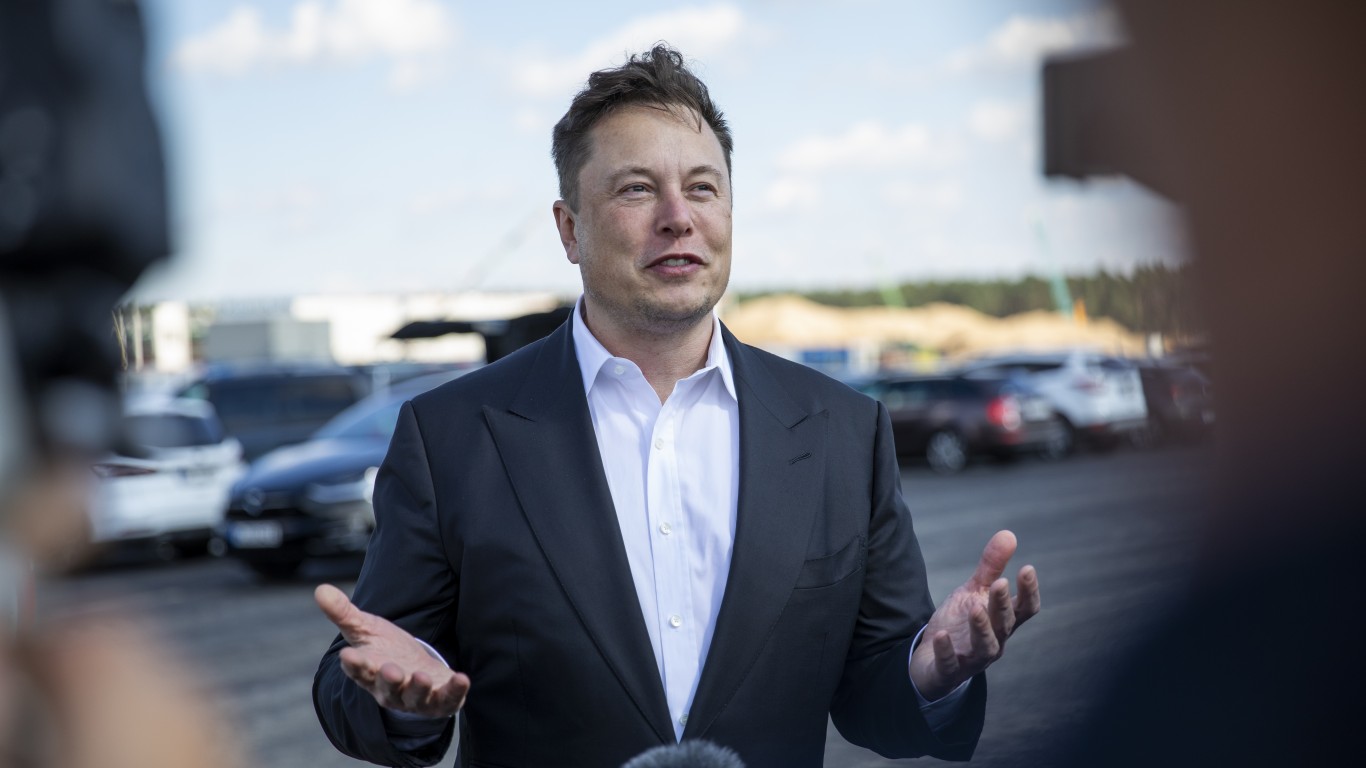
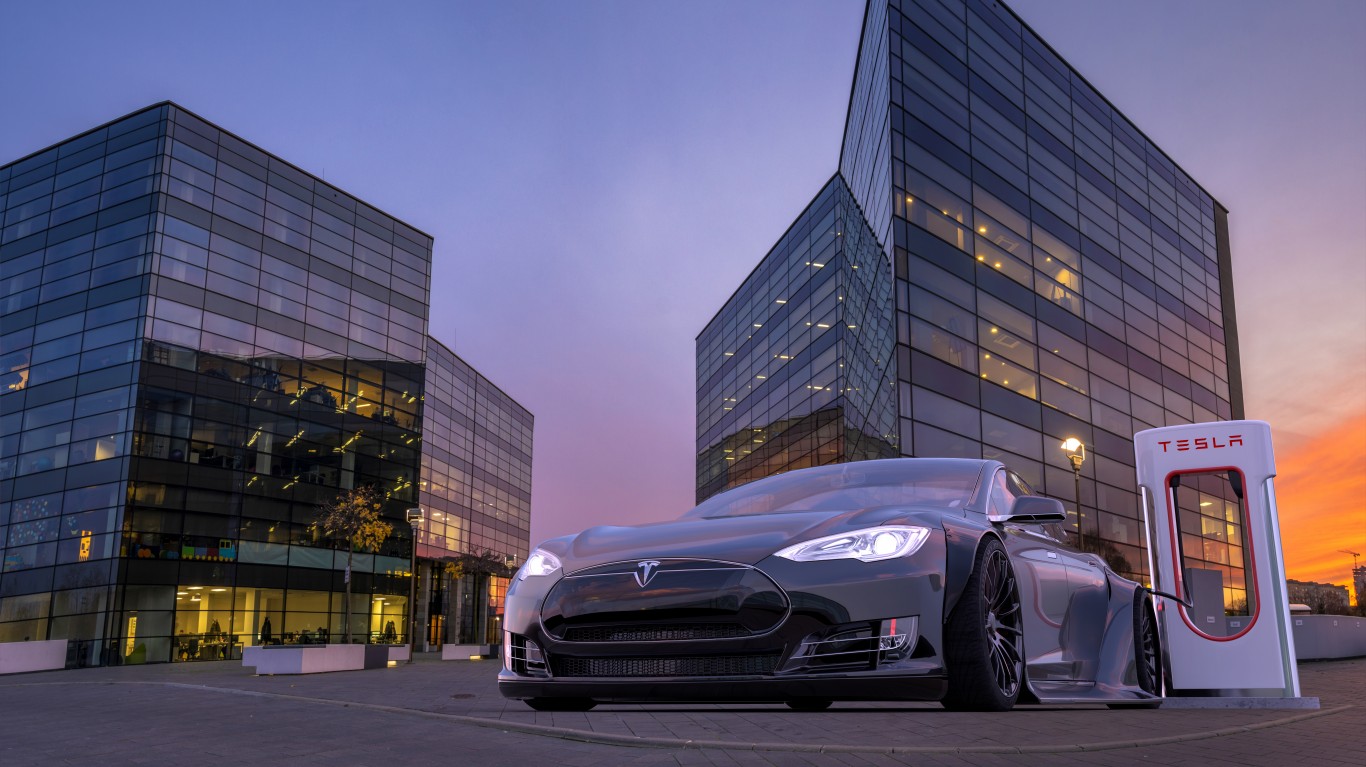
Autonomy is the second leg. Tesla (NASDAQ:TSLA) is Wood’s largest conviction position, sitting at roughly 9.7% of the ARK Innovation ETF (NYSEARCA:ARKK). Tesla ended Q2 with 1.48 million active FSD subscriptions, robotaxi service in seven U.S. metros, and Cybercab production underway. If Optimus becomes what Musk called “the biggest product ever,” the labor-supply math changes at a global scale.

Bear Case, Given Real Weight
The hardest fact for Wood’s thesis is that trend growth barely budged through a century that already included electrification, the automobile, computing, and the internet. Each felt transformative in its moment. None doubled the trend. Productivity gains have also historically taken far longer to appear in the data than their advocates predicted.
The financing structure raises further questions. NVIDIA has committed to nearly $50 billion in Frontier AI Labs and lined up partners including Apollo, BlackRock, Blackstone, Brookfield, Goldman Sachs, and KKR to raise over $500 billion of third-party capital. Management acknowledged that “some will call this circular financing.” Tesla’s own free cash flow turned negative at -$1.09 billion as capex ramped. Real productivity has to arrive to justify the buildout.
What This Means for a Long-Term Portfolio
A forecast this far outside consensus is not a reason to restructure a retirement portfolio. NVDA is up 17.32% year to date, while TSLA is down 18.74%. The 10-year Treasury yield sits at 4.95%, the highest of the past year. If Wood is even partly right, expected returns and rate paths behind conservative planning need rethinking. If she is wrong, growth stocks trading at a P/E around 380 face a long air pocket.
The one thing worth watching is measured labor productivity in the official U.S. data. That is where a genuine industrial-revolution-scale shift would eventually show up, before it shows up in your portfolio.
Contact [email protected] for any questions or corrections.
Chris Lange is a financial and geopolitical writer with more than a decade of experience covering a myriad of topics. He has published thousands of articles for 24/7 Wall St., with past coverage focused heavily on stocks, IPOs, healthcare, defense, global affairs, and technology.
His work has been quoted, or referenced by a number of outlets including Business Insider, USA Today, Yahoo Finance, MSN, The Motley Fool, and many other publications. A graduate of Southwestern University, he studied business with a focus on investments and has previous experience in banking and startups.
When not reading or writing the news, he is following his passion for Lacrosse, playing chess, or building solar projects with his dad.