Rivian’s Remarkable Three Month Stock Collapse
Rivian entered the second half of 2025 with a promising new model, fresh investment, and high expectations. So why does its stock chart now look eerily similar to America's most troubled EV company?

This post may contain links from our sponsors and affiliates, and Flywheel Publishing may receive compensation for actions taken through them.

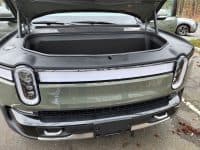
On July 6, the stock of troubled EV company Rivian (NASDAQ: RIVN | RIVN Price Prediction) traded at $20. Now it trades at just above $15. That’s over a quarter of its market cap, gone during a time when Rivian was supposed to do much, much better. Its stock price chart looks a bit like Lucid’s (NASDAQ: LCID). And Lucid is America’s most troubled EV company.
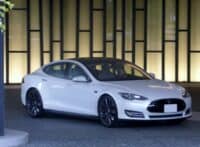
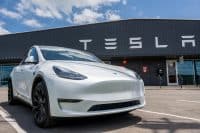
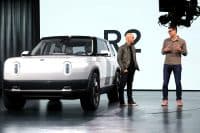
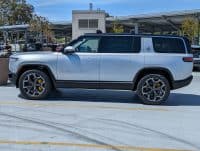
Orders for its new R2, which is much less expensive than its earlier models, are supposed to be brisk. For the most part, it has received good reviews. However, it has two drawbacks as it moves into the market. One is that it faces the top-selling EV in America: the Tesla (NASDAQ: TSLA) Model Y. The R2 will need to convince customers that it is a much better vehicle.
The second may be a larger issue. Many new American cars are marketed as self-driving (though all require driver assistance). Tesla’s Full Self-Driving (FSD) (Supervised) remains the industry standard. According to Motor Trend, the balance of the products on the market isn’t even close. The magazine’s editors wrote, “it’s the best advanced driver assistance system on the market.” Rivian’s “Autonomy+” usually ranks below Tesla’s technology.
Another reason the R2 did not have a strong launch is that it is advertised with a base price of $44,990. However, Rivian launched the R2 with a model priced at almost $58,000. Potential buyers were left to imagine what the cheaper version might be like. It will take several months to find out. For Rivian, it was an unforced error.
Next, Rivian’s viability is in question. In the most recent quarter, it produced and delivered only slightly more than 12,000 vehicles. It lost $833 million. While it is impossible to do the exact math, Rivian would need sales to soar to break even.
Finally, the EV market in the US was badly crippled in the first half of the year. By most estimates, the year-over-year sales drop was 20% to 25%. The loss of a $7,500 tax credit on September 30 may be a reason. However, Americans have stayed with their gas-powered cars. Will higher gas prices change that? Recent Cox data show the answer is “no” so far. People may not buy a new car because of high retail prices for cars and $4 gas. However, they are not moving to EVs as an option.
There is no reason to think Rivian’s stock will trade much more than sideways until it releases Q3 figures. The price immediately after that may be the price until the end of the year.
Contact [email protected] for any questions or corrections.
Douglas A. McIntyre is the co-founder, chief executive officer and editor in chief of 24/7 Wall St. and 24/7 Tempo. He has held these jobs since 2006.
McIntyre has written thousands of articles for 24/7 Wall St. He is an expert on corporate finance, the automotive industry, media companies and international finance. He has edited articles on national demographics, sports, personal income and travel.
His work has been quoted or mentioned in The New York Times, The Wall Street Journal, Los Angeles Times, The Washington Post, NBC News, Time, The New Yorker, HuffPost USA Today, Business Insider, Yahoo, AOL, MarketWatch, The Atlantic, Bloomberg, New York Post, Chicago Tribune, Forbes, The Guardian and many other major publications. McIntyre has been a guest on CNBC, the BBC and television and radio stations across the country.
A magna cum laude graduate of Harvard College, McIntyre also was president of The Harvard Advocate. Founded in 1866, the Advocate is the oldest college publication in the United States.
TheStreet.com, Comps.com and Edgar Online are some of the public companies for which McIntyre served on the board of directors. He was a Vicinity Corporation board member when the company was sold to Microsoft in 2002. He served on the audit committees of some of these companies.
McIntyre has been the CEO of FutureSource, a provider of trading terminals and news to commodities and futures traders. He was president of Switchboard, the online phone directory company. He served as chairman and CEO of On2 Technologies, the video compression company that provided video compression software for Adobe’s Flash. Google bought On2 in 2009.