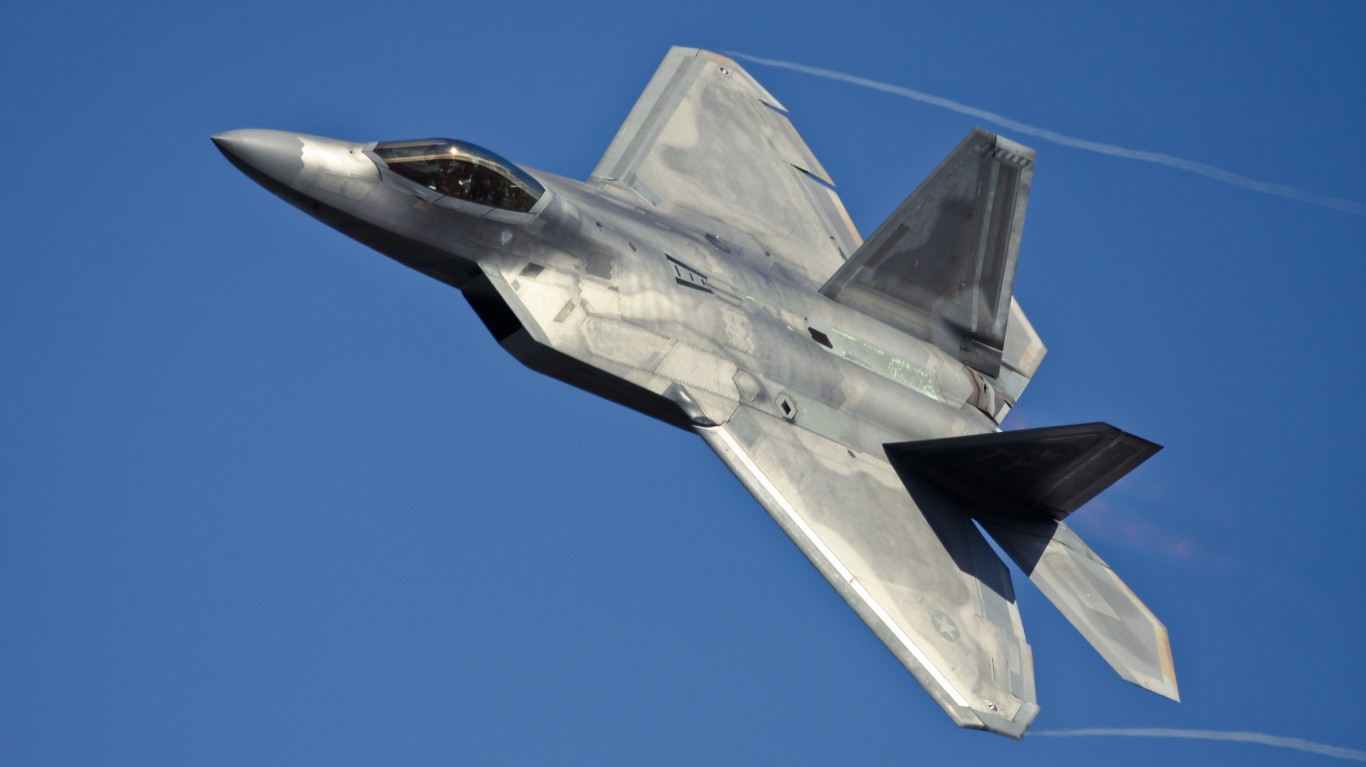
Defense Stocks Fall While Oil Slides on Hormuz Reopening Report: Lockheed Martin and RTX Drop 3%, Boeing Dips
A Reuters report on Iran's Hormuz offer sent defense primes tumbling Tuesday morning, but the selloff in Lockheed Martin and RTX started long before today's headline, raising a harder question about what the market is actually pricing in.

Aerospace and defense shares are trading lower Tuesday morning after a Reuters report that Iran has offered to reopen the Strait of Hormuz within seven days if the U.S. takes initial steps toward easing military pressure. Crude oil is falling for a fourth session alongside the diplomatic signal, which suggests the market is compressing the geopolitical risk premium that had underpinned expectations for sustained munitions demand across allied buyers.
The iShares U.S. Aerospace & Defense ETF (NYSEARCA:ITA) is at $213.40, down 1% and pulling the sector benchmark lower on the day. At the same time, the SPDR S&P 500 ETF Trust (NYSEARCA:SPY) is at $773.53 and is practically unchanged in Tuesday morning trading, so the selling is concentrated in defense primes rather than in the wider tape.
Lockheed Martin (NYSE:LMT | LMT Price Prediction) stock is at $521.05, down 3% in Tuesday morning trading, the sharpest same-day drop among the primes and the clearest single-name expression of the sentiment shift. Meanwhile, RTX (NYSE:RTX) stock is at $189.40, down 3%, moving in near-lockstep with Lockheed Martin on the same de-escalation read. Boeing (NYSE:BA) stock is at $198.61, down 1%, tracking the group only loosely because its revenue mix leans toward commercial aircraft rather than munitions.
Hormuz Report Compresses the Risk Premium
WTI crude oil trades at $91.64 per barrel, down 0.79% over the past 24 hours. The Reuters report on Iran’s Hormuz offer is the only verified same-day development bearing on the defense group, with no fresh company-specific news at Lockheed Martin, RTX or Boeing confirmed for this session. A diplomatic thaw that eases the tanker chokepoint would soften the case for the emergency-purchase piece of allied munitions demand that has supported prime-sector multiples this year.
Crude oil sliding for a fourth session reinforces that reading, because the same de-escalation trade is playing out in the commodity market alongside the defense selloff. That doesn’t erase the order books already sitting at Lockheed Martin, RTX or Boeing.
Lockheed Martin Stock Carries Its Own Loss
Lockheed Martin stock is down 7% over the past month, which means today’s slide extends a decline that began well before this morning’s Hormuz headline hit the wire. That timing matters because it makes this session the continuation of a de-rating rather than a one-day reaction, and it complicates any tidy causal read where a single report drove the whole move.

The bull case for Lockheed Martin rests on contracted backlog, which converts to revenue on multi-year schedules and doesn’t cancel on a diplomatic development. A bear case is that the market is repricing how long elevated munitions demand can persist, and Lockheed Martin sits at the center of that debate because of its exposure to interceptor and missile-defense programs that had been priced for extended tension in the Gulf.
Boeing Is the Useful Contrast
Boeing’s smaller decline reflects a business weighted toward commercial aircraft rather than munitions, and that mix is what separates Boeing from Lockheed Martin and RTX on a day driven by conflict expectations. Shares of Boeing are still lower, but the gap between a 1% dip and losses closer to 3% is the market drawing that mix distinction in real time.
RTX stock is down 10% over the past month, an even steeper one-month slide than Lockheed Martin’s. That figure argues the de-rating in the pure-play defense names predates today’s report, and Tuesday’s Hormuz story is the accelerant rather than the ignition for a trade that has been building for weeks.
What to Watch Next
Traders can watch whether the Hormuz timeline holds up over the next several sessions, since a stalled or reversed offer would take pressure off the risk premium compression that drove today’s selling. Any confirmation or denial from Washington could land directly on the same defense and crude trade that moved this morning.
Shareholders may want to keep an eye on whether ITA breaks its recent range, since the fund is the cleanest read on how the sector is digesting the diplomatic story. Investors should size their exposure to defense primes, including Lockheed Martin, with awareness that headline volatility can outrun order-book fundamentals in both directions, which argues for measured positioning rather than chasing either the fear trade or the relief trade.
Contact [email protected] for any questions or corrections.
David Moadel is financial writer specializing in stocks, ETFs, options, precious metals, and Bitcoin. David has written well over 1,000 articles for leading online publications, helping investors understand markets, income strategies, and risk.His work has appeared in The Motley Fool, InvestorPlace, U.S. News & World Report, TipRanks, ValueWalk, Benzinga, Market Realist, TalkMarkets, Finmasters, 24/7 Wall St., and others.With a master’s degree in education, David has taught at the elementary, high school, and college levels. That teaching background shapes his writing style: clear, educational, and practical. David has also built a loyal social-media audience by providing trustworthy financial content on YouTube, X/Twitter, and StockTwits.