3 Stocks to Buy Before the End of September
The biggest profits in AI infrastructure hide in three chokepoints that most investors walk right past, and two of them are priced as if the boom is already over.


The AI trade runs on a supply chain, and the tightest links in that chain tend to capture the most pricing power. Three of those chokepoints sit outside the GPU spotlight: custom silicon and networking, memory and the electricity that keeps data centers running.
Each of Broadcom (NASDAQ:AVGO | AVGO Price Prediction), Micron Technology (NASDAQ:MU) and Constellation Energy (NASDAQ:CEG) controls one of them. Two of the three trade as if the market still doubts how long that demand lasts. Below is the case for each, plus the one risk that could break it.
Number 1: Broadcom
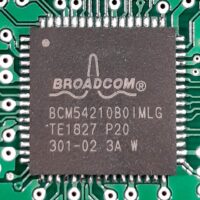
As of midday on Monday, Sept. 28, Broadcom shares were up just 0.43% year to date (YTD), while the business is compounding at a pace few megacaps have ever sustained. Fiscal third-quarter revenue reached $29.59 billion, up 85.5% year over year (YoY), and AI semiconductor revenue hit $16.7 billion, up 221%. The stock closed at $352.81, below the $371.27 it fetched on the day of that report.
The anchor is management’s multiyear AI roadmap. Broadcom guided fiscal 2026 AI revenue to $58 billion, fiscal 2027 to approximately $115 billion, and fiscal 2028 AI semiconductor revenue to $230 billion. Hock Tan added, “Our demand actually exceeds this outlook and we will work to improve supply.”
In plain terms, AI labs and hyperscalers want chips designed around their own models, and Broadcom makes them. Tan said Anthropic is “on track to become our largest XPU customer in 2027”, and fourth-quarter guidance calls for revenue of ~$34.8 billion (+93% YoY). If those shipments land on schedule, the gap between flat share performance and near-doubling revenue should narrow.
The risk: the forecast depends on customers finishing entire data centers. Tan called it “a multidimensional issue to get an AI data center deployed,” mentioning land, power, and shells. Anthropic and OpenAI also rely on third-party financing, with a first $35 billion tranche closed in June. If that capital tightens, the 2027 and 2028 targets slip. The next checkpoint is the fiscal fourth-quarter report on Dec. 9.

Number 2: Micron Technology
Micron is the pick where Wall Street has partially caught on, with shares up more than 230% YTD. The argument is that estimates still trail reality. Fiscal third-quarter revenue of $41.46 billion beat the $35.25 billion consensus by 17.6% and non-GAAP EPS of $25.11 vs. $20.28 estimate marked seven straight beats. GAAP gross margin expanded to 84.6% vs 37.7% a year earlier.
The CapEx commitment tells you how durable management thinks this is. Fiscal 2026 capital spending is projected at approximately $27 billion, with fiscal fourth-quarter capex around $10 billion and fiscal 2027 quarterly spending expected above fiscal Q4 levels. That expansion is backed by 16 Strategic Customer Agreements structured as take-or-pay contracts, carrying RPO of approximately $100 billion.
Memory used to trade like a spot commodity. Multiyear contracts with price floors make the earnings stream more predictable, and management expects tight conditions to remain beyond calendar 2027. Fiscal fourth-quarter guidance calls for $50 billion ±$1.0 billion in revenue and non-GAAP EPS of $31.00 ± $1.
The risk: Memory cycles have historically been severe after peaks, and Micron is putting record capital near what could be one. The fourth-quarter margin outlook already reflects a meaningful moderation in the rate of price increases. That report is expected near the end of September, though the company has not confirmed a date.

Number 3: Constellation Energy
Constellation is the contrarian leg. Shares are down 29.33% YTD, even after full-year 2026 adjusted operating EPS guidance was raised to $11.50 to $12.50 from $11 to $12. Second-quarter adjusted EPS of $2.55 vs. $2.33 estimate beat expectations.
The anchor is contracted demand from AI’s biggest spenders. Constellation holds long-term power agreements with Microsoft (NASDAQ:MSFT) and Meta (NASDAQ:META), including a 20-year Microsoft PPA supporting the Crane restart, now aiming 2027. Last quarter it signed about 920 megawatts of new nuclear agreements averaging 18 and a half years.
Existing reactors are the fastest source of clean, around-the-clock power, and the Department of Energy projects data centers could reach up to 12 percent of U.S. electrical demand by 2028. PJM’s 2028/2029 capacity auction cleared at $325/MW-day, and about $2.8 billion remains under the buyback authorization to capitalize on the discount. All of that expansion still has to be powered and cooled by somebody, which is why we pulled together seven suppliers doing exactly that in a free AI infrastructure report.
The risk: Regulation. Management expects PJM co-location clarity only in the first to second quarter of 2027, the Illinois ZEC program ends May 2027, and long-term debt stands at $17.5 billion after Calpine. Revenue of $7.5 billion also missed the $7.7 billion estimate, a reminder that integration noise can cloud results.

Three Catalysts Worth Tracking Into Year-End
- Micron’s fiscal fourth-quarter report: A result near the $50.0 billion guide would confirm the contract-backed model.
- PJM decisions: Management expects a PJM response around November and Dominguez said deal flow could then “kick off with a bit of a bang.”
- Broadcom’s December update: Q4 AI revenue guided at $21.7 billion is the next proof point for the 2027 roadmap.
If all three chokepoints stay tight, pricing power stays with the suppliers. Investors should position around that pattern before the market fully prices it.
Contact [email protected] for any questions or corrections.
Joel South covers large-cap stocks, dividend investing, and major market trends, with a focus on earnings analysis, valuation, and turning complex data into actionable insights for investors.
He brings more than 15 years of experience as an investor and financial journalist, including 12 years at The Motley Fool, where he served as an investment analyst, Bureau Chief, and later led the Fool.com investing news desk. He has also co-hosted an investing podcast and appeared across TV and radio discussing market trends.