3 Stocks to Buy Now Before Wall Street Catches On
The AI infrastructure trade has quietly shifted away from chips toward two scarce resources that hyperscalers cannot conjure fast enough, and three under-the-radar companies control the chokepoints.

This post may contain links from our sponsors and affiliates, and Flywheel Publishing may receive compensation for actions taken through them.

The AI trade has changed. The scarce resources now are megawatts on the grid and silicon that connects accelerators together inside a rack. Hyperscaler CapEx plans clash with interconnection queues, refueling schedules, and substrate supply. That gives a specific set of infrastructure names real pricing power, and Wall Street is still catching up to the plumbing.
Three companies sit at that chokepoint. Two sell electrons into the tightest power markets in the country. The third supplies custom accelerators and optics to hyperscalers.
Vistra: The Hedged Power Bill Behind PJM and ERCOT

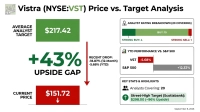
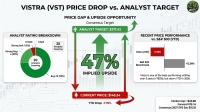
Vistra (NYSE:VST | VST Price Prediction) traded around $137.17 on Sept. 28, down nearly 31% over the past year despite strengthening operations. Q2 FY2026 Ongoing Operations Adjusted EBITDA grew more than 30% YoY to $1.77 billion, with Texas generation more than doubling to $311 million and East jumping to $642 million from $418 million. The GAAP line was pulled down by $472 million unrealized mark-to-market derivative losses, a bookkeeping artifact of an aggressively hedged book.
What makes this bullish is the shape of the forward book. Vistra has roughly 100% of 2026 generation hedged, 94% for 2027, and 72% for 2028, and it confirmed 2026 Ongoing Operations Adjusted EBITDA guidance of $6.8B to $7.6B. On top of that sits the pending 5,500-MW Cogentrix Energy acquisition and Helix Digital Infrastructure, the platform Vistra formed with NVIDIA, KKR, and the Kuwait Investment Authority, where Vistra is the preferred power partner and has committed “up to $1 billion to be invested over time”. On the Q2 call, Jim Burke described Helix as “an additive proposition for Vistra” that combines rack-to-grid solutions for hyperscalers.
The risk: the hedge book drives noisy GAAP prints, and softer ERCOT wholesale prices, set at $30 per megawatt hour year to date, pressure the 2027 setup before Cogentrix closes.
Constellation Energy: The Only Scaled Clean and Firm Baseload

Constellation Energy (NASDAQ:CEG) traded around $258.74 on Sept. 28, off more than 29% year to date. Q2 FY2026 adjusted non-GAAP EPS came in at $2.55, beating the $2.33 consensus by 9.52%, exceeding expectations. The nuclear fleet produced 44,160 GWh at a 93% capacity factor despite 86 outage days versus 41 the prior year. Management raised full-year 2026 adjusted operating earnings guidance to $11.50 to $12.50 per share.
What makes Constellation attractive is how it pairs the largest private nuclear fleet with Calpine’s efficient gas fleet, giving hyperscalers clean and firm baseload at scale. The company signed roughly 920 MW of long-term nuclear PPAs with investment-grade counterparties (an 18 and a half year average duration). PJM capacity prices reset dramatically higher, with the 2028/29 auction clearing at $325/MW-day. Joe Dominguez framed the grid problem: “We have a peak capacity concern, not an energy concern.”
The risk: Illinois. The state’s ZEC program ends in May 2027, and combined with pending PJM co-location rulemaking, that creates a policy overhang the market is pricing today. The broader nuclear restart trade extends well past Constellation, and we mapped five ways to play it in a free report on the coming nuclear renaissance.
Marvell Technology: Custom Silicon and the Optical Layer

Marvell Technology (NASDAQ:MRVL) closed at $252.60 on Sept. 28, up nearly 183% year to date. Q2 FY2027 delivered record revenue of $2.739 billion, with data center revenue of $2.17 billion, up 46% year over year and now 79% of total revenue. Non-GAAP operating margin expanded to 36.6%. Q3 revenue guidance came in at $3.15 billion at the midpoint, more than 50% year-over-year growth, and full-year FY2028 revenue outlook was raised to approximately 50% year-over-year growth.
The confirmed hyperscaler presence is what makes this bullish. Marvell’s expanded commercial agreement with Google covers inference accelerators, storage controllers, NICs, and memory-interface controllers, with a warrant allowing Google to acquire up to 7% of Marvell shares tied to revenue milestones. Management said the deal “greatly increases the revenue opportunity for us in custom.” On the optical side, scale-up optics next year is “much larger than we thought just a quarter ago,” and the 51.2T Ethernet switching business is on track to more than double this year.
The risk: Concentration. A few of customers drive the data-center segment, and hyperscalers can, in principle, in-house more of the design work over time. Advanced wafer and substrate supply is also tight, which is why capacity prepayments will hit roughly $1 billion this fiscal year.
What to Watch Next
The next catalysts are concrete: Constellation’s PJM co-location filing expected in the first to second quarter of 2027, the Cogentrix close date for Vistra and Marvell’s Investor Day. Each event tightens or loosens one specific chokepoint.
Contact [email protected] for any questions or corrections.
Joel South covers large-cap stocks, dividend investing, and major market trends, with a focus on earnings analysis, valuation, and turning complex data into actionable insights for investors.
He brings more than 15 years of experience as an investor and financial journalist, including 12 years at The Motley Fool, where he served as an investment analyst, Bureau Chief, and later led the Fool.com investing news desk. He has also co-hosted an investing podcast and appeared across TV and radio discussing market trends.