6 High-Yield Dividends at Risk of a Cut After Asset Sales Dry Up
Selling assets can keep a dividend alive for a while, but every sale shrinks the pool of what remains. These six companies have been leaning on divestitures to fund their payouts, and the list of things left to sell is…

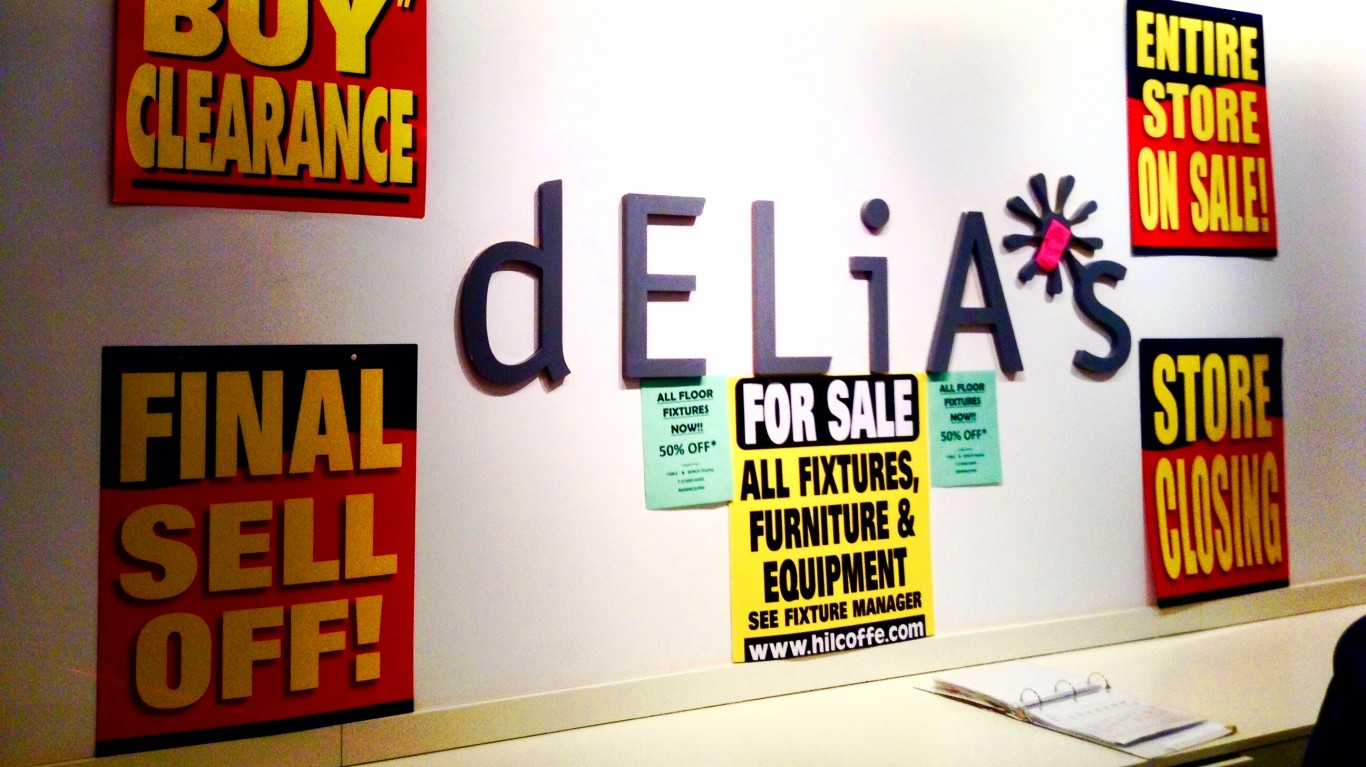
A company can sustain a dividend by selling pieces of itself, but each sale reduces what remains. Whirlpool (NYSE:WHR | WHR Price Prediction) paid $0.90 per common share in Q1 2026 and declared $0 in Q2 2026. A high yield is only as good as the company’s ability to keep paying it, and for the five names below, divestitures and stake sales have been doing some of that work.
Quick test: A dividend is unsustainable when recurring cash flow fails to cover it and the gap gets filled with debt, new shares or asset sales. Asset sales are finite, so a payout leaning on them has limited room. (A free report here lays out seven warning signs a big yield is about to be cut: Dividend Traps.)
Icahn Enterprises (IEP)
Meanwhile, Icahn Enterprises (NASDAQ:IEP) pays a $0.50 quarterly distribution per depositary unit against a unit price of $6.87. That payout looks enormous next to the price, and the price is part of the reason: units are down 61.88% over five years.
IEP is a limited partnership, so the right gauges are distributable cash and indicative net asset value. NAV fell $765 million in Q2 2026 to roughly $2.60 billion, down from approximately $3.37 billion in Q1. Cash dropped 67.74% year over year to $1.221 billion, and adjusted EBITDA turned to a loss of $134 million from positive $40 million. The distribution defaults to additional units unless holders elect cash, which preserves cash by issuing equity.
What is left to sell: Icahn Automotive agreed to sell Pep Boys for $700 million. Remaining disclosed holdings include CVR Energy, CVR Partners, Viskase, WestPoint Home and Vivus, set against $4,664 million of holding-company debt at Q4 2025. Carl Icahn said “My optimism is also buoyed by our liquidity position.” For the payout to hold, CVR’s value has to recover, the hedge book has to stop bleeding and the Pep Boys deal has to close.
Whirlpool (WHR)
Whirlpool shows what a trap looks like after it springs. Shares sit at $32.26, down 54.69% year to date. Any trailing-yield screen that still counts the Q1 payment makes the stock look like an income bargain. Yet no common dividend was declared in Q2.
The company agreed to sell its remaining 25% stake in Beko to Arcelik for $84 million net cash, taking a roughly 2.9% equity stake in Arcelik. That is dwarfed by $2.0 billion in new secured bonds and a $2.0 billion asset-based lending facility that lift 2026 interest expense to about $350 million. Ongoing EPS of -$0.21 missed the $0.05 consensus.
What is left to sell: the Arcelik stake and a brand portfolio that includes KitchenAid, JennAir, Maytag and InSinkErator. A restored payout would need free cash flow above the $300 million guide and net debt below the $5.0 billion target.
VF Corp (VFC)
VF Corp (NYSE:VFC) pays $0.09 per quarter on shares trading near $14.40, down 75.17% over five years.
VF sold Dickies to Bluestar Alliance for $600 million, booking a pre-tax gain of roughly $127.2 million. Net debt fell $1.1 billion, or 20%. The dividend kept flowing in Q1 FY27. Operating cash flow was -$62.5 million, and a consulting-fee liability of up to $146 million is tied to the stock price.
What is left to sell: The North Face ($590.9 million, +6%), Vans ($459.8 million, -8%), Timberland, plus Smartwool, Icebreaker, Napapijri, JanSport, Kipling and Eastpak. To hold, free cash flow must stay flat to up versus FY26’s $405 million and Vans wholesale must steady.
Newell Brands (NWL)
Newell Brands (NASDAQ:NWL) pays $0.07 per quarter at a stock price of $5.44. The stock is up 53.24% year to date but down 83.97% over ten years, and the dividend was already cut once.
Newell has spent years selling brands to reduce debt. Yet gross debt is still approximately $5.0 billion, with $321 million of 2025 interest expense against $264 million of operating cash flow. In Q1 2026, operating cash flow was -$233 million. The Q2 beat leaned on $126 million of pretax tariff refunds, worth roughly $0.21 per share, a windfall that will not repeat.
What is left to sell: Home and Commercial Solutions ($903 million of Q2 revenue), Learning and Development ($851 million) and Outdoor and Recreation ($240 million). The around $400 million cash flow guide assumes substantially all tariff refunds arrive.
Pitney Bowes (PBI)
Pitney Bowes (NYSE:PBI) pays $0.10 per quarter. Shares are up 54.97% year to date to $16.38, so the yield has contracted as the price rose.
Cash coverage looks solid: Q2 free cash flow hit $148.1 million, and the full-year guide is $360 million to $410 million. The warning shows up in the financials, where shareholders’ equity is negative $863 million. A Strategic Review Committee is exploring divestitures, partnerships and potential sale of the company.
What is left to sell: PB Bank, scheduled to be reported as its own segment, Presort ($142.6 million, -5%) and SendTech ($308.9 million, -1%). The payout holds if cash flow survives the loss of a $5 million tariff refund and ongoing mail declines.
Yield Alone Is Never a Buy Thesis
When a dividend gets cut, the stock usually falls with it. Each company here has a finite list of saleable assets and a clear set of things that must go right. Track operating cash flow against the payout, and treat every divestiture as time purchased rather than a permanent fix.
Contact [email protected] for any questions or corrections.
Chris Lange is a financial and geopolitical writer with more than a decade of experience covering a myriad of topics. He has published thousands of articles for 24/7 Wall St., with past coverage focused heavily on stocks, IPOs, healthcare, defense, global affairs, and technology.
His work has been quoted, or referenced by a number of outlets including Business Insider, USA Today, Yahoo Finance, MSN, The Motley Fool, and many other publications. A graduate of Southwestern University, he studied business with a focus on investments and has previous experience in banking and startups.
When not reading or writing the news, he is following his passion for Lacrosse, playing chess, or building solar projects with his dad.