AMD at 4 Milestones: Total Return From the Intel Settlement to the $1 Trillion Club
AMD just hit a $1 trillion market cap, but the real story lives in the four moments before it got there. Each entry point produced a wildly different outcome, and the gaps reveal something most milestone headlines bury.

This post may contain links from our sponsors and affiliates, and Flywheel Publishing may receive compensation for actions taken through them.

Advanced Micro Devices (NASDAQ:AMD | AMD Price Prediction) reached a $1 trillion market value for the first time on September 21, 2026. On Monday, it also agreed to acquire Fei-Fei Li’s World Labs. For long-horizon investors, the better question is what each major entry point actually paid. We tracked four, and the gaps between them explain the stock.
Settling With Intel Left AMD Fighting for Survival
On November 12, 2009, AMD settled its long legal fight with Intel (NASDAQ:INTC), the leading PC processor maker. Even so, AMD spent the early 2010s as a near-bankruptcy candidate.
- Adjusted price, November 12, 2009: $6.48
- Close, September 28, 2026: $607.87
- Total return: 9,280.71%
Lisa Su’s First Day Was the Best Entry of All
Lisa Su became chief executive on October 8, 2014. The turnaround fits in one comparison: shares cost $3.28 that day, lower than the $6.48 price after the Intel settlement five years earlier.
- Adjusted price, October 8, 2014: $3.28
- Close, September 28, 2026: $607.87
- Total return: 18,432.62%
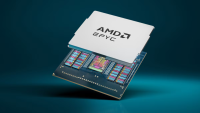
Su’s plan centered on the Zen architecture. Ryzen PC chips and EPYC server chips launched in 2017 and began taking share from Intel. Buying in 2014 meant supporting a company many investors had written off, and nobody knew then that it would work.
Xilinx Buyers Still Won, With Far Less Room to Run
On February 14, 2022, AMD closed its purchase of Xilinx, a maker of programmable chips for embedded and adaptive computing.
- Adjusted price, February 14, 2022: $114.27
- Close, September 28, 2026: $607.87
- Total return: 431.96%
AI drove most of that gain. Instinct GPUs made AMD the credible number two to Nvidia (NASDAQ:NVDA), and Data Center revenue hit $6.72 billion in Q2 2026, up 107% year-over-year and representing 58% of revenue. Still, each later milestone bought a sharply smaller payoff. (We reverse-engineered what the earliest buyers of the biggest tech winners actually saw, and summarized the pattern in a free playbook here.) On standard windows, AMD returned 284.58% over one year, 511.11% over five and 8,774.82% over ten.
Trillion-Dollar Buyers Are Already Underwater
Shares priced at $615.52 on the day CNBC reported the September 21, 2026, milestone and closed at $607.87 on September 28, a 1.24% loss. Premarket trading at $613.25 still leaves that buyer behind.
At this price, the upside depends on Helios racks ramping on schedule and OpenAI and Anthropic turning gigawatt commitments into revenue. Su says Helios demand is “tracking ahead of our initial forecasts,” and Q3 guidance calls for about $13 billion in revenue.
The risk case builds if any stumble appears. Shares trade near 162 times trailing earnings and 40 times forward estimates, while China export controls, Nvidia’s CUDA lead, and a 31% Gaming decline remain live risks.


The setup favors patience. The 2014 buyer paid for an uncertain turnaround. Today’s buyer pays full price for a proven turnaround, and milestone headlines tend to arrive after most of the gains have been made.
Contact [email protected] for any questions or corrections.
Trey has been an editor and author at 24/7 Wall St. for more than a decade, where he has published thousands of articles analyzing corporate earnings, dividend stocks, short interest, insider buying, private equity, and market trends. His comprehensive coverage spans the full spectrum of financial markets, from blue-chip stalwarts to emerging growth companies.
Beyond 24/7 Wall St., Trey has created and edited financial content for Benzinga and AOL's BloggingStocks, contributing additional hundreds of articles to the investment community.
Trey's editorial expertise extends across multiple publishing environments. He served as production editor at Dearborn Financial Publishing and development editor at Kaplan, where he helped shape financial education materials. Earlier in his career, he worked as a writer-producer at SVE. His freelance editing portfolio includes work for prestigious clients such as Sage Publications, Rand McNally, the Institute for Supply Management, the American Library Association, Eggplant Literary Productions, and Spiegel.
Outside of financial journalism, Trey writes fiction and has been an active member of the writing community for years, moderating workshop sessions at regional conventions.