Muse Got Here First But This Agentic AI Will Supercede It Soon
Meta launched its agentic AI model before Google did, yet one structural advantage in Google's stack could quietly erase that head start before Meta ever collects a dollar from enterprise customers.


Meta (NASDAQ:META | META Price Prediction) and Google (NASDAQ:GOOGL) both reported Q2 results in late July, each promoting agentic AI to investors. Meta deployed Muse Spark 1.1 across WhatsApp, AI glasses, and business agents. Google responded with Gemini at scale Meta has yet to match. Meta shares fell today on AI spending concerns, making this comparison timely.
Cloud Carries Google While One-Time Charges Dent Meta
Google’s revenue rose 24.23% to $119.80 billion. Google Cloud grew 82%, signaling real AI workload adoption. Sundar Pichai noted “wide adoption of Gemini Enterprise, with nearly 90% of the Fortune 100 using it.” EPS of $9.11 includes a $99.03 billion gain from unsold equity investments.
Meta grew revenue 27.96%, but EPS of $6.18 missed the $7.22 estimate. Legal charges of $2.4 billion and $1.2 billion in severance cut operating margin to 31% from 43%. Excluding those charges, operating income would have grown 9%. More than 1 million businesses use Meta’s business agents weekly.
| Business Driver | Meta | |
|---|---|---|
| Consumer Reach | 950 million Gemini App monthly users | 3.60 billion daily active people |
| Enterprise Proof | Gemini Enterprise inside Fortune 100 firms | Business agents on WhatsApp and Messenger |
| Q2 Free Cash Flow | -$5.86 billion | $784 million |
Gemini Owns the Phone While Muse Lives in Chat Apps
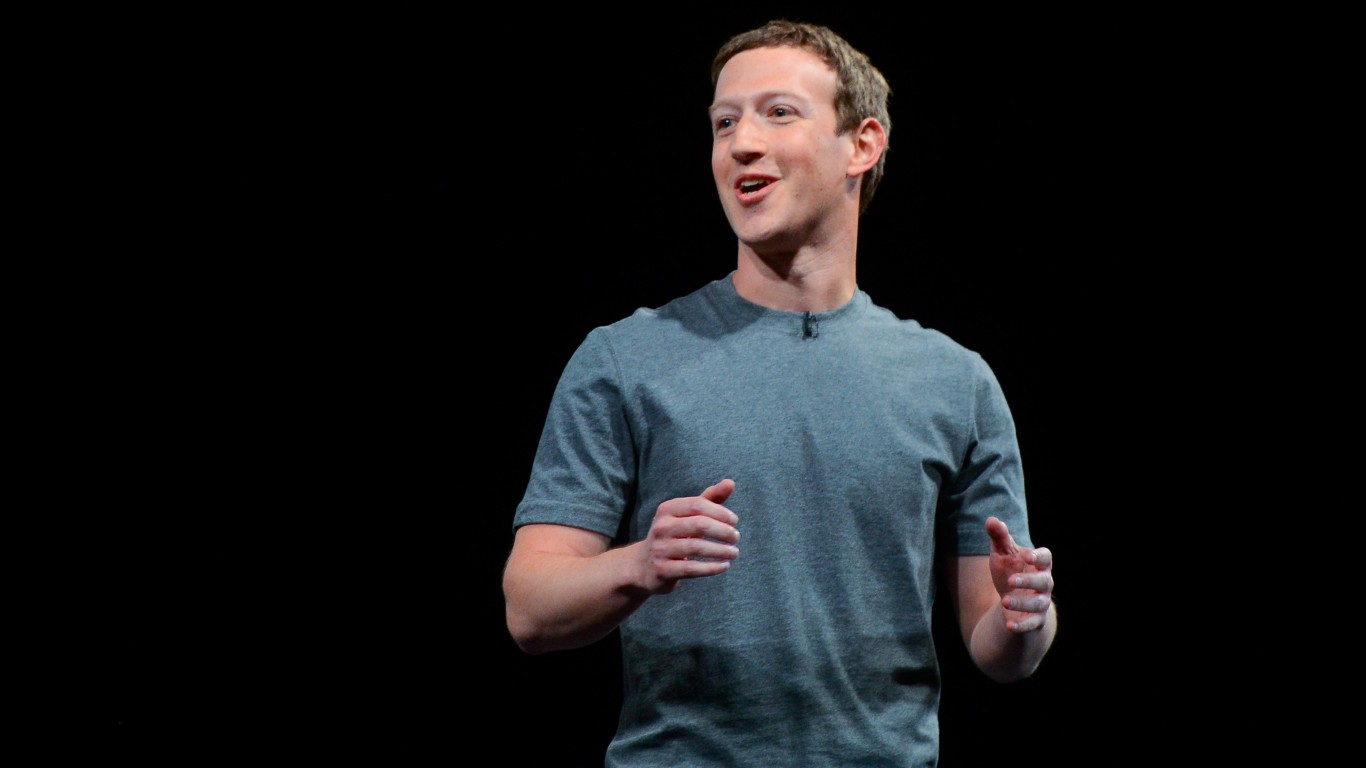
Muse reached consumers first through WhatsApp and Ray-Ban glasses. Zuckerberg called it “a strong agentic encoding model that is very efficient and excels at computer use, tool use, and multimodal understanding.”
Gemini has the structural edge. Google is phasing out Google Assistant, with Gemini’s agent taking over at the OS level across Android, Maps, Gmail and Google Pay. An agent built into the phone requires fewer transfers than one in a chat window. Meta’s advantage is reach: “agents that just work out of the box” for billions of users.
Cash Burn Will Decide Who Keeps Building Agents
Google spent $44.92 billion on capex and raised debt to $98.2 billion from $46.5 billion. Meta guided 2026 capex to $130 to $145 billion (all of that has to be powered, cooled, and connected by somebody, and we covered seven of those suppliers in a free AI infrastructure report). Watch whether Meta’s subscriptions and compute sales offset that spending. Meta fell 4.79% Monday.
Why I Lean Toward Google’s Gemini Stack
Both trade at similar forward multiples: about 23 for Google and 22 for Meta. Google’s Cloud backlog exceeded $460 billion, so paying customers are lined up for its spending. Meta’s ad revenue rose 27%, but enterprise agents are early and legal charges remain. Gemini looks more likely to pass Muse.
Contact [email protected] for any questions or corrections.
Alex Sirois is a financial writer with experience spanning both retail and institutional investing. He has written for InvestorPlace and held roles at BNY Mellon and Bernstein, giving him a perspective that bridges Main Street portfolios and Wall Street analysis.
Alex holds an MBA from George Washington University and has built his career across multiple industries, including e-commerce, education, and translation — a breadth of experience that informs how he breaks down complex financial topics for everyday investors. His writing is conversational, actionable, and grounded in long-term, buy-and-hold investing principles.
At 247 Wall St., Alex focuses on delivering analysis that is both accessible and useful, with a clear emphasis on helping readers make more informed decisions with their money.