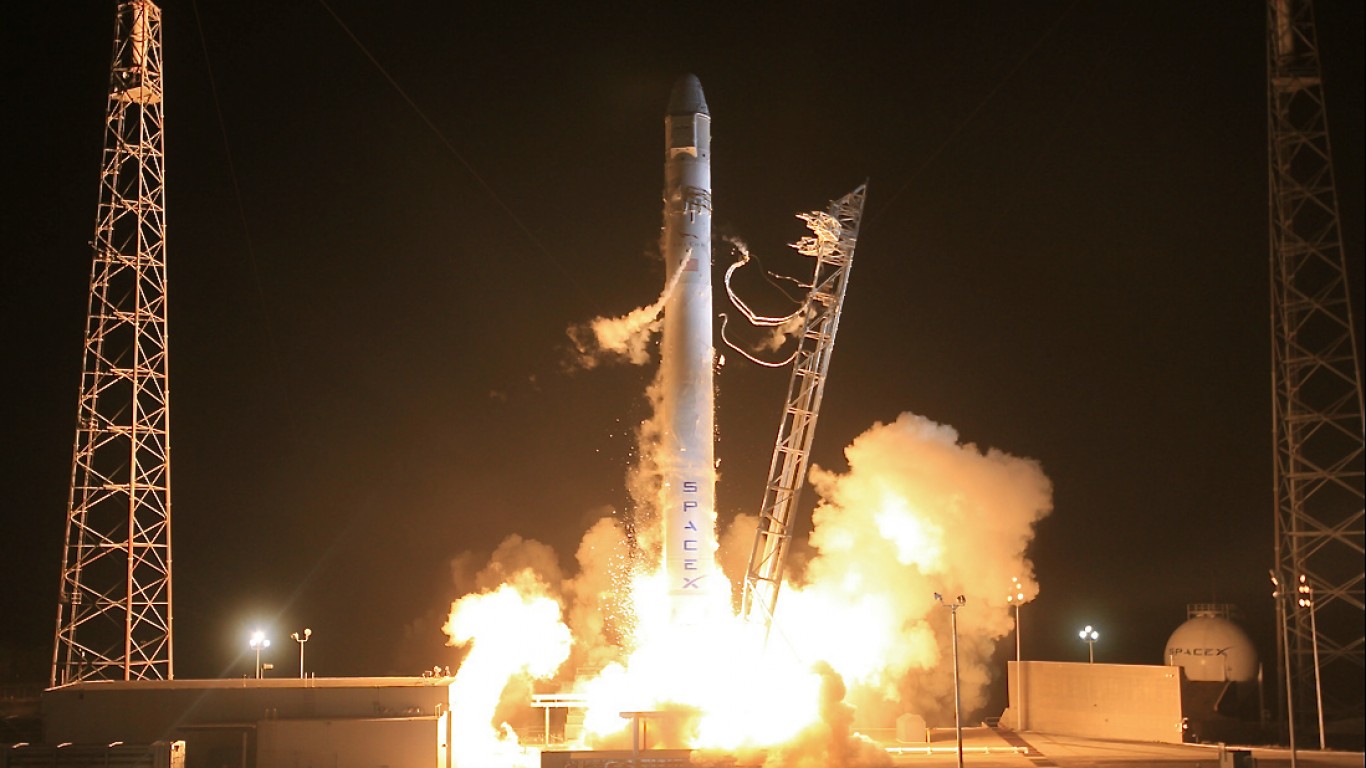
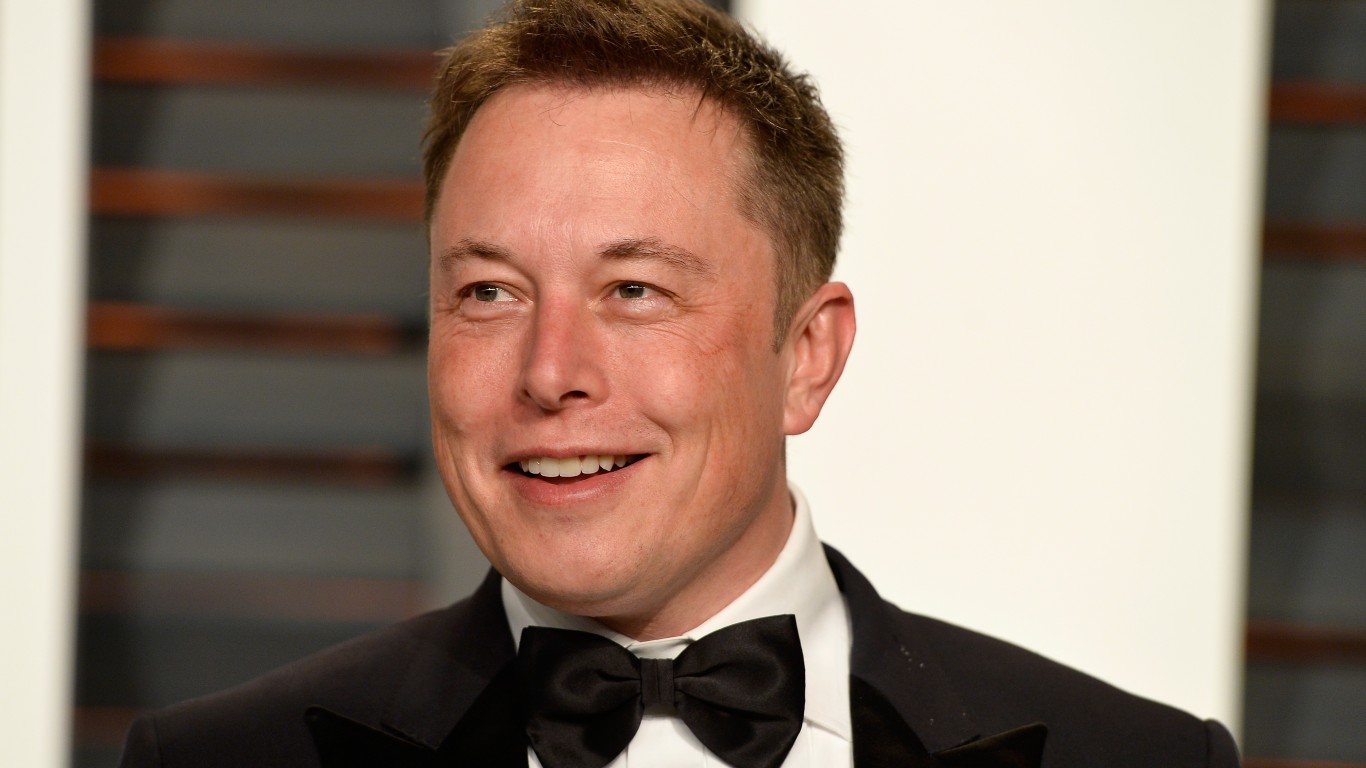
Musk: “First Orbital Flight Successful” as SpaceX’s Starship Reaches Orbit on Flight 14
SpaceX's Starship just cleared a milestone that directly funds its most profitable business, but the flight also exposed how much the company still needs to prove before investors can trust its biggest numbers.

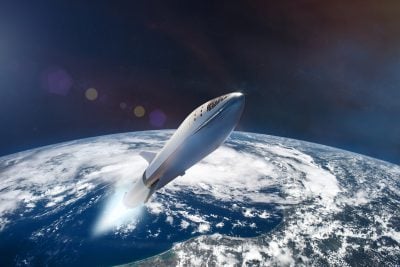
“First orbital flight of Starship successful!” Elon Musk posted on September 28, 2026, after the launch he designated Flight 14 reached orbit on its first orbital attempt and released a batch of next-generation Starlink satellites. For SpaceX (NASDAQ:SPCX | SPCX Price Prediction), which began trading on Nasdaq in June 2026, the flight moves its most expensive development program closer to its biggest paying business.
Investors reacted modestly. Shares traded at $146.88 Tuesday morning, up 0.97% on the session, while still down 3.27% over the past week and 8.74% below the $160.95 close on June 12. The company carries a market value of roughly $1.13 trillion. Retail attention spiked: a single r/wallstreetbets thread drew 1620 upvotes and 927 comments by 9 p.m. ET Monday.

What Musk Actually Posted on Launch Day
Musk described the mission on his X account. At 8:14 a.m. ET he wrote “Starship Flight 14 launches in ~30 mins”, according to SpaceX. Shortly after 10 a.m. ET he declared the orbital flight a success, then added “All 26 Starlink V3 operational satellites deployed and operating nominally”, confirming that Elon Musk counted 26 V3 units working in orbit.
He also amplified SpaceX’s own framing that the company is building “the infrastructure of the future, from supercomputers to Terafab to Gigasat to a new Starbase in Louisiana.” That list covers all three segments: Space, Connectivity (Starlink and Starshield) and AI (cloud compute, Grok and X).
Why Starlink Investors Should Care Most
Here is the mechanism. Bigger, more capable satellites need a bigger rocket. On the August earnings call, Musk said “The Starlink V3 satellite is about an order of magnitude more capable than the Starlink V2 satellite.” More capacity per satellite means more bandwidth to sell to households, airlines, ships and governments without a matching rise in launches.
Connectivity already carries the company. According to the Q2 2026 earnings release filed with the SEC, Connectivity revenue reached $4.29 billion, up 66% year over year, with Enterprise and Government up 108%, according to SpaceX. Starlink has over 12 million subscribers, though ARPU slipped from $85 to $66 as cheaper plans pulled in new users. Extra V3 capacity gives SpaceX room to keep adding subscribers while pushing higher-value enterprise contracts.
Management said a meaningful service upgrade requires about 1,000 V3 satellites, a threshold it expects around the second quarter of next year.
What Flight 14 Proved and What Remains Unproven, according to SpaceX
Proven: Starship reached orbit and deployed a working V3 payload. Still unproven: catching the ship, reflying it quickly and doing so repeatedly. Musk said in August that SpaceX would attempt a tower catch of the ship on the next flight, subject to regulatory approval, and claimed “We do not see any technical obstacles at this point to achieving full and rapid reusability.” That remains a forecast.
Costs remain heavy. Space segment adjusted EBITDA was a loss of $205 million on Starship R&D. Quarterly capex hit $18.37 billion, with $15.83 billion going to AI compute, and management guided the next two quarters to similar levels. Filings can be tracked on SpaceX’s investor relations site.
Does Flight 14 Change the SPCX Story, according to SpaceX?
Yes, for Connectivity. An orbital Starship carrying V3 satellites is the delivery system for Starlink’s next capacity jump, and Starlink already has the paying base to monetize it. Near-term valuation still leans on AI compute, which drew most of the capex, so one flight alone is unlikely to re-rate the whole stock.

The trigger to keep an eye on: SpaceX said it planned to attempt catching both Starship stages this year. A successful ship catch before December 31, 2026 would prove the reuse economics, according to SpaceX. A slip into 2027 would signal the 1,000-satellite V3 target is at risk too.
Contact [email protected] for any questions or corrections.
Chris Lange is a financial and geopolitical writer with more than a decade of experience covering a myriad of topics. He has published thousands of articles for 24/7 Wall St., with past coverage focused heavily on stocks, IPOs, healthcare, defense, global affairs, and technology.
His work has been quoted, or referenced by a number of outlets including Business Insider, USA Today, Yahoo Finance, MSN, The Motley Fool, and many other publications. A graduate of Southwestern University, he studied business with a focus on investments and has previous experience in banking and startups.
When not reading or writing the news, he is following his passion for Lacrosse, playing chess, or building solar projects with his dad.