SpaceX Flew the Most Powerful Rocket Ever Built and the Stock Fell Anyway
Starship pulled off one of the most ambitious orbital missions in history on Monday morning, and investors sold the stock anyway. The reason says something important about how Wall Street actually prices a company worth over a trillion dollars.


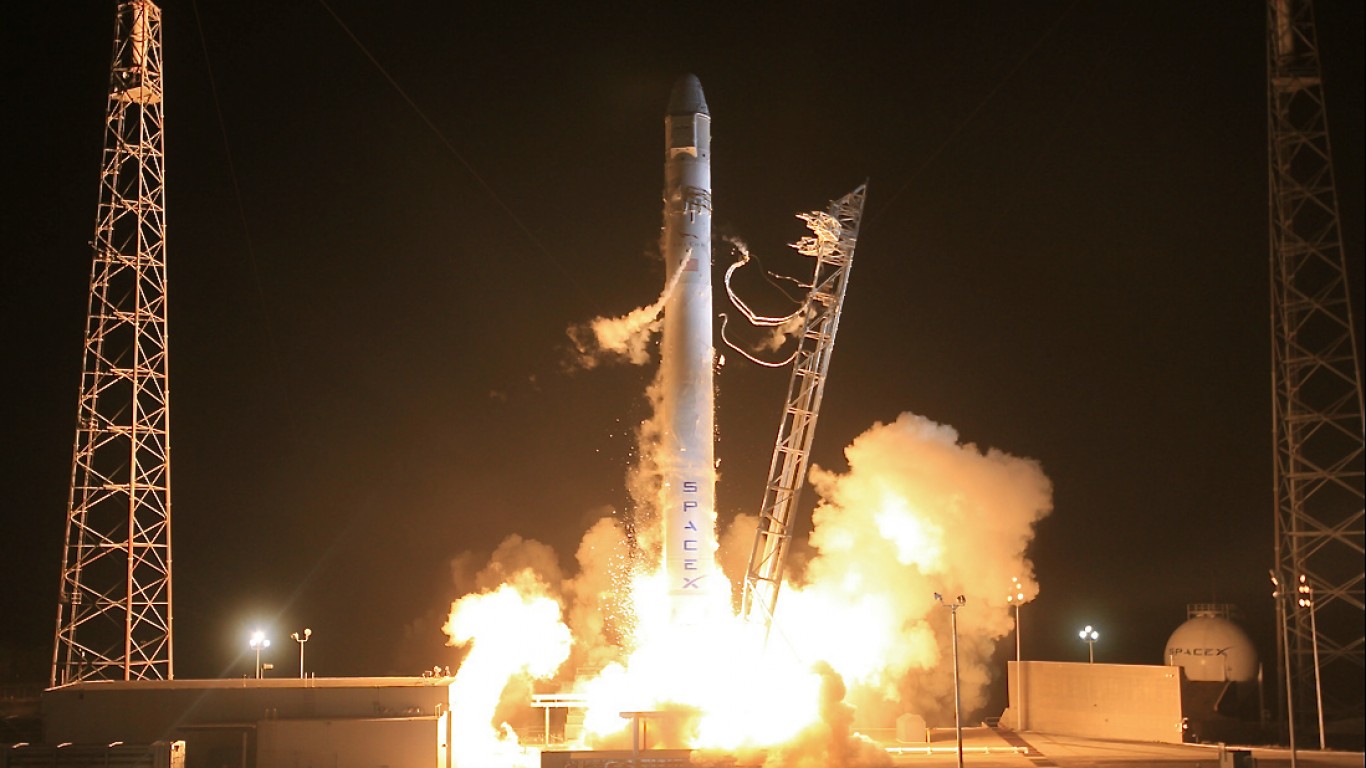
SpaceX (NASDAQ:SPCX | SPCX Price Prediction) launched Starship on Monday morning, deployed a batch of next-generation Starlink satellites into orbit and soft-landed the Super Heavy booster off the Texas coast. By the close, the shares had fallen 2.16% to $145.47.
CNBC’s Morgan Brennan was on air that morning. She said she was a little surprised to see the stock trading down 0.8% “because this mission was so successful and it was very ambitious.” The close landed well below her intraday reading, and the stock is down 4.2% over the past week.
That gap has a plain explanation, and it matters for investors considering a company valued at roughly $1.12 trillion. Launch milestones build the long-term case, while daily pricing in a newly listed stock follows broader fund flows.
Investors are also paying for two kinds of future at once. Satellite internet and launch revenue are growing quickly today, while orbital data centers and Mars remain plans without reported sales.
What One Launch Added to Starlink’s Network
Brennan reported that “with today’s single Starship launch, SpaceX added more Starlink capacity this morning than the first one and a half years of Starlink launches, and the next launch will cover another full year.”
Capacity per launch decides the economics of satellite internet. Each flight carries a largely fixed cost, so more bandwidth per flight lowers the cost to serve each subscriber.
That math is urgent because Starlink is growing by expanding its customer base at lower prices. Subscribers doubled year over year to 12.0 million in the second quarter, while average revenue per user fell from $85 to $66. Lower revenue per customer only works if the cost per customer falls faster, and Starship’s payload is how SpaceX plans to get there.
Lower revenue per customer only works if the cost per customer falls faster, and Starship’s payload is how SpaceX plans to get there.
Why Shares Slipped After a Successful Flight
Monday was a broadly negative session for growth and momentum stocks, and SpaceX traded with the group. Brennan’s own surprise suggests no company-specific problem drove the move.
Recently listed, richly valued stocks tend to move with factor flows more than with milestones, so when funds cut momentum exposure, they sell across the group, whatever happened on the launch pad that morning.
Separating Revenue That Exists From Revenue on a Slide
Management ties Starship to orbital data centers, lunar missions with NASA and eventually Mars.
Connectivity produced $4.29 billion of second-quarter revenue, up 66%, and Space added $962 million, up 29%, according to the company’s earnings release. Those businesses have paying customers, and the company reports a $47.5 billion backlog.
Orbital compute is a narrative. It moves into the revenue column when SpaceX signs customers for computing capacity in orbit and reports that revenue separately.
Today’s $2.56 billion of AI revenue comes from Grok, X, and ground-based data centers, funded by $15.83 billion of AI capex in a single quarter. That expansion has to be powered, cooled, and connected by someone, and 24/7 Wall St. covered seven suppliers riding the same wave in a free report on the AI infrastructure names behind the chipmakers.
Flight Cadence Will Decide Whether the Capacity Story Holds
The investable variable is flights per quarter and reuse economics. SpaceX had already completed two successful Starship V3 flight tests within 90 days before this launch.
The capacity story must hold over the next several quarters. For that to happen, Starship needs to fly on a regular schedule, boosters need to refly without long refurbishment, and Space segment losses need to narrow. The company’s stated goal is to cut the cost to orbit by 99% or more.
Starlink results should confirm the progress. Revenue per user can keep sliding, but subscriber growth and Connectivity profitability need to rise with each batch of added capacity.
Should You Buy or Sell SPCX Stock

Second-quarter revenue of $7.81 billion exceeded the $6.82 billion consensus, and the $0.09 loss per share was narrower than the $0.29 expected.

Sizing matters because the stock listed only this year and has no full-year volatility record, so position sizing should reflect that flight frequency and Starlink margins have yet to prove out.
Rocket Lab (NASDAQ:RKLB) offers launch exposure at a smaller scale, and SPCX remains the direct way to own Starship’s economics alongside a subscriber business like Starlink.
I wouldn’t buy SPCX stock in this environment, as many positives are already priced in. Other mega-cap stocks are far cheaper with higher, stickier growth.
Contact [email protected] for any questions or corrections.
Omor Ibne Ehsan is a writer at 24/7 Wall St. He is a self-taught investor with a focus on growth, cyclical, and dividend equities that have strong fundamentals, value, and long-term potential. He also has an interest in high-risk, high-reward investments such as penny stocks.