Former SpaceX Engineer: ‘We All Rolled Our Eyes’ When Elon Musk Proposed Catching a Rocket With Chopsticks
The engineers best positioned to judge whether SpaceX's most audacious launch tower idea was even physically possible all dismissed it immediately, and every single one of them turned out to be wrong.


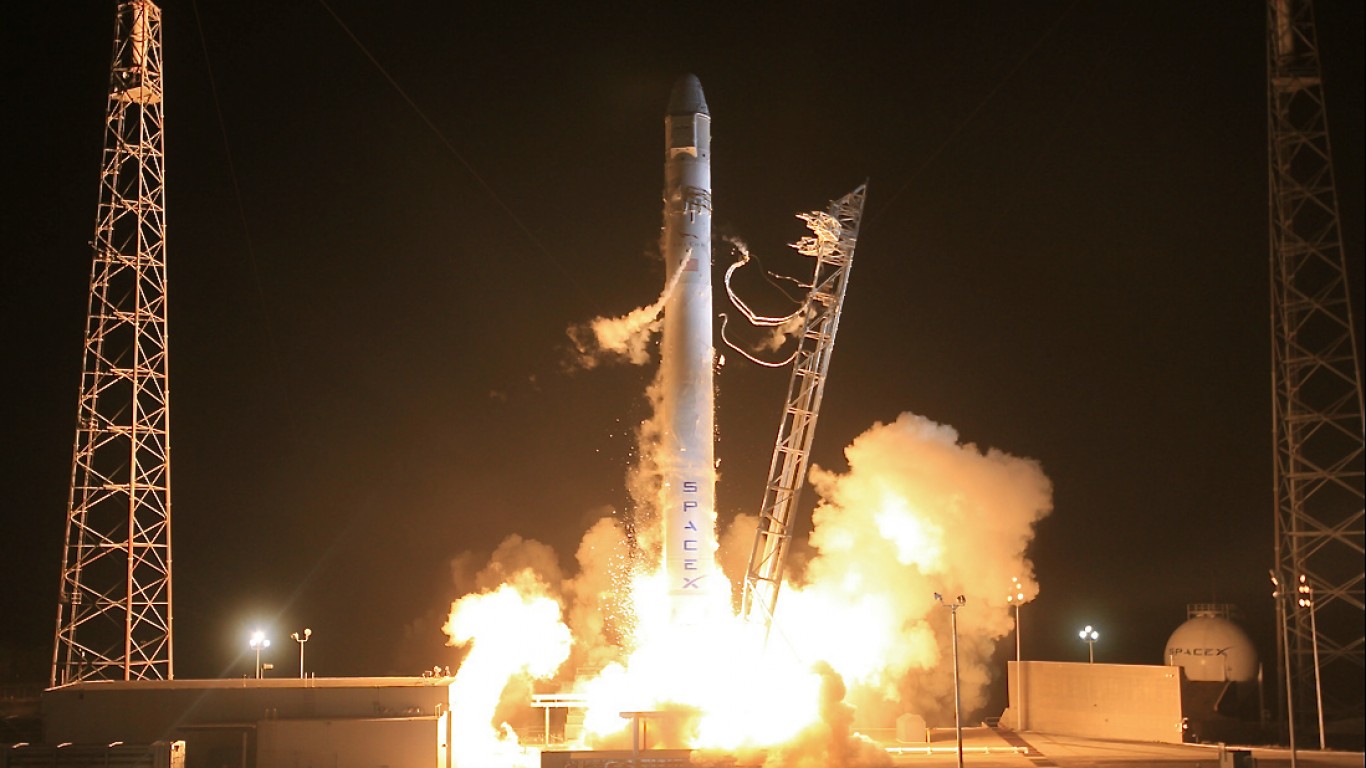
On the September 21, 2026 episode of Bloomberg’s Odd Lots, former SpaceX engineer Tom Mueller told hosts Tracy Alloway and Joe Weisenthal what happened inside the company when Elon Musk first floated the idea of catching a returning Super Heavy booster with mechanical arms mounted on the launch tower instead of landing it on legs. “We all just rolled our eyes like, this is crazy. There’s just no way,” Mueller recalled. His retrospective takeaway is the line worth sitting with: Mueller now says, “If it’s possible, it’s solvable, according to SpaceX.”
The striking part is that the engineers most qualified to judge feasibility dismissed the concept on instinct, and the instinct was wrong.
What the Chopsticks Have Actually Caught
Most coverage blurs an important distinction, so it is worth being precise. The catches demonstrated so far are of the Super Heavy booster, the lower stage, not the Starship upper stage.
The first one landed on October 13, 2024, when FOX Weather reported SpaceX catching the Starship booster in Mechazilla arms in a historic first. Phys.org described it as a first for the megarocket booster. The New York Times covered the same day as SpaceX advancing the Starship program with a launch and a catch in 2024, per The New York Times. collectSPACE noted it came on the fifth Starship test flight.
It was repeated on January 17, 2025, when Stars and Stripes reported that SpaceX caught the booster again but lost the Starship upper stage during the test flight. The South China Morning Post reported that SpaceX repeats the chopsticks catch while Starship exploded. Space.com reported on March 6, 2025 that SpaceX lost the Starship stage again but caught the Super Heavy booster during the Flight 8 launch. Those are the catches we can document from reporting. We have not established a complete count of every catch since.
The harder version, catching the Starship upper stage itself, is a separate goal. Teslarati reported on July 25, 2026 that SpaceX wanted to catch Starship for launch 14, per Musk. Tesla Oracle reported on July 30, 2026 that the attempt was on deck and that the preceding flight’s Ship 40 had landed precisely.
Why Public Investors Missed the Milestone
A natural question for a retail investor is what SpaceX shares have done since the technique was introduced. That answer is itself instructive. SpaceX (NASDAQ:SPCX | SPCX Price Prediction) only began trading on NASDAQ following its June 2026 IPO. Our price history for the stock begins on June 12, 2026 at $160.95. The first chopsticks catch happened in October 2024, according to The New York Times. Public shareholders never got to price that milestone. The engineering breakthrough belonged entirely to private investors, and the public market showed up after the hard part was already proven. Details on the company’s operating segments and post-IPO financials are in its August 4, 2026 8-K filing.
Where the Stock and the Company Sit Now
SPCX traded at $153.61 as of 11:03 AM Eastern on September 22, 2026, up 1.16% in the session, on a roughly fifteen minute delay. Since its market debut the stock is down 4.56%, which is its entire trading history. It is up 12.15% over one month and up 3.69% over one week. Market capitalization stands at $1,182,227,721,340.

Readers who still picture a pure rocket company should update the mental model. SpaceX operates in three segments. Space covers launch services including the Falcon and Starship vehicle families and spacecraft development. Connectivity covers Starlink, the world’s largest satellite broadband constellation, serving over 12 million subscribers, plus Starshield for government customers. AI covers cloud compute infrastructure, model development including the Grok family, and the X social media platform. A share of SPCX is a claim on all three.
On the same podcast, Joe Weisenthal raised whether tariffs meant to boost American industrial production might raise costs on imported components domestic manufacturers still depend on, noting such policies can cut in both directions. He posed it as a question, and it applies to any hardware company sourcing globally.
The reason Mueller’s line lands is the credential of the people who got the call wrong. If it’s possible, it’s solvable.
Contact [email protected] for any questions or corrections.
AJ spent 10 years writing about financial markets at The Motley Fool. His coverage centers on technology stocks and the broader macroeconomic trends, from interest rates to geopolitics, that shape where markets are headed next. AJ is drawn to the stories where big-picture economics and individual companies collide.