Cathie Wood Sees Hidden Value in SpaceX While Analysts Remain Divided
Cathie Wood calls SpaceX a deep value play at a price-to-sales ratio of 85, while Scott Galloway sees the opposite staring at the same numbers. The case for each hinges on a single question neither side can fully answer yet.


SpaceX (NASDAQ:SPCX | SPCX Price Prediction) was trading over $150 intraday, with a reported market capitalization over $2 trillion. Cathie Wood, chief investment officer at ARK Invest, has publicly argued that SPCX will look like a deep value opportunity in hindsight if Starship delivers on Elon Musk’s launch cadence and payload targets. Some analysts are divided on this, but it’s worth checking the math.
Wood’s Thesis in Plain Language
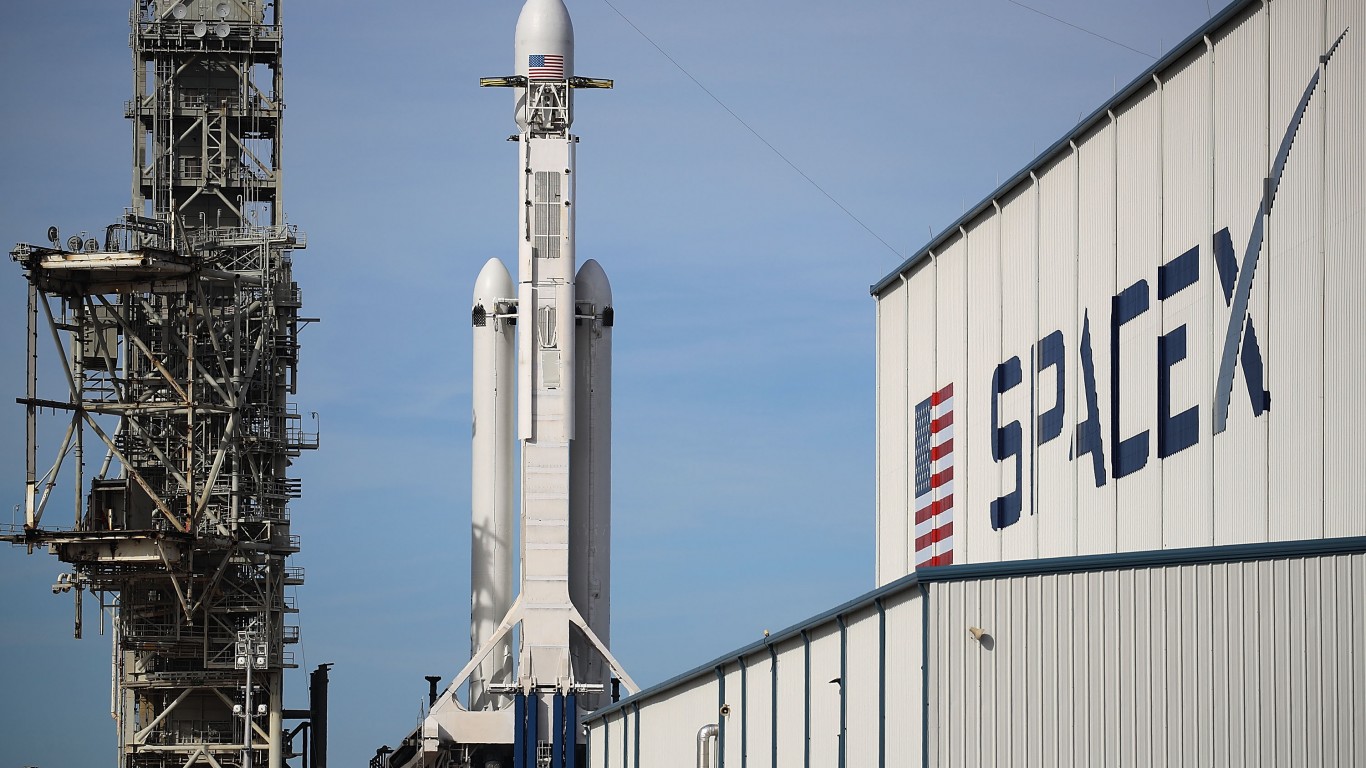
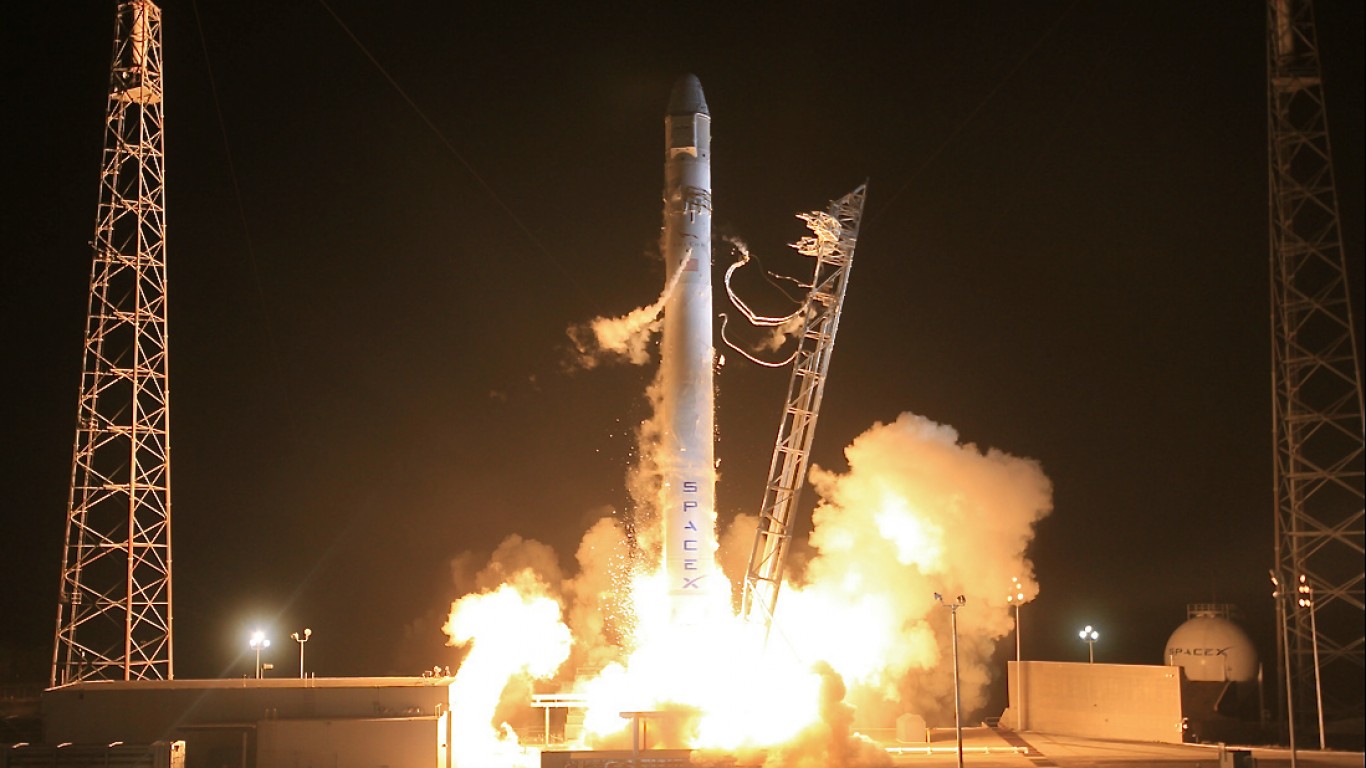
Wood’s argument compounds two variables: how many Starship flights per year SpaceX can achieve, and how much revenue each flight can support once Starship is fully and rapidly reusable. Musk told analysts on the August 4, 2026 call that “we expect the cadence of flights to be increasing rapidly and probably a year from now, we will be doing at least one flight a day and possibly more,” with aspirations to deliver “well over a million tons to orbit per year and probably ultimately 10 million tons per year.” Wood extrapolates from those launch economics to an annual revenue potential large enough to make today’s price look cheap.
It’s worth pointing out that this extrapolation belongs to Wood alone. SpaceX management’s own stated marker is more restrained: internal projections for $1 trillion in revenue moved from 2031 to 2030, with “a non-zero chance” of reaching it in 2029. Anything larger circulating under Wood’s name should be read as her modeling of a physically possible outcome, not guidance SpaceX stands behind.
Multiples Wood Is Calling Cheap
SPCX currently carries a trailing price-to-sales ratio of 85, an EV/EBITDA of 512, and a forward price-to-earnings multiple of 204. Price-to-sales measures what investors pay for each dollar of revenue; a reading in the 80s is what markets historically reserve for early-stage software with runway to expand margins. EV/EBITDA compares enterprise value against pretax operating cash generation, and a reading above 500 says the current business barely registers against what the market is pricing in.
Wood’s framing accepts those multiples as trivially small versus what Starship-scale launch revenue could underwrite. It is a bet on the numerator eventually growing into the denominator.
Why Growth Bulls Have Ammunition
Q2 2026 revenue grew 92% year over year to $7.81 billion, beating consensus by 14.59%. Adjusted EBITDA rose 191% to $3.54 billion. Starlink subscribers doubled year over year to 12.0 million, and the connectivity segment produced $4.29 billion in revenue. Management said it expects to reach a $100 billion annualized revenue run rate by December. The 220.68 analyst target price against a 50-day moving average of 134.8 reflects a Street tilted bullish, with 22 buy and 6 strong buy ratings. Full details of the quarter are in the 8-K filing.
Two Prominent Investors, Opposite Verdicts

Scott Galloway has publicly argued SpaceX is drastically overvalued, a bear case 24/7 Wall St. covered previously. Wood and Galloway are staring at the same $23.04 billion trailing revenue base, the same negative $1.10 diluted EPS, and the same triple-digit sales multiple, and arriving at opposite conclusions. The disagreement centers on how much of Starship’s future the reader should already treat as delivered.
What Would Validate the Deep Value Call

Starship Flight 14 is tentatively scheduled for the end of the month pending regulatory approval, and CFO Bret framed it as the first flight to carry version 3 Starlink satellites to operational orbit, a shift from demonstration to production cadence. A successful tower catch of the ship, sustained flight cadence, and Starlink ARPU stabilizing above the $66 level would give Wood’s math oxygen. Continued $18.37 billion quarterly capex against triple-digit multiples would give Galloway his. Investors can track official milestones on the SpaceX investor relations site.
Wood’s deep value framing is defensible only under her own launch-economics extrapolation, which is not SpaceX guidance. At an EV/EBITDA above 500, the market is already pricing a version of Starship that works. If Flight 14 and the flights behind it confirm rapid reusability at cadence, Wood will look prescient. If cadence slips while capex compounds, the multiple will do the correcting.
Contact [email protected] for any questions or corrections.
Chris Lange is a financial and geopolitical writer with more than a decade of experience covering a myriad of topics. He has published thousands of articles for 24/7 Wall St., with past coverage focused heavily on stocks, IPOs, healthcare, defense, global affairs, and technology.
His work has been quoted, or referenced by a number of outlets including Business Insider, USA Today, Yahoo Finance, MSN, The Motley Fool, and many other publications. A graduate of Southwestern University, he studied business with a focus on investments and has previous experience in banking and startups.
When not reading or writing the news, he is following his passion for Lacrosse, playing chess, or building solar projects with his dad.