Williams Says the Fed Has Time. October Rate Hike Odds Fell Below a Coin Flip
One sentence from New York Fed President John Williams sent rate-hike odds tumbling, but two other Fed governors told a very different story about where policy is headed before year's end.

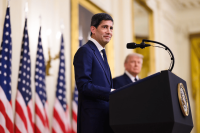
A single sentence from New York Fed President John Williams at the University at Buffalo on September 29 was enough to reprice the Fed’s next meeting. CME FedWatch odds of an October hike fell from 70% earlier in the week to below 50%.
Williams is vice chair of the Federal Open Market Committee, the Fed’s rate-setting body. That seat carries a permanent vote, and the New York Fed carries out the committee’s market operations, so his words move markets more than a rotating regional president’s.
The Fed lifted rates by a quarter point on September 16. It was the first hike since 2023, leaving the target range at 3.75% to 4.00%.
This is a hiking cycle. Retirement positioning built for rate cuts the committee is no longer discussing now faces pressure, and a bad first year of withdrawals does more lasting damage than most retirees realize (24/7 Wall St. walked through that sequence-of-returns problem in a free guide).
What Williams Said, and the Hike He Kept Alive
Here is the full quote. “With the policy action we took at our September meeting, there is no need for urgency, and we have time to gather more information.”
Williams left the hike on the table while ruling out urgency. He called inflation, which he put at 3.7%, “unquestionably too high” and said one more increase “may be appropriate late this year.”
That keeps the final meeting of the year, which is set for December 9, firmly in play.
Why Traders Retreated From a Speech That Still Backed a Hike
CME FedWatch converts fed funds futures prices into chances. A chance is a price, and it moves when traders shift, not only when the outlook changes.
A market that repriced this far on a speech backing another hike was never confident. Governor Michael Barr spoke at the Detroit Economic Club. He sounded less patient: “In my base case, further policy adjustments are likely to be needed to ensure inflation comes down to target in a timely fashion.”
Barr counted just two months out of 20 months when core PCE sat in line with the Fed’s 2% target. Governor Lisa Cook said: “I expect to see continued pressure on inflation from the AI build-out … and from the pass-through of higher oil prices.”
That is supply-side pressure, while rate hikes work on demand. Consumer confidence hit its lowest level since 2014 and, in August, job openings fell to 7.079 million, creating policy-error risk on both sides.
What Two-Decade-High Yields Mean for Your Bonds
The 10-year Treasury closed near 5.26%, its highest since 2007, with the 30-year near 5.6%.
Rising yields lower the market value of bonds you already own. New buyers who plan to hold to maturity can lock in the highest 10-year yields in nearly two decades.
If you hold long-duration bonds waiting for cuts, the committee is openly considering further increases, leaving that positioning exposed.
What Rate-Sensitive Stocks Face at These Yields
The bull case is simple. Weak consumer and hiring data cap the cycle at one more hike, letting the yields that squeezed utilities and real estate investment trusts ease back.
At these yields, rate-sensitive stocks remain under pressure until inflation turns. The August PCE report comes September 30, and the September jobs report October 2, ahead of a decision October 28.
Hot core PCE or strong payrolls would push October odds back up, while soft readings would keep them below even and give income stocks room to recover.
Contact [email protected] for any questions or corrections.
Omor Ibne Ehsan is a writer at 24/7 Wall St. He is a self-taught investor with a focus on growth, cyclical, and dividend equities that have strong fundamentals, value, and long-term potential. He also has an interest in high-risk, high-reward investments such as penny stocks.