6 Words From Kevin Warsh Changed the Question From “Will the Fed Hike Rates?” to “How High Can Rates Go?”
Six words buried in the Fed's September statement quietly rewrote the rules for every investor, borrower, and market strategist who assumed the tightening cycle was almost over. What those words signal about where rates are headed will force a rethink…

The Federal Reserve was supposed to be nearing the end of its tightening cycle. Instead, the inflation picture has deteriorated just days after the central bank delivered its first interest-rate increase in three years. On Sept. 16, the Federal Open Market Committee raised its target range by 25 basis points to 3.75%-4.00%, citing elevated inflation.
Now bond yields are climbing to levels not seen in years, oil remains above $100 a barrel, and traders are rapidly repricing the path for interest rates. The question isn’t simply whether the Fed will raise rates again. The market is increasingly asking how many more hikes it will take to restore price stability.
Six Words Changed the Equation
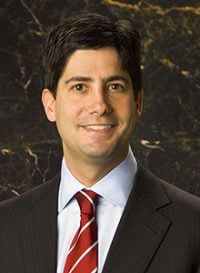
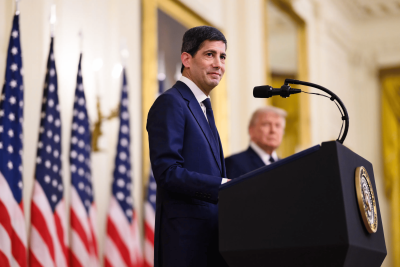
Fed Chair Kevin Warsh didn’t need a lengthy forecast to make his intentions clear. In the statement accompanying September’s decision referencing the rate hike, the FOMC said, “Today’s policy action will support a timelier return to the Committee’s 2% goal. The Committee will deliver price stability.” Those six words at the end are key because they establish the Fed’s objective even as the sources of inflation become more complicated.
“The Committee will deliver price stability.”
FOMC statement, Sept. 16, 2026
The latest Consumer Price Index showed prices rising 3.4% year over year in August, while core CPI increased 0.3% for the month. Energy prices were an important contributor, but inflation pressures have also appeared in underlying categories.
Meanwhile, CME Group’s FedWatch Tool has rapidly shifted.
| FOMC Meeting | Market-Implied Rate-Hike Odds |
| Current | 3.75%-4.00% |
| October 2026 | 64.2% chance of 4.00%-4.25% |
| December 2026 | 51.0% chance of 4.25%-4.50% |
| January 2027 | 72.1% chance of 4.25%-4.75% |
| March 2027 | 57.0% chance of 4.50%-5.00% |
The October probability has climbed from 57.6% a week ago and 43.1% a month ago, according to the FedWatch readings. A second hike is no longer a distant possibility.
Inflation Is Giving the Fed Few Easy Choices
The bond market is saying what it thinks. On Sept. 25, the 10-year Treasury yield reached 5.196%, its highest level since 2007, while the 30-year yield hit 5.513%, a 22-year high.
That is important beyond just Wall Street. Treasury yields influence mortgage rates, corporate borrowing costs, auto loans, and the discount rates used to value stocks. Higher rates therefore raise the cost of capital across the economy.
And the inflation pressure isn’t coming from one source, either. Brent crude is above $100 a barrel, the national average gasoline price reached $4.49 a gallon — up from $4.10 one month ago — and diesel hit a record high of $6.52 a gallon on Sept. 22, according to AAA data.
At the same time, tariffs are adding to input costs, while the AI investment boom is creating another unusual source of demand. Chicago Fed President Austan Goolsbee recently said strong demand, including AI investment, is now adding to inflation alongside supply shocks from energy prices and tariffs. July PCE inflation was 3.7% year over year.
Ironically, even if oil prices fall tomorrow, that wouldn’t immediately solve the problem. Supply chains, transportation costs, and contracts take time to adjust.
Investors Need to Prepare for Higher Rates
The Federal Reserve’s own September projections show how difficult this balancing act has become. Officials now see PCE inflation at 3.7% in 2026 before declining to 2.3% in 2027, while their median federal-funds-rate projection sits at 4.1% at the end of 2026.
But markets are increasingly pricing a higher path than that. That creates a problem for investors because today’s stock valuations were built during an era when capital was considerably cheaper. AI companies are particularly exposed because the industry’s enormous data-center buildout requires vast amounts of capital, electricity, memory, and other infrastructure.
The same is true for consumers. A mortgage, car loan, credit-card balance, or business loan becomes more expensive when interest rates remain elevated for longer.
Granted, there are reasons yields could retreat. Oil prices have recently fallen from their highs as markets consider the possibility of improved U.S.-Iran diplomacy. But the bond market is still demanding much higher yields than investors saw earlier this year.
Key Takeaway
In short, investors shouldn’t treat September’s 25-basis-point hike as a one-off event. The Fed has explicitly committed to restoring price stability, while inflation remains above its 2% target and the bond market is pricing a growing probability of additional increases. CME FedWatch puts the odds of another October hike at 64.2%, with rates potentially reaching 4.25%-4.75% by March.
That doesn’t guarantee the Fed will follow that path. It does mean investors should stop building portfolios around the assumption that interest rates won’t have a meaningful impact. For now, higher-for-longer isn’t merely a Fed talking point — analysts, the bond market, and even consumers are beginning to price it in.
Contact [email protected] for any questions or corrections.
After two decades of patrolling the dark corners of suburbia as a police officer, Rich Duprey hung up his badge and gun to begin writing full time about stocks and investing. For the past 20 years, he’s been cruising the markets looking for companies to lock up as long-term holdings in a portfolio while writing extensively on the broad sectors of consumer goods, technology, and industrials. Because his experience isn’t from the typical financial analyst track, Rich is able to break down complex topics into understandable and useful action points for the average investor. His writings have appeared on The Motley Fool, InvestorPlace, Yahoo! Finance, Money Morning, and, of course, 24/7 Wall St. He has been featured in both U.S. and international publications, including MarketWatch, Financial Times, Forbes, Fast Company, and USA Today.