Constellation Energy Has Crushed Investors in 2026: 75% Gains Are Coming According to One Pro Analyst on Wall Street
Constellation Energy runs the largest nuclear fleet in the country, guidance keeps climbing, and yet the stock sits near a 52-week low. One Wall Street analyst sees a very specific path back to all-time highs, but it hinges entirely on…


Constellation Energy (NASDAQ:CEG | CEG Price Prediction) currently trades at $254.02. Wall Street’s average price target is $347.28, which puts the stock 36.7% below where analysts think it should be.
Constellation runs the largest nuclear fleet in the country. After closing the Calpine deal, it has 55 GW of capacity across nuclear, natural gas, geothermal and battery storage. Wall Street likes it because AI data centers need carbon-free power around the clock, and Constellation has more of that power to sell than anyone else. (We picked five ways to play the nuclear restart, utilities and fuel suppliers included, in a free report here.)
Management keeps raising guidance while the stock keeps falling.
Guidance Went Up and the Stock Went Down
Grid rule uncertainty and a messy second quarter drove the decline. Shares have fallen 27.77% this year from $351.68. Adjusted EPS of $2.55 beat the $2.33 consensus, but revenue of $7.50B missed. Operating income fell 39.01% and planned refueling outage days rose to 86 from 41.
PJM hasn’t settled rules for connecting large loads and co-located data centers. Management expects a FERC order in the first to second quarter of 2027. In Texas, new batteries are reaching the grid before data-center demand, weakening ERCOT pricing. The stock has dropped 7.55% over the past month.
Scotiabank’s Street-High Target Points to Nearly 74% Upside
Andrew Weisel at Scotiabank has the highest target at $441, meaning 73.6% upside. He points to Constellation’s lead in selling nuclear power to hyperscalers, the restart of Crane Clean Energy Center, and tighter PJM capacity markets.
Crane is scheduled to restart in 2027 with a $1B DOE loan guarantee and 20-year Microsoft PPA. Constellation has signed 920 megawatts of new nuclear contracts averaging 18 and a half years. PJM’s 2028/2029 capacity auction cleared at $325/MW-day. Management guides to base EPS growth of 20%+ through 2029. The CEO expects contracting to speed up once rules are settled: “Deal flow will kick off with a bit of a bang.”
Of 22 analysts, 19 rate the stock Buy or Strong Buy and 3 rate it Hold. BMO lowered its target but kept an Outperform rating, naming PJM and ERCOT as key issues. Estimate revisions for 2026 EPS ran 14 up versus 2 down over 30 days.
Revisions to 2027 estimates were split, with 7 up and 9 down. Management says new contracts won’t move 2029 earnings much and hasn’t disclosed pricing. This target depends on regulators acting on schedule.
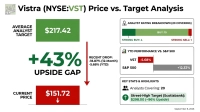
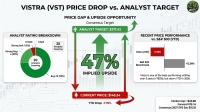
Vistra (NYSE:VST) is down 13.85% this year at $138.36. Its average target of $217.58 meaning 57.3% upside. Analysts have 19 Buy or Strong Buy ratings and 1 Strong Sell.
Constellation’s consensus upside trails Vistra’s. The 74% case depends on a single bullish analyst.
Constellation Has Lagged a Rising S&P 500 All Year
Constellation is down 27.77% this year, while the S&P 500 is up 11.81%. Over one year, the stock is down 22.37% and the index is up 14.46%. At $254.02, the stock is close to its 52-week low of $228.28. Its average target of $347.28 meaning 36.7% upside.
The stock trades at about 21x forward earnings. Management’s 2026 EPS guidance is $11.50 to $12.50.
Constellation’s Upside Depends on Regulators
The outlook improves if PJM and FERC settle co-location rules by mid-2027, Crane restarts on time, and hyperscaler contracts speed up. With $2.8B left in buyback authorization, the company can support EPS while investors wait.
The bear case gains weight if the regulatory process drags, ERCOT stays oversupplied, or the Illinois ZEC program ending in May 2027 hurts more than expected. A stock at 21x forward earnings could keep losing ground.
The core business is improving and guidance is rising. The consensus target is more realistic than Scotiabank’s $441.
Contact [email protected] for any questions or corrections.
Alex Sirois is a financial writer with experience spanning both retail and institutional investing. He has written for InvestorPlace and held roles at BNY Mellon and Bernstein, giving him a perspective that bridges Main Street portfolios and Wall Street analysis.
Alex holds an MBA from George Washington University and has built his career across multiple industries, including e-commerce, education, and translation — a breadth of experience that informs how he breaks down complex financial topics for everyday investors. His writing is conversational, actionable, and grounded in long-term, buy-and-hold investing principles.
At 247 Wall St., Alex focuses on delivering analysis that is both accessible and useful, with a clear emphasis on helping readers make more informed decisions with their money.