I’m Dollar Cost Averaging AMD at Today’s Price Without Fear
AMD sits near a trillion-dollar market cap with a valuation that would make most investors flinch, yet one investor keeps hitting the buy button every single month without checking the price first. Here is the logic behind that discipline and…

This post may contain links from our sponsors and affiliates, and Flywheel Publishing may receive compensation for actions taken through them.
I bought more Advanced Micro Devices (NASDAQ:AMD | AMD Price Prediction) this month, and I will buy more next month at whatever price the market gives me. The stock trades at $611.76, up 185.66% year to date, and my schedule stays the same. Dollar cost averaging lets me keep adding to a business I believe in without trying to guess the next move.
Why I Keep Coming Back to the Buy Button
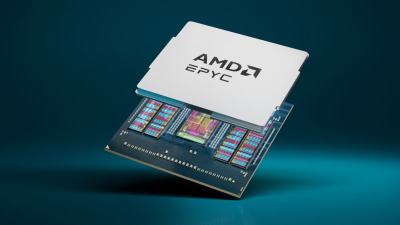
AMD sells both of the chips every AI data center needs. Its CPUs run the servers, and its GPUs train and serve the models. The biggest AI builders keep selecting it. OpenAI named AMD a core preferred partner to deploy 6 gigawatts of GPUs. Meta Platforms (NASDAQ:META) committed up to 6 GW. Anthropic plans to deploy up to two gigawatts of MI450 GPUs in Helios racks. Multi-year commitments of that size tell me AMD has years of demand ahead of it.
Three Numbers That Keep Me Adding Shares
First, growth keeps accelerating. Q2 FY2026 revenue rose 50.1% to $11.54 billion. Data Center revenue climbed 107% to $6.718 billion and now makes up 58% of sales. Management expects Data Center revenue to “more than double year-over-year in 2027.”
Second, profits are growing faster than sales. Non-GAAP operating margin expanded to 27% from 12% a year earlier. Fiscal 2025 free cash flow more than doubled to $5.519 billion. Management also says AMD will “significantly exceed” its $20 annual EPS target.
Third, the balance sheet gives AMD a wide safety margin. The debt-to-equity ratio stands at 0.071, AMD holds net cash, and interest coverage runs 28.2x. In a retirement account, I want a growth company that can pay its own way through a downturn.
Why My Money Goes Here Instead of NVIDIA or Intel
NVIDIA (NASDAQ:NVDA) is the obvious choice, and it trades at a lower 46 times trailing earnings. I pass on it because of size. NVIDIA has a $5.51 trillion market cap, while AMD sits near $998.7 billion, so each new contract matters far more to AMD’s growth. AMD also sells server CPUs into a market that management expects to grow more than 50% annually to about $220 billion by 2030.
As a turnaround play, Intel (NASDAQ:INTC) looks tempting, but its balance sheet keeps me away. Intel’s net debt runs 2.77 times EBITDA, and its Foundry unit lost $2.1 billion in one quarter. Meanwhile, AMD’s Client revenue grew 23% on strong Ryzen demand.
Risk That Could Actually Hurt This Position
Valuation concerns me most. AMD trades at 230 times trailing earnings and 149 times free cash flow. With a beta of 2.48, one bad quarter could pull the stock down sharply. I saw that happen when shares dropped to $472 one hour after the August earnings report. Export controls cost AMD roughly $440M in charges in fiscal 2025, and Gaming revenue fell 31% last quarter.
That risk shapes how I buy. On forward estimates, AMD trades closer to 49 times earnings. Because I buy on a fixed schedule, a sell-off gets me more shares for the same money, and that is exactly what happened in August.
What Keeps My Buy Button Active From Here
Helios ramps through the fourth quarter, Venice is already in production, and the MI500 platform arrives in 2027. Lisa Su told investors, “We are still in the early innings of a multi-year AI adoption cycle.” For as long as that cycle runs, I plan to own a bigger piece of AMD at the end of every month.
Contact [email protected] for any questions or corrections.
Alex Sirois is a financial writer with experience spanning both retail and institutional investing. He has written for InvestorPlace and held roles at BNY Mellon and Bernstein, giving him a perspective that bridges Main Street portfolios and Wall Street analysis.
Alex holds an MBA from George Washington University and has built his career across multiple industries, including e-commerce, education, and translation — a breadth of experience that informs how he breaks down complex financial topics for everyday investors. His writing is conversational, actionable, and grounded in long-term, buy-and-hold investing principles.
At 247 Wall St., Alex focuses on delivering analysis that is both accessible and useful, with a clear emphasis on helping readers make more informed decisions with their money.