SpaceX Wants to Borrow $40 Billion to Buy Nvidia Chips
SpaceX is racing to raise tens of billions in borrowed money to lock in an exclusive chip supply deal, and the timing raises questions about who really benefits when the money moves.

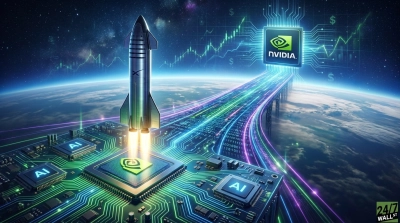
A recent report citing people familiar with the matter said SpaceX (NASDAQ:SPCX | SPCX Price Prediction) is seeking about $40 billion of financing to pay for an order of AI chips from NVIDIA (NASDAQ:NVDA). In after-hours trading, SpaceX fell about 1%, and NVIDIA rose about 0.5%.
Under the reported plan, SpaceX would take on the debt to fund the purchase, while NVIDIA would record the chip order as revenue when it ships.
SpaceX, Apollo Global Management (NYSE:APO) and NVIDIA did not immediately respond to requests for comment. The financing remains at the discussion stage.
What SpaceX Has Committed Versus What It Only Seeks
SpaceX is reportedly seeking about $10 billion in bank loans and about $30 billion in investment-grade debt. Investment-grade means bonds rated as having low default risk, which pension funds and insurance companies can hold.
The bank loans are the easier part, because a small group of lenders can agree on terms quickly, but selling bonds that large to a wide investor base requires work with rating agencies and a marketing process that takes quarters.
Apollo is expected to lead the deal and place pieces with other buyers. Pimco is among the lenders in talks.
The financing is expected to close in 2027, which means the terms, the lender group and the final size could all still change before any money moves.
Spending Has Outgrown Revenue
In the second quarter of 2026, SpaceX reported revenue of $7.81 billion against capital spending of $18.37 billion, of which $15.83 billion went to AI. It posted a net loss of $541 million.
On the August 4 earnings call, management said the next two quarters should look “very similar” on spending, and Elon Musk said, “So we’re exclusive to NVIDIA.”
More shares are coming anyway.
Borrowing avoids diluting shareholders today. Even so, lockup expirations will add 328.4 million marketable shares on October 9, another 328.4 million on October 24 and up to 1.3 billion after third-quarter earnings.
The stock priced at $135 in its June 11, 2026 initial public offering, peaked at $225.64 and closed at $171.92 on October 6. That close came one session after a 7.63% gain to its highest close since June, so insiders got their first chance to sell right after a rally, as the debt was being marketed.
What NVIDIA Gains
NVIDIA closed at $239.24 after a record intraday high of $243.37, worth about $5.78 trillion. A large order matters, but at that size, no single customer changes the business.

Morgan Stanley (NYSE:MS) estimates AI infrastructure will need $1.5 trillion of outside financing by 2028. When more buyers borrow to pay for chips, NVIDIA’s revenue stability depends in part on whether those buyers can carry their debt.
What Analysts and Lenders Are Weighing on SpaceX
Analysts are bullish. Adam Jonas carries a $300 target, Eric Sheridan of Goldman Sachs (NYSE:GS) is at $230, and the average is near $235. Those targets assume the spending pays off, and lenders are now being asked to fund that same plan with debt.


At a market value of about $2.2 trillion to $2.3 trillion, with losses, heavy borrowing, and new share supply, SpaceX carries risks that the analyst targets may not fully reflect.
NVIDIA’s exposure to the same AI spending carries less balance-sheet risk, because it gets paid when the chips ship, while SpaceX carries the debt for years. The power, cooling, and networking suppliers behind the expansion sit in a similar spot, paid up front as capacity gets built (we covered seven of them in a free report here).
It will be worth tracking whether SpaceX confirms the financing in a filing, whether rating agencies publicly engage, and whether the stock holds $171.92 through the October 24 unlock.
Contact [email protected] for any questions or corrections.
Omor Ibne Ehsan is a writer at 24/7 Wall St. He is a self-taught investor with a focus on growth, cyclical, and dividend equities that have strong fundamentals, value, and long-term potential. He also has an interest in high-risk, high-reward investments such as penny stocks.