Intel Is Worth More Than Coca-Cola and PepsiCo Put Together
A chipmaker that lost billions last year now commands a valuation that dwarfs two of the world's most profitable consumer giants, and the math holding that together is razor thin.

This post may contain links from our sponsors and affiliates, and Flywheel Publishing may receive compensation for actions taken through them.
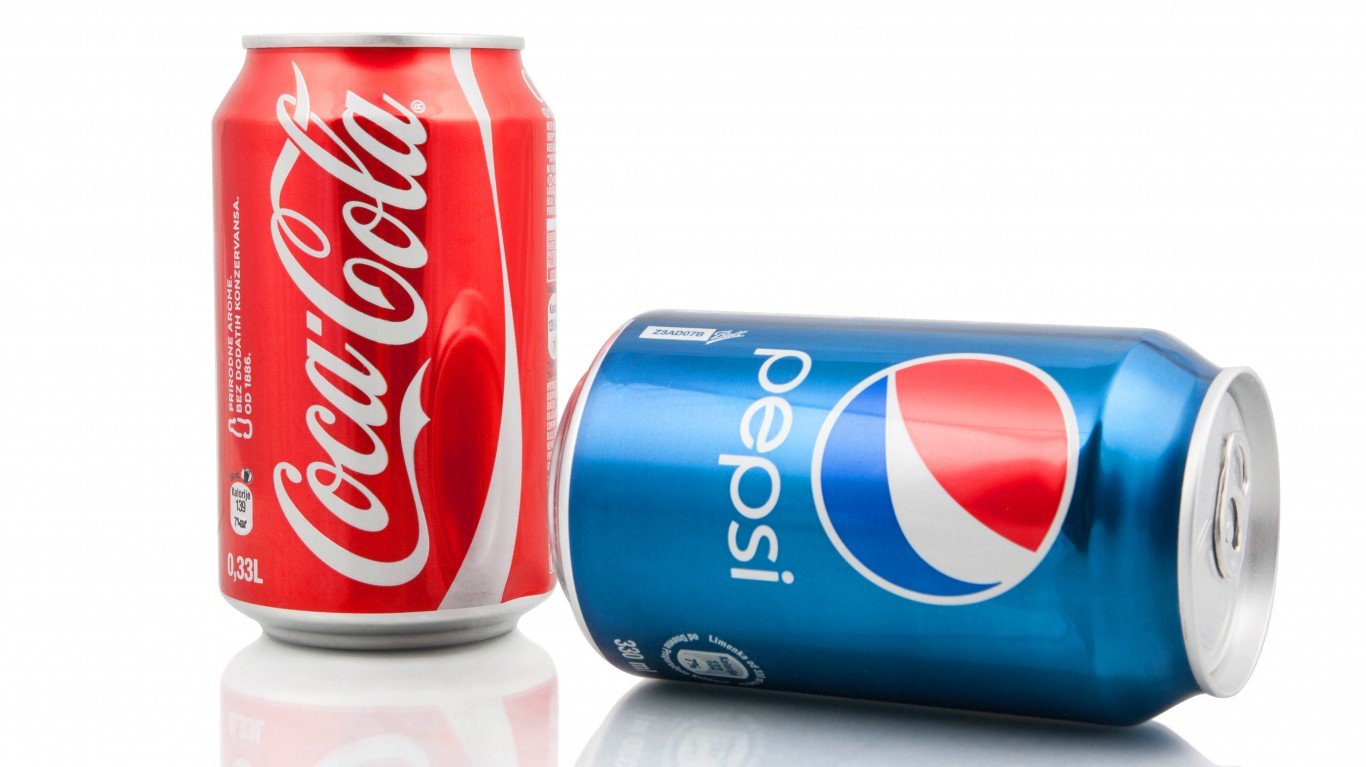
Intel (NASDAQ:INTC | INTC Price Prediction) lost money over the past year, yet the market values it above Coca-Cola and PepsiCo combined. Intel closed October 8 with a market capitalization of $562.65 billion. Coca-Cola (NYSE:KO) and PepsiCo (NASDAQ:PEP) were worth $552.80 billion together.
Intel’s lead is only about 1.8%. That lead disappears if Intel closes below about $105.21. Intel ended at $107.08, so one down day could erase it.

Beverage Giants Earn the Profits Intel Is Still Chasing
Over the trailing twelve months, Coca-Cola and PepsiCo brought in $148.37 billion of revenue and $25.22 billion of profit. Intel had $57.03 billion in revenue and a $11.29 billion loss.
Coca-Cola’s dividend yield is about 2.42%, and PepsiCo’s is about 4.61%. Intel pays no dividend.
Coca-Cola raised guidance after Coca-Cola Zero Sugar grew 16% worldwide. PepsiCo cut its core EPS growth outlook to 2.5% to 3.5% after core operating profit in North American foods fell 12%.
| Lens | Intel | Coca-Cola | PepsiCo |
|---|---|---|---|
| Growth Engine | Data center CPUs | Zero Sugar, World Cup marketing | International snacks |
| Key Risk | Foundry losses | Squeezed consumers | North American volume |
Terafab Tests Whether Intel’s Foundry Can Win Outside Volume
This spring, Intel joined Elon Musk’s Terafab chipmaking venture. Under the agreement, Tesla (NASDAQ:TSLA) will use Intel’s advanced manufacturing process, and Intel’s chief executive and Musk both reaffirmed that role this week.
A buyer that large confirms Intel’s manufacturing process. Intel Foundry lost $2.1 billion last quarter and brought in only $293 million from outside customers.

A 63x Forward Multiple Assumes Smooth Execution
Intel trades at about 63x forward earnings. A forward multiple divides today’s price by the earnings analysts expect over the next year, so it assumes those estimates come true on schedule.
Coca-Cola trades at 25x forward earnings and PepsiCo at 15x, which is typical for steady consumer businesses. Intel’s average analyst target of $118.05 is above the current price.
Intel hit its 52-week low of $32.89 last November and closed 2025 at $36.90. It reached $142.35 on June 30 and is up about 190% this year. On October 8, Intel fell 5.34% while Coca-Cola rose 2.27% and PepsiCo climbed 3.73%.
What Intel Must Prove to Justify Its Lead
Intel’s valuation leaves little room for error. Data center revenue rose 59% to $6.26 billion, but the share price assumes Terafab becomes committed foundry volume. Picking out the next huge chip winner early is a pattern we reverse-engineered in a free playbook on the traits past tech runners shared before their big moves.
Coca-Cola’s fundamentals look steadier. Unit case volume grew 5%, and operating margin expanded to 34.9%. Guidance rose, and earnings growth and income came without reliance on an unfinalized contract. The Intel case would improve if outside foundry customers sign public volume agreements.
Contact [email protected] for any questions or corrections.
Omor Ibne Ehsan is a writer at 24/7 Wall St. He is a self-taught investor with a focus on growth, cyclical, and dividend equities that have strong fundamentals, value, and long-term potential. He also has an interest in high-risk, high-reward investments such as penny stocks.