Tesla’s Volatility Is Tempting Investors Again at $375
Tesla just posted record deliveries and sits on a $43 billion cash pile, yet margins are crumbling and free cash flow turned negative. Whether the bull case survives the next few quarters comes down to one bet that very few…

Tesla (NASDAQ:TSLA | TSLA Price Prediction) trades at $367.16. The stock has fallen well below where it started the year, and the next earnings report could reveal whether heavy AI spending is building something that justifies the margin pain.
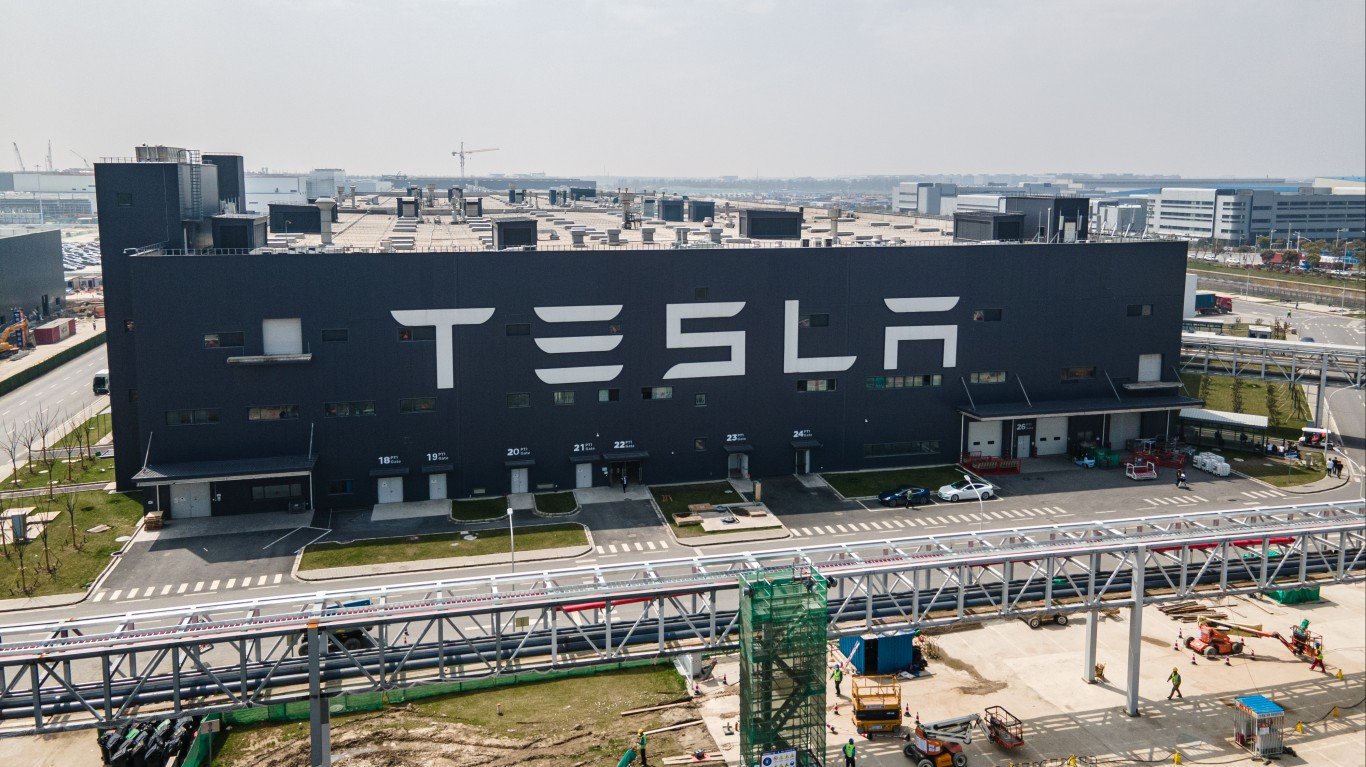
Tesla sells electric vehicles, Megapack and Powerwall storage systems, and Full Self-Driving software, and it runs a Robotaxi service in 7 US metros. Shares are down 18.36% year to date. In the second quarter, revenue rose 25.5% to $28.24B, but EPS of $0.33 missed the $0.5367 estimate after operating expenses jumped 47%.
Record Deliveries and a $43.5 Billion Cash Pile Power the Upside
Demand is accelerating. Deliveries hit a record 480,126, up 25% YoY, and Tesla’s CFO said the company ended the quarter with its “largest order backlog since 2023.” Services and Other revenue grew 50% at a record 14% gross margin. Active FSD subscriptions reached 1.48M, up 56%.
The balance sheet can fund the expansion. Tesla holds $43.52B in cash and sits in a net cash position. Cybercab, Tesla Semi, Megapack 3 and Optimus are all targeted for 2026 production. Elon Musk called this potentially “one of our best years ever.”
A 347x Earnings Multiple Leaves No Room for Spending Missteps
Tesla trades at 347x trailing earnings and 159x forward earnings while its operating margin has shrunk to 1.4%. Free cash flow swung to -$1.09B. Management expects 2026 capex above $25 billion, still rising for two or three years, and is lining up debt facilities of up to $30 billion.
Earnings quality also looks weaker. Net income got a lift from a $1 billion mark-to-market gain on SpaceX holdings. Energy gross margin fell from 39.5% to 20.4%, and automotive margin excluding credits slipped from 19.2% to 16.3%.
Spending Must Turn Into Profit Before Conviction Builds
Revenue momentum supports the long-term case, while collapsing margins weigh on near-term profitability. The test comes over the next two to three quarters. Investors need to see whether operating margin recovers from the low single digits and whether Robotaxi expands beyond its current markets. FSD approval in China and Europe, which is still pending, would also matter, along with Optimus moving into production.
Analysts Lean Hold as Tesla Lags the S&P 500
The consensus target of $397.83 implies roughly 8.4% upside across 44 analysts. Targets are one data point and guarantee nothing. The ratings break down this way:
- Strong Buy: 4
- Buy: 15
- Hold: 21
- Sell: 2
- Strong Sell: 2
Tesla is down 14.46% over the past year while the S&P 500 gained 16.22%. Year to date, the index is up 12.87%. Tesla’s beta of 1.916 and its 52-week range of $297.38 to $498.83 show how sharp its moves have been. The stock trades above its $356.08 50-day average and below its $390.07 200-day average.
Tesla’s Pullback Puts Software Monetization in Focus
At $367, the bullish argument rests on software monetization.
The path higher runs through monetization. With FSD attached to more than 55% of new North American deliveries and Robotaxi miles growing “more than 10% a week,” high-margin software revenue could help offset hardware pressure.
Shares near the 50-day average sit well below the 52-week high, a gap that may reflect some of the margin damage. The thesis breaks if free cash flow stays negative without matching growth in Robotaxi or FSD revenue, or if deliveries stall because of battery constraints.
At this price, Tesla combines record demand and a large cash reserve with a share price below its recent range.
Contact [email protected] for any questions or corrections.
Alex Sirois is a financial writer with experience spanning both retail and institutional investing. He has written for InvestorPlace and held roles at BNY Mellon and Bernstein, giving him a perspective that bridges Main Street portfolios and Wall Street analysis.
Alex holds an MBA from George Washington University and has built his career across multiple industries, including e-commerce, education, and translation — a breadth of experience that informs how he breaks down complex financial topics for everyday investors. His writing is conversational, actionable, and grounded in long-term, buy-and-hold investing principles.
At 247 Wall St., Alex focuses on delivering analysis that is both accessible and useful, with a clear emphasis on helping readers make more informed decisions with their money.