Why Great Earnings Are Being Punished Right Now
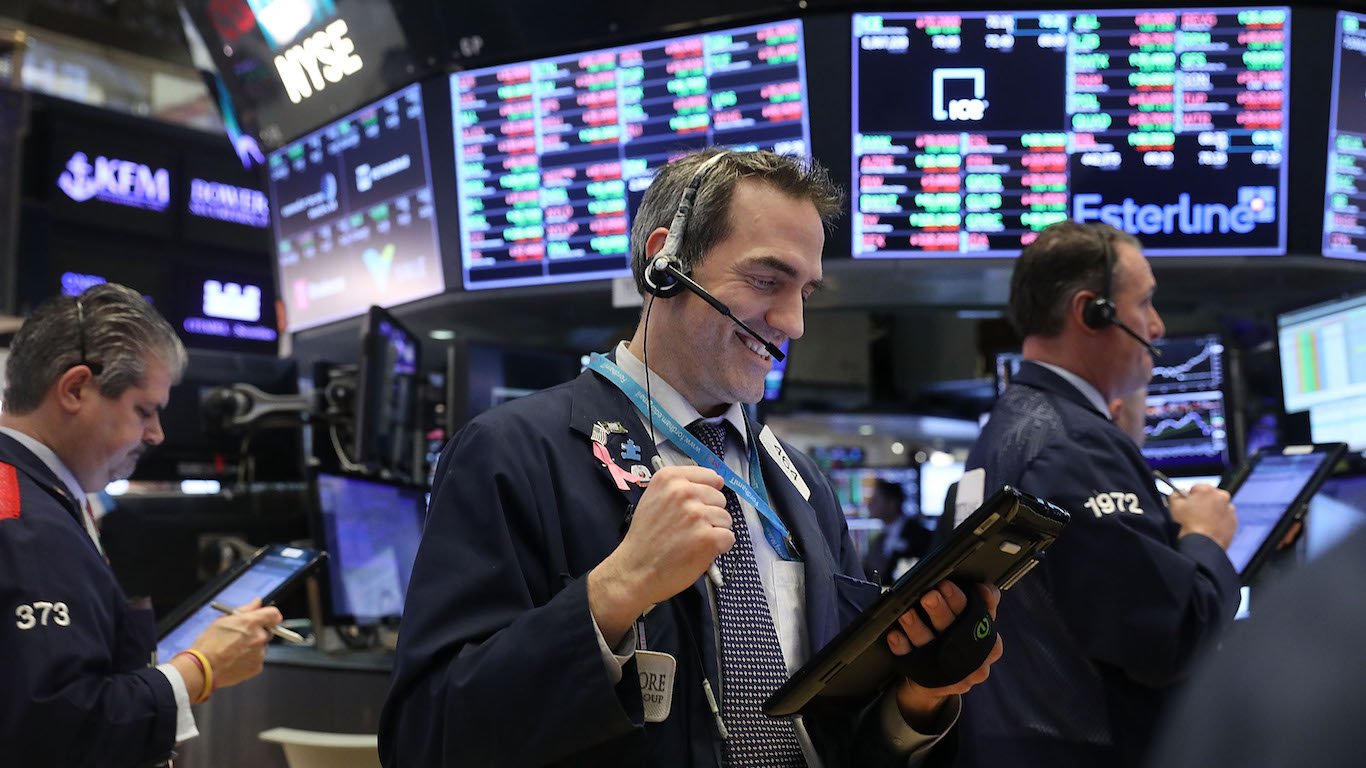
ASML and Goldman Sachs just delivered blowout quarters and their stocks got punished anyway. Something in the market has shifted, and it has nothing to do with how these companies are actually performing.


ASML (NASDAQ:ASML | ASML Price Prediction) reported third-quarter results on October 14, 2026, that beat forecasts on every major line. GAAP EPS of $14.48 exceeded the $10.66 consensus, and revenue rose 55.2% year over year to $13.1 billion. The stock fell 3.9% that day and has lost 6.8% over the past week. Even after that drop, shares at $1,650.00 are still up 53.9% for the year.
Goldman Sachs (NYSE:GS) shows the same pattern. Its EPS of $17.01 beat the $13.65 consensus, and revenue of $18.7 billion was the firm’s second-highest quarterly total. On CNBC’s Mad Money, Jim Cramer pointed to 39% earnings growth. The shares now trade at $878.72, down 11.1% in a month, and are essentially flat year to date.
Both businesses are performing well. The price investors will pay for that performance is what has changed.
Cramer Calls It a Valuation Reset
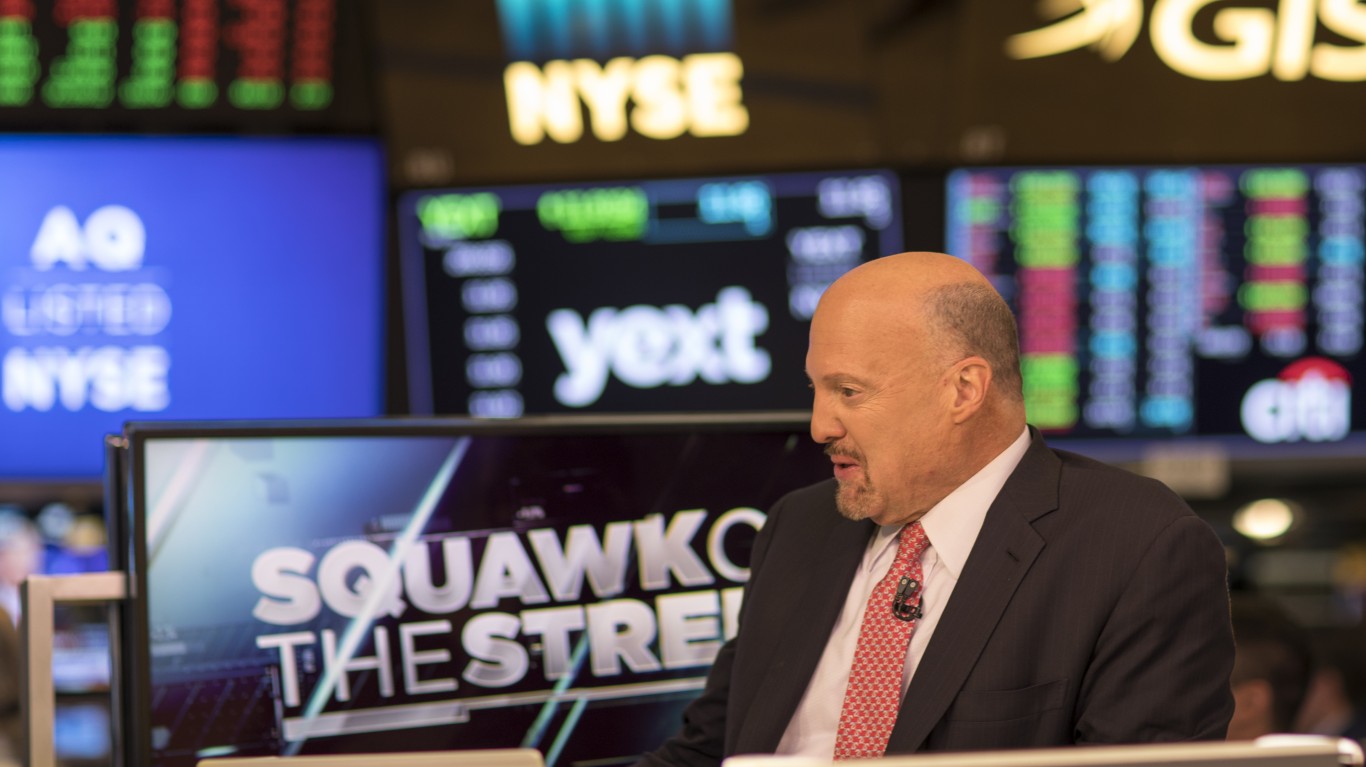
On October 14’s Mad Money, Cramer described the move this way: “P/E compression explains this move, not earnings.” On ASML specifically: “The earnings aren’t being crushed. In fact, semiconductor capital equipment maker ASML reported fantastic [numbers] last night. Yet its stock was slammed.” He added, “I think we’re seeing a reset and one that simply can’t be gamed.”
The chip equipment maker‘s guidance makes the correction easier to see. In the 6-K filing, management said planned supply for 2027 and 2028 will not fully meet customer demand, and that some customers want to place orders for 2029 and even 2030. Even so, investors assigned a lower multiple to that demand visibility this week.
JPMorgan’s Call Gave Investors Less to Worry About
JPMorgan Chase (NYSE:JPM) reported EPS of $5.57 on revenue of $50.9 billion, which Reuters called a rare profit miss. Cramer found the net interest income outlook unusually positive and said CEO Jamie Dimon “didn’t hit us with his usual dose of doom and gloom. For once the conference call wasn’t a minefield.” The stock is up 4.1% year to date. CFO Jeremy Barnum still noted that “evolving market conditions have recently slowed activity a bit.”
Solomon Describes Ballast While His Stock Slides
In Goldman CEO David Solomon’s on-camera remarks on October 13, 2026, he called AI infrastructure activity “a really good ballast for capital markets activity on a go-forward basis,” while warning that bumps can still happen. Addressing the earnings call that day, he said, “there will be a point in time when this recalibrates, resets, for sure.” So the chief executive is describing a positive environment while Goldman’s shares reprice lower. That disconnect suggests investors are questioning how long these peak conditions will last.
Two Markets Inside One Index
In an October 11, 2026, X post, Jim Bianco of Bianco Research described the S&P 500 as two separate markets: AI-related companies and everybody else. Bianco said the 41 AI-related companies he tracks accounted for 48.68% of the index’s combined market capitalization. With so much weight concentrated in one group, the index can appear calm while individual stocks such as ASML and Goldman are heavily de-rated beneath the surface. (Riding a concentrated rally is fine as long as you plan the exit, which is the whole subject of our free bubble survivor’s handbook.)
Cramer’s Rotation Case Favors Enterprise Software
Cramer has a clear view on the rotation. He believes money is moving out of AI hardware and into enterprise software, because the AI-driven destruction investors feared for those companies never arrived. On October 14, 2026, he said: “The enterprise software companies can keep going higher because their stocks never should have been so low in the first place. After a year where we expected these companies to be destroyed by AI, it never came to pass and never will.”
Looking ahead, at Goldman, the investment banking backlog declined from the prior quarter. JPMorgan has guided fourth-quarter expenses to about $27.5 billion. ASML plans to update its longer-term outlook at its Capital Markets Day on June 10, 2027.
Contact [email protected] for any questions or corrections.
Trey has been an editor and author at 24/7 Wall St. for more than a decade, where he has published thousands of articles analyzing corporate earnings, dividend stocks, short interest, insider buying, private equity, and market trends. His comprehensive coverage spans the full spectrum of financial markets, from blue-chip stalwarts to emerging growth companies.
Beyond 24/7 Wall St., Trey has created and edited financial content for Benzinga and AOL's BloggingStocks, contributing additional hundreds of articles to the investment community.
Trey's editorial expertise extends across multiple publishing environments. He served as production editor at Dearborn Financial Publishing and development editor at Kaplan, where he helped shape financial education materials. Earlier in his career, he worked as a writer-producer at SVE. His freelance editing portfolio includes work for prestigious clients such as Sage Publications, Rand McNally, the Institute for Supply Management, the American Library Association, Eggplant Literary Productions, and Spiegel.
Outside of financial journalism, Trey writes fiction and has been an active member of the writing community for years, moderating workshop sessions at regional conventions.