In 1903, A Coal Dealer’s Clerk Borrowed $100 From His Sister To Invest In A New Car Company. 16 Years Later Henry Ford Bought Out The Minority Shareholders, And His Sister’s $100 Stake Was Worth $262,000
A clerk in a Detroit coal office scraped together borrowed money to buy into a cash-strapped car company that once had $223 in the bank. What happened to the $100 his sister lent him would take sixteen years to become…

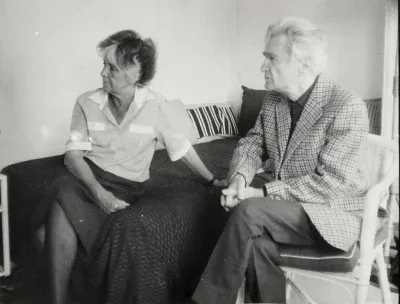
In Detroit in 1903, James Couzens worked as a clerk in Alexander Malcomson’s coal business. When Malcomson backed a new car company built around Henry Ford’s designs, Couzens wanted a piece of it. He borrowed to buy in, and part of that money came from his sister, Rosetta, who lent him $100. The company was Ford Motor Company (NYSE:F | F Price Prediction).
A Car Company Running on Almost No Cash
Ford Motor Company was incorporated on June 16, 1903. Its checking account opened on June 26, 1903 with $14,500. The original investors were expected to contribute $100,000. Only a few paid in full, and others signed promissory notes for the rest. Henry Ford and Malcomson put in no cash. Each was credited with $25,500 for plans, machinery, patents and prior work.
The company’s 1903 checkbook, now held by The Henry Ford museum, was kept by Couzens himself, and it shows how fast the money moved. The first check, for $10,000, reimbursed Malcomson for money he had paid to the Dodge brothers’ machine shop. By July 10, after 60 checks, the balance was at $223.65. On July 15 the company recorded its first sale: $850 from Dr. E. Pfennig, paid through a Chicago bank.
A $100 Loan Inside a $2,500 Stake
Couzens invested $2,500, partly with borrowed money. Of that, Rosetta lent him $100, a sum The Henry Ford museum describes as “half her life savings.”
Couzens was born in Chatham, Ontario, in 1872 and moved to Detroit in 1890. At Ford he became secretary and business manager at a salary of $2,400 a year, later rose in the company, and resigned in 1915 at age 43.
What the 1919 Buyout Paid Out
In 1919, Henry Ford, who already held 11,700 shares, bought out the minority shareholders and their 8,300 shares. Couzens received $29,308,857.90, according to The Henry Ford. Wikipedia, MotorCities and the Detroit Historical Society round that to about $30 million.
The 1919 stockholders list shows 20 shares held in the name of Rosetta Couzens Hauss within her brother’s holding. She received $262,036.67, per The Henry Ford. That is the “stake” in the headline: the portion of Couzens’s holding that her loan helped fund. The record shows the shares in her name and the sum paid for them, and ends there.
Who Sold Early and Who Held
Other early backers took different paths. Vernon Fry put in $5,000 and sold to Ford in 1907 for $25,000. Charles Woodall, Malcomson’s bookkeeper, put in $1,000 and sold in 1906 for $5,000. John Anderson and Horace Rackham each put in $5,000 and held. When they sold in 1919, each received $12,500,000.
None of those results could be sorted in advance. A company whose bank balance fell to $223.65 within weeks of opening gave no one a clear view of what was coming. Selling for a gain in 1906 or 1907 was a reasonable decision at the time (we turned that kind of hindsight into a repeatable research practice in a free report on the winners most investors walked past).
Where Couzens’s Money Went Next
Encyclopedia.com says Couzens was “reportedly worth” $40 to $60 million when he left Ford. He served as Mayor of Detroit from 1919 to 1922 and as a US Senator from 1922 to 1936. In 1929 he founded the Children’s Fund of Michigan with an irrevocable gift of $10 million and added nearly $2 million in 1934. His charitable giving amounted about $30 million, per Encyclopedia.com. He died on October 22, 1936.
Rosetta’s $100, Sixteen Years Later
The biggest numbers in this story belong to Henry Ford and to Rosetta’s brother. The smallest one is hers. In 1903 she lent her brother $100 to help him buy into a car company that was spending cash as fast as it came in. 16 years later, the 20 shares in her name were bought out for $262,036.67. The record does not say what she expected, and nothing in it suggests anyone could have known.
Contact [email protected] for any questions or corrections.
AJ spent 10 years writing about financial markets at The Motley Fool. His coverage centers on technology stocks and the broader macroeconomic trends, from interest rates to geopolitics, that shape where markets are headed next. AJ is drawn to the stories where big-picture economics and individual companies collide.