Home Depot vs. Lowe’s: Higher Yield or Faster Dividend Growth?
One retailer hands retirees a bigger check today while the other quietly positions itself to deliver faster raises for years to come, and frozen housing makes picking the wrong one a costly mistake.

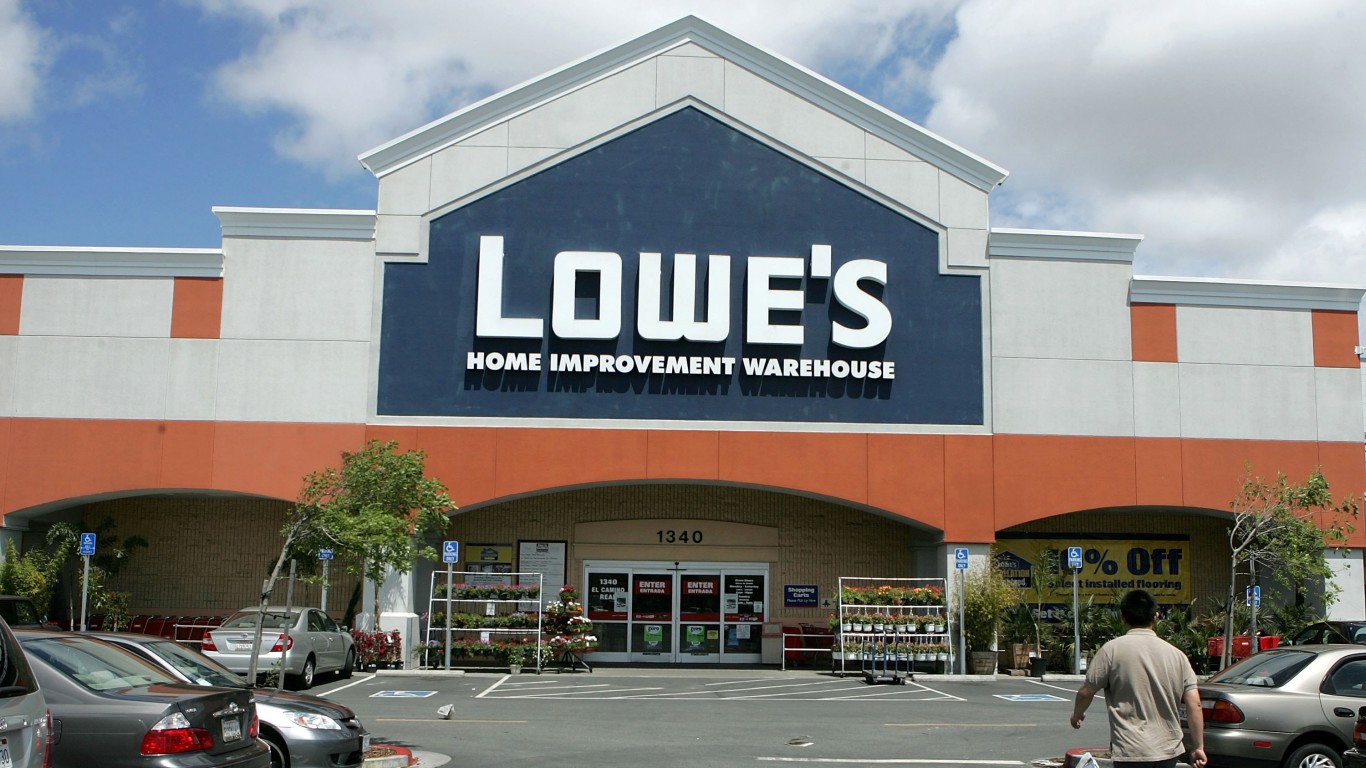
Home Depot (NYSE:HD | HD Price Prediction) and Lowe’s (NYSE:LOW) reported second-quarter results a day apart in August. Both leaned on Pro contractors while housing turnover sat near historical lows. Dividend checks matter most to retirees. Home Depot pays $2.33 per share per quarter, up from $2.30. Lowe’s pays $1.25 per share, up from $1.20.
Home Depot Pays More, Lowe’s Raises Faster
| Dividend Lens | Home Depot | Lowe’s |
|---|---|---|
| Annualized Dividend | $9.32 | $5.00 |
| Yield | 2.96% | 2.38% |
| Latest Raise | 1.3% | About 4.2% |
| Payout vs. Adjusted EPS | About 63% (FY2025) | About 41% (FY2026 guide) |


Home Depot’s yield provides more income today, and the company has paid a cash dividend for 156 consecutive quarters. The latest raise was small, though. Lowe’s payout uses a much smaller share of guided adjusted EPS of $12.25, so it has more room for bigger increases.
Home Depot generated $16.325 billion in operating cash flow last fiscal year against $3.679 billion of capex. That left about $12.6 billion to fund $9.152 billion in dividends. The buffer holds up, but operating cash flow slipped from $19.81 billion. Lowe’s generated $3.1 billion in free cash flow and paid $673 million in dividends.


Home Depot’s Pro Machine Outruns Lowe’s Caution
SRS comped above Home Depot’s average, and 90% of Home Depot stores closed a sale through SRS over the past year. Comps rose 1.7% and picked up to 2.3% in July. Momentum like that supports steady dividend growth.
Lowe’s comps rose just 0.2%. CEO Marvin Ellison credited “sustained growth in Pro, Online and Home Services” as DIY spending stayed weak. Management also skipped matching rivals’ summer promotions because it did not consider doing so “financially prudent.” Even so, full-year guidance narrowed to the low end.
Housing hits Lowe’s harder. Its Artisan Design Group (ADG) unit is 100% exposed to residential construction, and Foundation Building Materials (FBM) is about 45% exposed. Years of buybacks left Lowe’s with negative shareholders’ equity, and its adjusted debt-to-EBITDA stands at 3.0x. The target is 2.75x by mid-2027. Home Depot also has heavy leverage, with debt-to-equity of 5.10, and its ROIC slipped to 24.8% from 27.2%.


Frozen Housing Will Test Both Payouts
Home Depot management sees “no sign of an inflection point” in housing. My focus will be whether Lowe’s delivers on its third-quarter outlook, which calls for adjusted EPS about 7% below last year. I also want to see whether Home Depot holds fourth-quarter gross margin “right around flat” as tariff refunds fade.
Weighing Home Depot and Lowe’s for Retirement Income
For retirees living off dividends now, Home Depot’s case rests on current income. Its higher yield, longer payment record, and share-gaining Pro business add up to steadier income, even at about 22 times earnings. The whole appeal is cashing checks without selling shares, which is the setup we walked through in a free dividend ladder guide.
Lowe’s case rests on future dividend growth rather than current yield. It trades near 17 times earnings and is down 17.46% this year, compared with Home Depot’s 8.83% decline. Its lower payout ratio also leaves room for faster increases. If leverage reaches the target and DIY demand recovers, that case would strengthen.
Contact [email protected] for any questions or corrections.
Chris Lange is a financial and geopolitical writer with more than a decade of experience covering a myriad of topics. He has published thousands of articles for 24/7 Wall St., with past coverage focused heavily on stocks, IPOs, healthcare, defense, global affairs, and technology.
His work has been quoted, or referenced by a number of outlets including Business Insider, USA Today, Yahoo Finance, MSN, The Motley Fool, and many other publications. A graduate of Southwestern University, he studied business with a focus on investments and has previous experience in banking and startups.
When not reading or writing the news, he is following his passion for Lacrosse, playing chess, or building solar projects with his dad.