Home Depot vs. Lowe’s: 1 Stock Wins
Both home improvement giants have taken a beating this year, but one stock offers retirement investors far more than a discounted price tag, and the difference comes down to where each company stands when the housing market stays frozen.

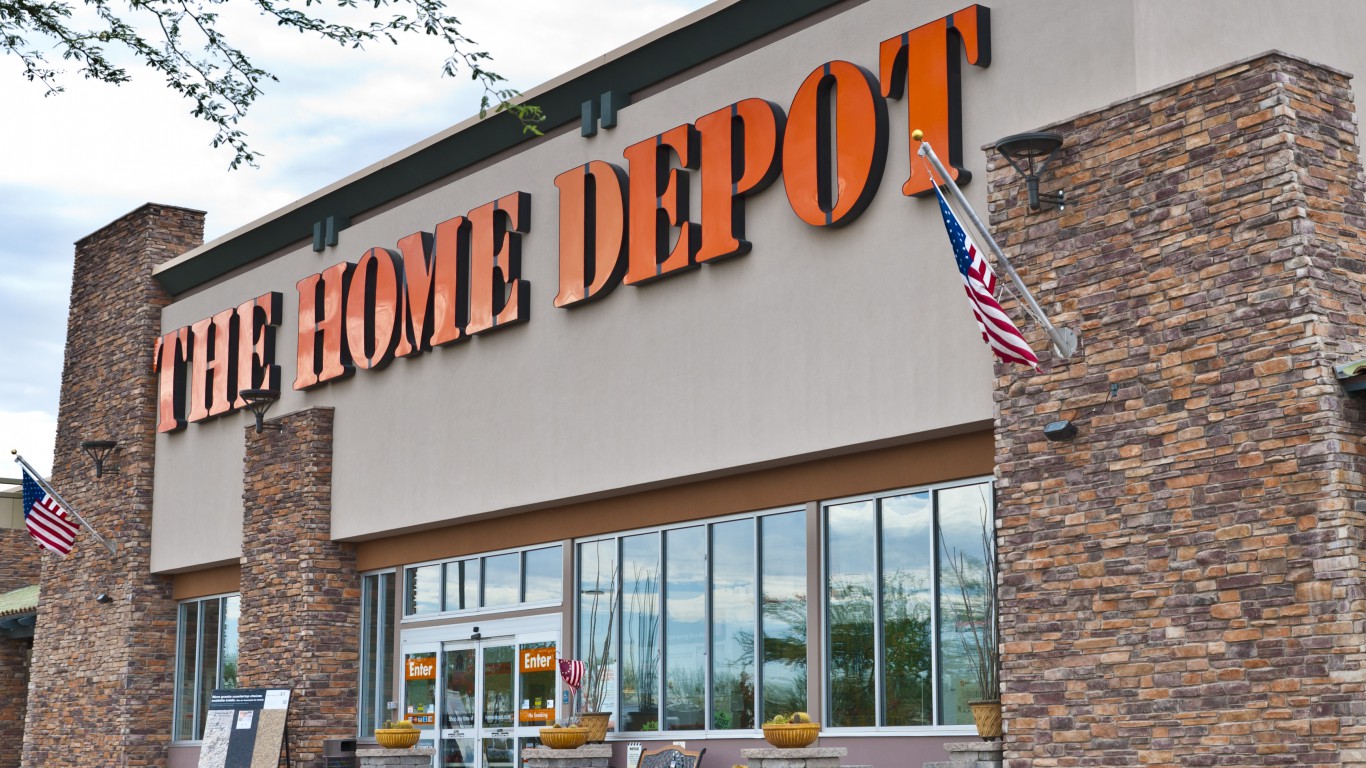
Home Depot (NYSE:HD | HD Price Prediction) orLowe’s (NYSE:LOW): Which home improvement stock should a retirement-focused investor own heading into the fourth quarter? Home Depot wins, and the gap is wider than Lowe’s discounted multiple suggests. Both stocks have fallen hard this year. Home Depot is down 15.15% year to date as of Monday morning, Sept. 28, while Lowe’s is down 23.57%.
That makes the choice sharper. The question is which business deserves a permanent spot in an income portfolio.
Housing Demand Backdrop: Home Depot Is Executing Through the Freeze

Both chains face the same stalled housing market. Existing home sales dropped to 3.98M annualized in August, the lowest reading in the past year, and housing starts slipped 2.6% to 1.27M. Home Depot’s Richard McPhail said housing turnover “has never been lower as a percentage of the housing stock.”
Execution separates them. Home Depot’s Q2 comps rose 1.7%, July sped up to 2.3%, and management reaffirmed full-year guidance. McPhail added, “We have had a start to Q3 that’s really consistent with the demand we saw in the second quarter.”
Lowe’s posted Q2 comps of 0.2%, saw July comps fall 1.2%, and cut its outlook to the low end: flat comps and adjusted EPS of about $12.25. For a Q4 holder, it gets worse. Lowe’s Brandon Sink said fourth-quarter comps are “implied negative,” with a winter storm comparison creating about a 50 basis point drag.
Winner: Home Depot.
Profitability and Returns: Home Depot’s Balance Sheet Buys Peace of Mind

Home Depot runs a 12.7% operating margin and 8.6% net margin, against 11.77% and 7.71% at Lowe’s. Lowe’s earns a stronger return on invested capital (ROIC, profit generated per dollar of capital) at 13.3% versus 6.8%, a genuine point in its favor.
Leverage decides this round. Lowe’s has net debt of 3.54 times EBITDA versus 2.65 for Home Depot, with interest coverage of 6.65 against 8.66. Lowe’s also faces about $1.6B in FY26 interest expense, $96M to $149M in quarterly intangible amortization from its acquisitions, and negative shareholders’ equity from buybacks. Its ADG unit is 100% exposed to residential construction. Retirees need margin of safety more than capital efficiency.
Winner: Home Depot.
Dividend and Valuation: Income Tilts the Scale

Lowe’s is cheaper, trading at 16x earnings versus 21x for Home Depot, with a free cash flow yield of 7.21% against 4.32%. Value hunters will notice.
Retirees cash dividend checks, though. Home Depot yields 3.13% on a $2.33 quarterly payout ($9.32 annualized), noting its 156th consecutive quarter of cash dividends. Lowe’s yields 2.48% on a $1.25 quarterly payout. Home Depot’s February raise was a modest 1.3%, but the starting yield is significantly higher and backed by $12.65 billion in FY25 free cash flow.
Winner: Home Depot.
Verdict: Home Depot Is the Retirement Pick for Q4

Home Depot takes all three categories. It has the stronger demand trends, the safer balance sheet, and the fatter dividend. Management expects Q4 gross margin “relatively flat versus last year,” a steady setup while Lowe’s guides to negative comps.
Lowe’s suits a different investor: a longer-horizon value buyer who wants the cheapest exposure to a housing rebound and can handle leverage. Its 10-year gain of more than 165% edges Home Depot’s 132.50%, and its CEO mentions an estimated $20 and $50 billion of pent-up project demand. If mortgage rates break lower, Lowe’s rebounds harder. Until that happens, the retiree’s stock is Home Depot. Watch existing home sales and building permits for the first sign that the freeze is thawing.
Contact [email protected] for any questions or corrections.
Joel South covers large-cap stocks, dividend investing, and major market trends, with a focus on earnings analysis, valuation, and turning complex data into actionable insights for investors.
He brings more than 15 years of experience as an investor and financial journalist, including 12 years at The Motley Fool, where he served as an investment analyst, Bureau Chief, and later led the Fool.com investing news desk. He has also co-hosted an investing podcast and appeared across TV and radio discussing market trends.