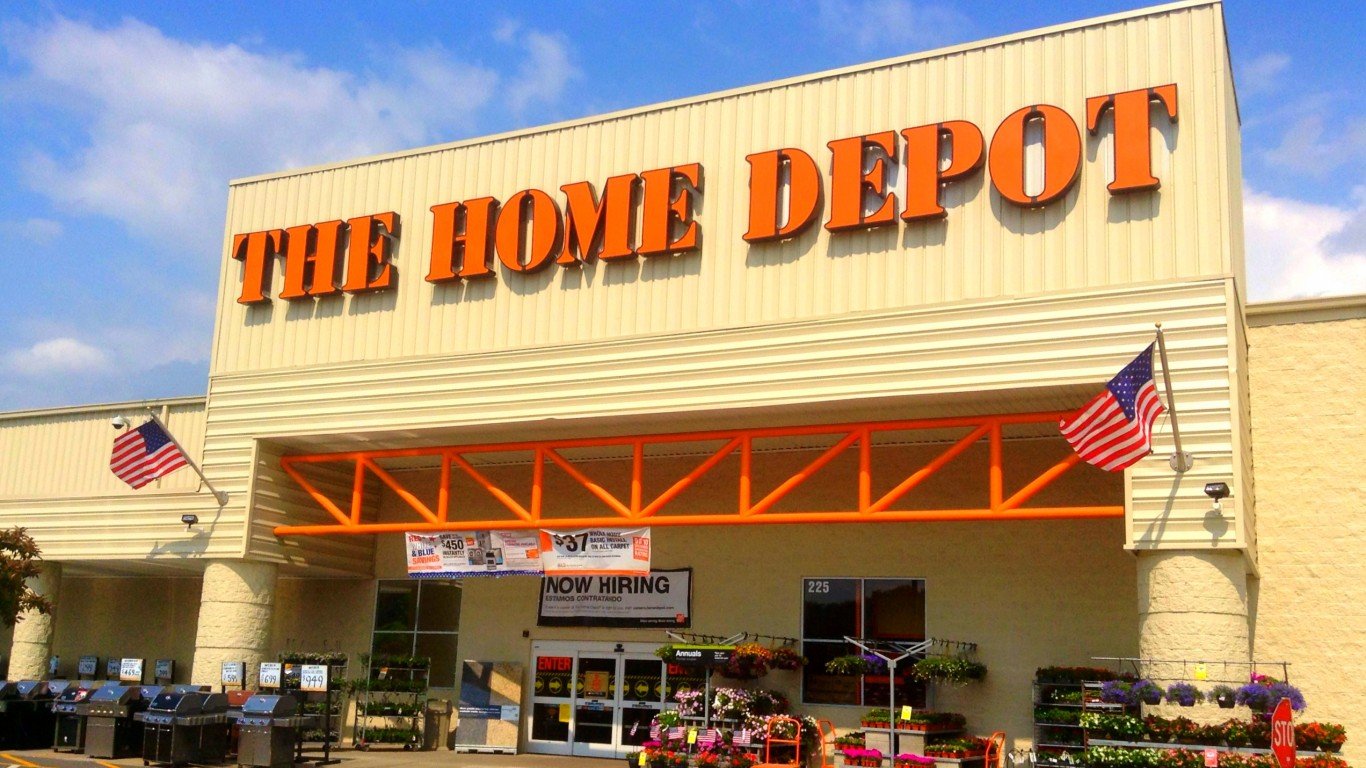
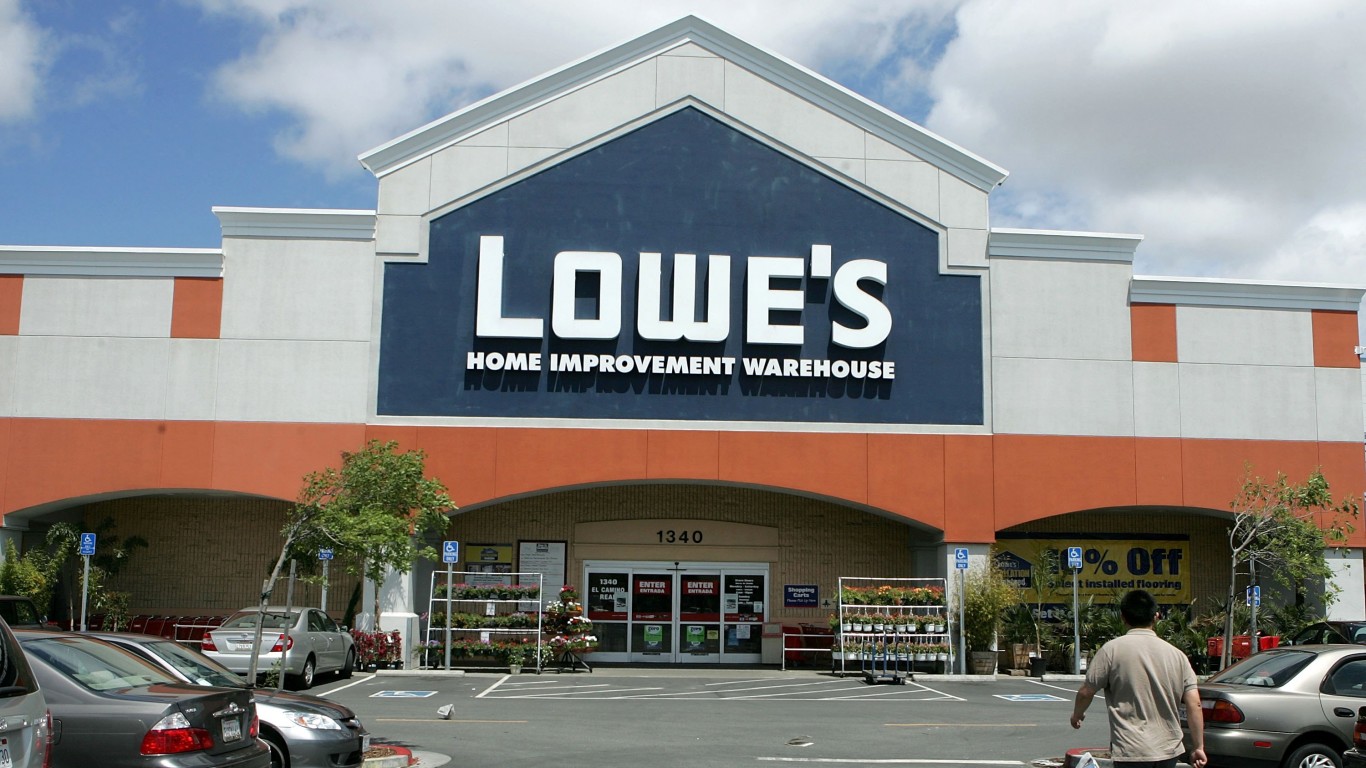
Home Depot vs. Lowe’s: One Payout Will Weather the Storm — Here’s Which
With existing home sales at historic lows and renovations drying up, both Home Depot and Lowe's face the same brutal headwind, but only one dividend has the cushion and growth runway to outlast a frozen housing market.

For an income investor weighing Home Depot (NYSE:HD | HD Price Prediction) against Lowe’s (NYSE:LOW), the real question is which dividend holds up better when the housing market stays frozen. Existing home sales sit at 3.98M annualized, the lowest reading in the trailing twelve-month history and inside what the series classifies as the soft range associated with high mortgage rates. Home Depot’s CFO said housing turnover has “never been lower as a percentage of the housing stock”. When people stop moving, they stop renovating. That is the identical headwind facing both payouts, and it sharpens the question of which one is actually safer.
Dividend Coverage Against Free Cash Flow
Home Depot generates a free cash flow yield of 4.11% against a dividend yield of 2.97%. Full-year free cash flow was $12.65B, down 22.5% from the prior period. The annualized dividend commitment sits at $9.32 per share against adjusted diluted EPS guidance of flat to +4.0% off $14.69. Covered, but the cushion has thinned as free cash flow shrank.

Lowe’s runs a free cash flow yield of 6.93% against a dividend yield of 2.39%. Quarterly free cash flow was $3.1 billion, and dividends paid were $673 million. Adjusted EPS guidance of approximately $12.25 covers an annualized payout of $5 multiple times over. If comparable sales stay flat, as Lowe’s already guides, coverage barely moves. Lowe’s wins this one on the strength of the gap between cash generation and the committed payout.

Pro Versus DIY Customer Mix
Home Depot has spent aggressively to lean into the professional contractor. The SRS Distribution footprint runs 1,340+ locations, and management said “Pro posted positive comps and outperformed DIY”. Comparable sales grew 1.7%, and big-ticket transactions over $1,000 rose 2.4%.
Lowe’s remains more exposed to the discretionary DIY customer who cut back first. CEO Marvin Ellison acknowledged “discretionary DIY demand remains under pressure”, and comparable sales grew just 0.2%. The Pro pivot is real, but it is smaller and less mature than Home Depot’s. In a frozen housing market where repair and small-ticket work carries the load, Home Depot’s customer mix wins.
Growth Record of the Payout
Home Depot has paid dividends for 156 consecutive quarters, an exceptional record. The most recent raise took the quarterly payout from $2.30 to $2.33, an increase of 1.3%. Continuity is elite. Growth has decelerated to a token bump.
Lowe’s carries Dividend Aristocrat status, and the latest raise took the quarterly payout from $1.20 to $1.25. The trailing progression shows steady step-ups from 1.05 to 1.10 to 1.15 to 1.20 to 1.25. Lowe’s is raising faster off a lower payout ratio, and the runway is longer (we ranked ten of the longest-running raisers by valuation in a free report here: 10 Dividend Kings to Buy Now and Hold Forever). Lowe’s wins.
Verdict
Lowe’s is the better dividend for an income-focused investor at or near retirement. It carries the wider free-cash-flow cushion, the larger and more consistent recent raises, and Aristocrat status. Home Depot’s payout is safer than most in retail, but the payout ratio is higher, the last raise was minimal, and the stock has been under heavier pressure, down 25% over the trailing year versus Lowe’s at 26.27%. A low payout ratio is only reassuring if earnings hold, and Lowe’s flat comparable sales guide keeps coverage intact even if the housing freeze extends. What would flip the verdict: a sustained drop in mortgage rates that reignites housing turnover and larger remodels. In that scenario, Home Depot’s Pro-heavy mix and SRS platform take the win. Absent that catalyst, Lowe’s is the more defensible income holding.
Contact [email protected] for any questions or corrections.
Chris Lange is a financial and geopolitical writer with more than a decade of experience covering a myriad of topics. He has published thousands of articles for 24/7 Wall St., with past coverage focused heavily on stocks, IPOs, healthcare, defense, global affairs, and technology.
His work has been quoted, or referenced by a number of outlets including Business Insider, USA Today, Yahoo Finance, MSN, The Motley Fool, and many other publications. A graduate of Southwestern University, he studied business with a focus on investments and has previous experience in banking and startups.
When not reading or writing the news, he is following his passion for Lacrosse, playing chess, or building solar projects with his dad.