Jim Cramer Calls Kimberly-Clark a Hated Dividend King. Is He Right?
Jim Cramer called Kimberly-Clark hated, but the real story behind its dividend streak, its free cash flow, and a social media disinformation campaign in China raises harder questions than Cramer let on.


Jim Cramer has a frank label for one of the market’s oldest dividend growers. Talking about Kimberly-Clark (NASDAQ:KMB | KMB Price Prediction) on CNBC on October 15, 2026, he said: “This was a premier name, and it’s got a 5.5% dividend, whatever you want to call it, dividend king. And it’s hated, and it’s hated because the last couple of quarters have been not great.”

His view hasn’t changed since summer. On Mad Money in July, Cramer called the Huggies and Kleenex maker “not just a dividend aristocrat with 54 consecutive years of dividend increases, this is a dividend king” and pointed out that “the stock itself has been going nowhere for ages.” CNBC reported the next day that Kimberly-Clark was having its best week in four years.
Checking Cramer’s Dividend Math
The streak checks out. As Cramer said, Kimberly-Clark’s dividend growth run reached 54 consecutive years as of the second quarter, which qualifies it as a Dividend King (we ranked ten Kings by valuation right now in a free report).
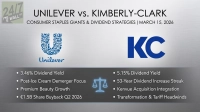
The yield he quoted is too high. The quarterly payout is $1.28. At the current price of $107.04, that works out to a yield of about 4.78%. Even at the $98.29 close on October 13, the yield was roughly 5.21%. The streak itself is also slowing. This year’s increase from $1.26 to $1.28 was only about 1.59%.
Free Cash Flow Is the Weak Spot in the Dividend
Measured against earnings, the payout looks fine. The annualized dividend equals about 68% of 2025 adjusted EPS of $7.53. Cash coverage is much lower. In 2025, free cash flow came to $1.639 billion while dividends totaled $1.66 billion, so the company paid out roughly 101% of its free cash flow. Through the first half of 2026, free cash flow of $877 million covered dividends at about 96%.
A big reason is heavy spending on the company’s transformation. Capital expenditures rose to $1.138 billion in 2025 from $721 million in 2024. The balance sheet can absorb that. Total debt dropped to $6.517 billion at the end of June from $7.296 billion at year-end, and cash rose to $956 million.
Why Investors Turned on Kimberly-Clark
Cramer’s “not great” description of recent quarters is accurate. In its second-quarter SEC filing, Kimberly-Clark reported revenue of $4.19 billion, missing the $4.22 billion estimate. North American sales fell 1.2%. A social media disinformation campaign in China about diaper quality cut organic sales by about 50 bps. The company also exited its U.S. private label diaper business and dealt with a fire at a Los Angeles distribution center. Management now expects adjusted EPS attributable to Kimberly-Clark to decline by a low single-digit amount in constant currency this year.

The pending acquisition of Kenvue (NYSE:KVUE), valued at about $48.7 billion, has added uncertainty. The stock is down 6.84% over the past year and 0.99% over five years.
Catalysts Behind the October Rally
Several worries eased last week. Kimberly-Clark released preliminary third-quarter revenue and EPS that topped Wall Street estimates. Chinese authorities said they found no formaldehyde in Huggies diapers. The European Commission approved the Kenvue deal on the condition that the company sell some feminine care brands in the region, and Brazilian regulators also signed off (per CNBC and MLex reports). The shares are up 8.9% over the past week and 10.11% year to date.

Verdict: Cramer Is Mostly Right
Cramer has the big picture right, though his yield figure is high. Kimberly-Clark has beaten EPS estimates for five consecutive quarters, expanded its adjusted gross margin by 190 bps last quarter, and trades at about 14 times 2025 adjusted earnings. For a Dividend King, that valuation suggests investors dislike the stock. The recent selloff shows investor frustration with the last few quarters.
The real yield is about 4.8%, though, and with free cash flow just covering the dividend, investors should expect small annual increases for now. The next milestones are the full third-quarter report, completion of the Kenvue deal by the end of 2026, and whether free cash flow coverage improves once capital spending comes down.
Contact [email protected] for any questions or corrections.
Chris Lange is a financial and geopolitical writer with more than a decade of experience covering a myriad of topics. He has published thousands of articles for 24/7 Wall St., with past coverage focused heavily on stocks, IPOs, healthcare, defense, global affairs, and technology.
His work has been quoted, or referenced by a number of outlets including Business Insider, USA Today, Yahoo Finance, MSN, The Motley Fool, and many other publications. A graduate of Southwestern University, he studied business with a focus on investments and has previous experience in banking and startups.
When not reading or writing the news, he is following his passion for Lacrosse, playing chess, or building solar projects with his dad.