Early SpaceX investor Diamandis: Elon’s empire could hit $1 trillion revenue by 2028-29
Peter Diamandis has known Elon Musk for 27 years and invested in SpaceX early, so when he makes a bold revenue prediction tied to a single vertically integrated empire spanning AI, satellites, robots, and solar, the question is whether the…

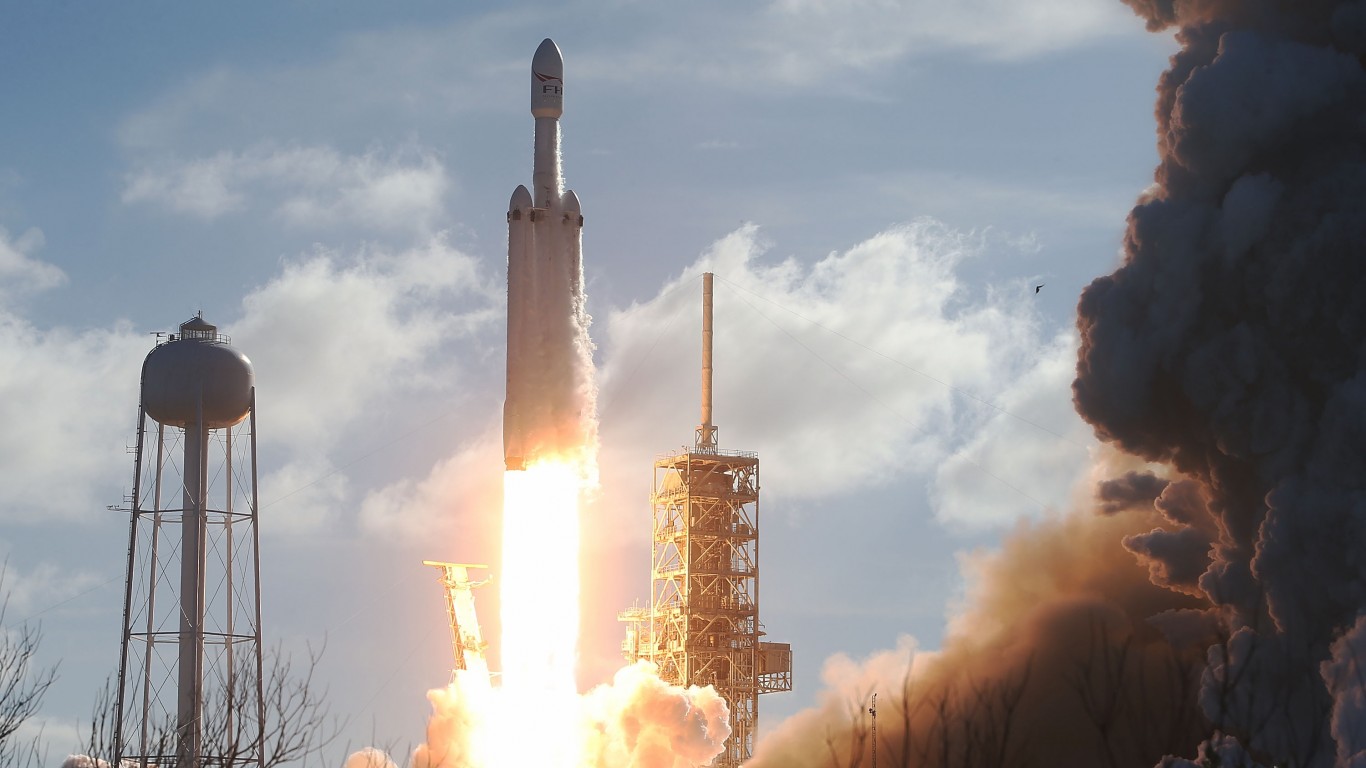
SpaceX (NASDAQ:SPCX | SPCX Price Prediction) shares rose 7.79% to $159.31 on October 21, one day after the rocket and satellite company reported quarterly revenue of $14.60 billion. Peter Diamandis, the XPRIZE founder and early SpaceX investor who has known Elon Musk for 27 years, used that moment to make the strongest case.
“I do 100% believe he could hit $1 trillion in revenue for this company in 2028 or 2029,” Diamandis said. He also predicted SpaceX would become the first $10 trillion company and later a $100 trillion one.
A gap remains between reported results and Diamandis’s vision. SpaceX and Tesla (NASDAQ:TSLA) third-quarter revenue together annualizes to about $170.6 billion, and SPCX trades 1.02% below its June 12 level despite strong results.
Diamandis sees a single vertically integrated superintelligence company spanning AI, robots, connectivity and solar. The market still prices two businesses moving at very different speeds, and some of his argument already shows up in the financial statements while some rests on faith in Musk.
How Musk’s Businesses Could Feed Each Other
The thesis is a loop: solar powers compute, compute runs AI, Starlink carries the traffic, and Optimus robots and Cybercab turn software into physical revenue.
Diamandis cited 13 GW of compute coming online, possibly rising to 20 GW, plus a 100 GW solar commitment across both companies.
The digital half already makes money. SpaceX’s AI segment brought in $7.60 billion in the third quarter, up 830%, while Connectivity added $5.20 billion.
Tesla’s half is earlier. Revenue was essentially flat at $28.05 billion, operating income fell to $718 million, and Optimus customer deliveries are likely toward the end of next year.
Starlink Becomes the Network for AI Agents
Diamandis calls Starlink the nervous system of the planet for AI agents talking to each other. Musk wants 100 times current capacity within three years.
That capacity matters because agents run constantly, and Musk said Starlink revenue should track total bandwidth delivered. Consumer subscribers already reached 13.6 million at $69 monthly ARPU.
That plan depends on Starship performing as intended. V3 satellites first reached orbit on Flight 14, and weekly flights are planned for the first half of next year.
That expansion is expensive, and SpaceX spent $19.6 billion on capital expenditures in the quarter and expects $35 to $40 billion in the fourth quarter.
Separating Trillion-Dollar Revenue From Quadrillion-Dollar Dreams
The revenue call is aggressive but measurable. Management guided first-quarter 2027 revenue to $33 to $37 billion and holds $63 billion in backlog.
The valuation claims belong in another category. At roughly $2.10 trillion today, SpaceX would need to grow about 4.8 times to reach $10 trillion, a level no company has reached.
Diamandis also conveyed Musk’s view that SpaceX could be worth $1 quadrillion, multiples of world GDP. A value larger than the entire global economy reflects belief about the distant future, and no cash flow model can support it today.

Weighing the Messenger and the Political Shield
A longtime friend and early investor has every reason to be bullish. Musk’s record on reusable rockets supports him, although even now he calls a 2028 Louisiana launch a goal and 2029 the likely date.
Diamandis argues Washington will depend too heavily on SpaceX over the next three years to break it up, even under a less friendly administration. The company signed 18 new National Security Space Launch missions last quarter.
That dependence also creates risk, because one company controlling launch, satellite communications, and AI compute invites regulatory resistance and focuses key-person risk on Musk.
The merger adds another layer of risk. Musk said a combination needs approval from 50% of all Tesla shares, and he is excluded from special committee talks as a conflicted party, leaving open who captures any premium.
What SpaceX’s Results Signal for SPCX Shares
SPCX carries a stronger fundamental case than its recent share performance suggests, although the stock remains volatile. Revenue rose 161% and net income jumped to $4.40 billion, yet the stock has slipped slightly since June.
Set aside the $100 trillion talk. The reasonable case rests on near-term guidance that, if delivered, keeps SpaceX on a credible path toward the revenue Diamandis describes.
Tesla offers less direct exposure to the same ecosystem. It trades at 402 times earnings with flat revenue, and any merger premium remains uncertain.
The main risk is spending. If compute pricing falls below the $30 to $50 per watt range, the payback math behind the capital program changes quickly.
Contact [email protected] for any questions or corrections.
Omor Ibne Ehsan is a writer at 24/7 Wall St. He is a self-taught investor with a focus on growth, cyclical, and dividend equities that have strong fundamentals, value, and long-term potential. He also has an interest in high-risk, high-reward investments such as penny stocks.