Trump Wants Data Centers to Pay a “Dividend” to Their Neighbors
Trump declared on Truth Social that data center developers must generate their own power and pay neighbors a dividend, but his posts named no amounts, no enforcement mechanism, and no federal program to back any of it up.


On Wednesday, October 21, 2026, President Donald Trump posted on Truth Social that companies building big data centers should pay the communities that host them a “dividend.” In a separate post, he wrote that “New and large, in some cases gigantic, Data Centers are mandated by me to make their own electricity.”
No executive order, directive, or rule has been issued. The White House rapid response account described the posts as an order, but the posts named no dollar amount, payment formula, or federal program.
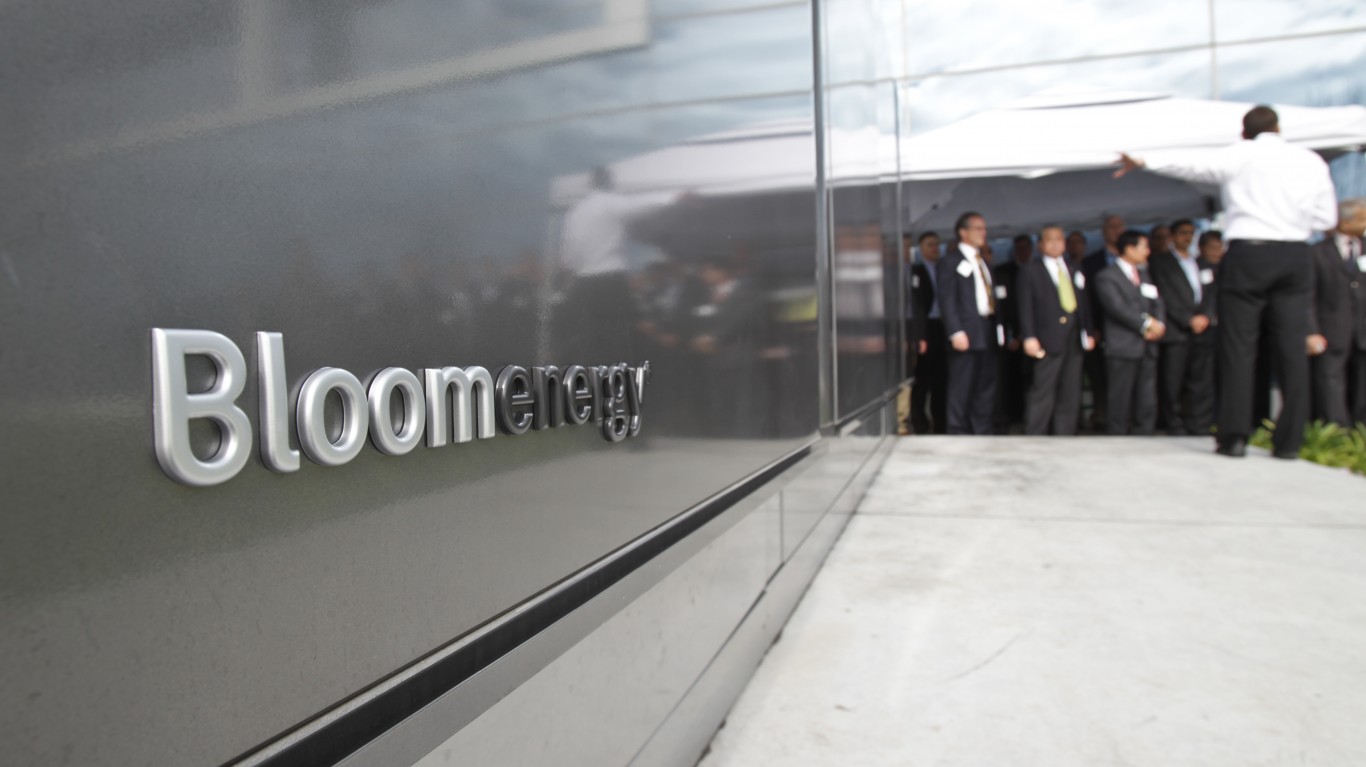
That day, Bloom Energy (NYSE:BE) rose 7.13% to $238.53, and GE Vernova (NYSE:GEV | GEV Price Prediction) gained 4.00% to $925.92. Those moves are context only. Bloom was already climbing ahead of its upcoming quarterly report.
What Trump Said and What He Left Out
Trump wrote that developers who want local support should pay the community “and/or individuals within the community” a dividend. He also said, “Data Centers that were highly unpopular in a certain area, have become extremely popular when a financial deal is struck.”
On power, he said data centers should “give or sell any excess back to the local community, or grid,” and on prices, “In fact, there could be a substantial decrease.” The posts leave out who pays, how much, who qualifies, and who enforces any of it.
An Idea Trump Has Built Over Several Weeks
On September 29, 2026, when he hosted tech leaders at the White House, Trump told reporters that people in host communities could “get paid a dividend.”
In a local TV interview published October 19, Donald Trump said operators “who have plenty of money” should pay residents. Trump cited a place where “everybody in the community got $10,000 and everybody thought it was the greatest thing.”
Why Cash Has Not Always Bought Local Consent
Developers of a proposed Amazon (NASDAQ:AMZN) Web Services campus in Hazle Township, Pennsylvania, offered every resident the $10,000 Trump cited. Residents rejected it in October.
In De Soto, Kansas, Digital Realty (NYSE:DLR) proposed per-household utility and property-tax credits for 10 years for a 600-megawatt campus. A payment does nothing about noise, water use, lost farmland, or the fear that power bills will rise, and those are the complaints neighbors raise most often.
In March, the administration’s Ratepayer Protection Pledge committed big tech firms to cover the full cost of power delivery and grid upgrades. Signing it was voluntary.
In October, the Federal Energy Regulatory Commission rejected efforts to require data centers to bring their own generation to the largest U.S. grid system. Utility bills have also turned into a midterm issue. That could hurt Republicans, which helps explain why the White House is pushing for on-site power while the regulator declined to require it.
What On-Site Power Stocks Stand to Gain or Lose
In the bull case, if self-generation becomes standard practice, Bloom’s fuel cells benefit most, because they produce power where it is used. On Bloom’s July earnings call, its chief executive said: “communities welcome Bloom, and that is proving to be a real competitive advantage.”
In the bear case, dividend payments plus on-site generation make every project more expensive, and nothing in either post says who absorbs that cost.
BMO Capital raised its Bloom target to $260 from $227. Even so, a $70.25 billion market value already assumes Bloom wins, against 2026 revenue guidance of $3.9 billion to $4.2 billion.
The case for on-site power stocks rests on orders already on the books, and the posts add little. GE Vernova looks less exposed to the policy than Bloom. Its $176 billion backlog does not depend on this policy. Data centers make up only 20% of its contracted gas gigawatts, so the shares would hold up if the policy goes nowhere. To see whether “mandated by me” turns into an actual rule, look for an executive order published in the Federal Register.

Contact [email protected] for any questions or corrections.
Omor Ibne Ehsan is a writer at 24/7 Wall St. He is a self-taught investor with a focus on growth, cyclical, and dividend equities that have strong fundamentals, value, and long-term potential. He also has an interest in high-risk, high-reward investments such as penny stocks.