Cruise Stocks Fall as Oil Price Hits Five-Month High: Norwegian Sinks 6%, Royal Caribbean and Carnival Drop 4%
Surging oil prices are hammering cruise stocks at the worst possible moment, and one major operator carrying $15 billion in debt and a CEO who admitted the company's problems are largely self-inflicted may be running out of room to absorb…

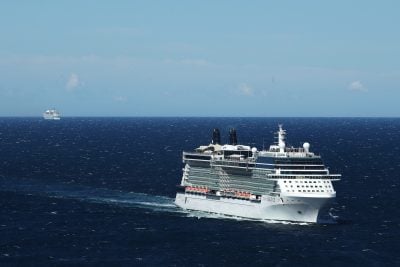
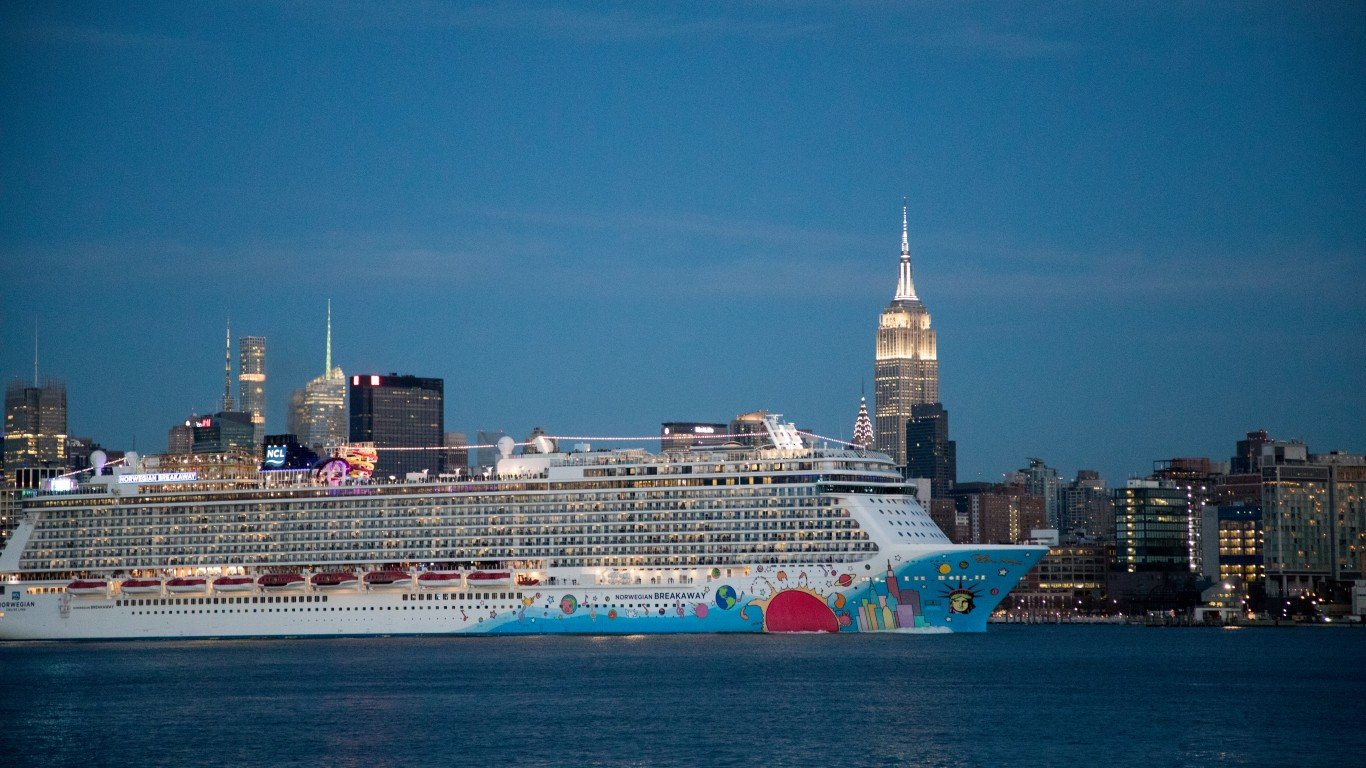
Oil’s run to a five-month high is landing hardest on cruise operators, whose ships burn fuel that ranks among their largest operating costs. Norwegian Cruise Line Holdings (NYSE:NCLH | NCLH Price Prediction) stock is off by 6%, trading at $14.67. That’s the biggest loss among the major U.S. cruise lines and a fresh blow to Norwegian shares, which are now down 33% year to date (YTD).
Meanwhile, Royal Caribbean Group (NYSE:RCL) stock is at $275.17, down 4%, marking a smaller slide than Norwegian’s. Carnival Corporation (NYSE:CCL) shares are down 4% to $25.92, matching Royal Caribbean’s decline. With a market value of $6.74 billion, Norwegian stock trails either rival by a wide margin.
Energy producers are trading in the opposite direction. The Energy Select Sector SPDR ETF (NYSEARCA:XLE) is up 2% to $68.90, lifting its gain to 57% YTD. That’s important because energy-market dynamics can have a direct impact on cruise stocks.
Broader stocks are lower, with the SPDR S&P 500 ETF Trust (NYSEARCA:SPY) down 0.6% to $759.69. So, what’s weighing on cruise stocks now?
Iran Tensions Send Crude to a Five-Month High
Crude oil reached a five-month high on concerns that the U.S. conflict with Iran could flare up again. The WTI crude oil price stands at $102.32 per barrel, up 2.86% over the past 24 hours. That level lifts the fuel bill that cruise operators pay to run their ships.
Fuel is one of the largest operating costs for Norwegian, Royal Caribbean and Carnival, so higher oil prices weigh on all three at once. The U.S. Energy Information Administration reported in May that the de facto closure of the Strait of Hormuz sent Brent to a high of $138 per barrel on April 7. At the pump, regular gasoline averaged $4.28 a gallon nationally as of October 19.
Norwegian’s Turnaround Meets a Fuel Squeeze
Norwegian entered this oil spike already under pressure. In Q2 2026, the company’s fuel price per metric ton net of hedges rose to $888 from $659 a year earlier. Management also lowered full-year guidance at the time, cutting its adjusted EPS outlook to approximately $1.50.

A biggest balance sheet adds to the strain at Norwegian, where net leverage stood at 5.3x on $15 billion of total debt in Q2. Demand is the bigger worry at Norwegian, with Q3 2026 net yield guided down 8.9% in constant currency. John Chidsey, CEO at the time of the July 30 earnings call, stated that “the vast majority of our problems are self-inflicted.”
Cost cuts give Norwegian some relief. The company’s second-quarter adjusted EPS of $0.48 topped the $0.34 estimate. Executives identified another $100 million in annualized savings on top of $125 million announced previously.
Top-line growth adds a bright spot for Norwegian. Revenue at Norwegian rose 4.9% year over year to $2.64 billion in Q2, driven by added capacity days. That mix of solid execution and rising fuel bills leaves the case for Norwegian shares balanced between genuine progress and fresh risk.
Norwegian’s Third-Quarter Report Puts Fuel Costs to the Test
Royal Caribbean and Norwegian report third-quarter results next week. Norwegian’s report could show whether its cost outlook holds up against higher fuel prices. The open variable for the Energy Select Sector SPDR ETF is the durability of crude’s rally, since the fund’s gains rest on the same move that’s hurting cruise stocks.
Riding this crude rally without a plan for the exit is the risk, and we laid out both sides, how to profit while it runs and when to step away, in a free handbook here: The Bubble Survivor’s Handbook.
This setup leaves Norwegian stock with the largest decline among the major cruise lines and a turnaround that management described in July as being in its “early stages.” Leadership expects newer savings initiatives to have limited impact on 2026 results, so investors weighing their exposure to NCLH stock need to scale their holdings carefully given Norwegian’s near-term dependence on demand and fuel trends.
Contact [email protected] for any questions or corrections.
David Moadel is financial writer specializing in stocks, ETFs, options, precious metals, and Bitcoin. David has written well over 1,000 articles for leading online publications, helping investors understand markets, income strategies, and risk.His work has appeared in The Motley Fool, InvestorPlace, U.S. News & World Report, TipRanks, ValueWalk, Benzinga, Market Realist, TalkMarkets, Finmasters, 24/7 Wall St., and others.With a master’s degree in education, David has taught at the elementary, high school, and college levels. That teaching background shapes his writing style: clear, educational, and practical. David has also built a loyal social-media audience by providing trustworthy financial content on YouTube, X/Twitter, and StockTwits.