OpenAI Just Cut Its Valuation Target by $150 Billion
OpenAI slashed its funding ask by a staggering amount just as public AI stocks cratered, and the timing raises serious questions about what private investors know that the market does not.


On Thursday, October 22, 2026, OpenAI reportedly cut the valuation it is asking from new investors to $1.25 trillion. Earlier in October, it had pitched $1.4 trillion to potential backers including BlackRock (NYSE:BLK | BLK Price Prediction) and UAE fund MGX. The $150 billion reduction followed resistance from some investors, and no reason for the lower figure was reported.
Both numbers are pre-money asking prices, meaning the company’s value before new cash arrives, and the talks have not closed. OpenAI declined to comment.
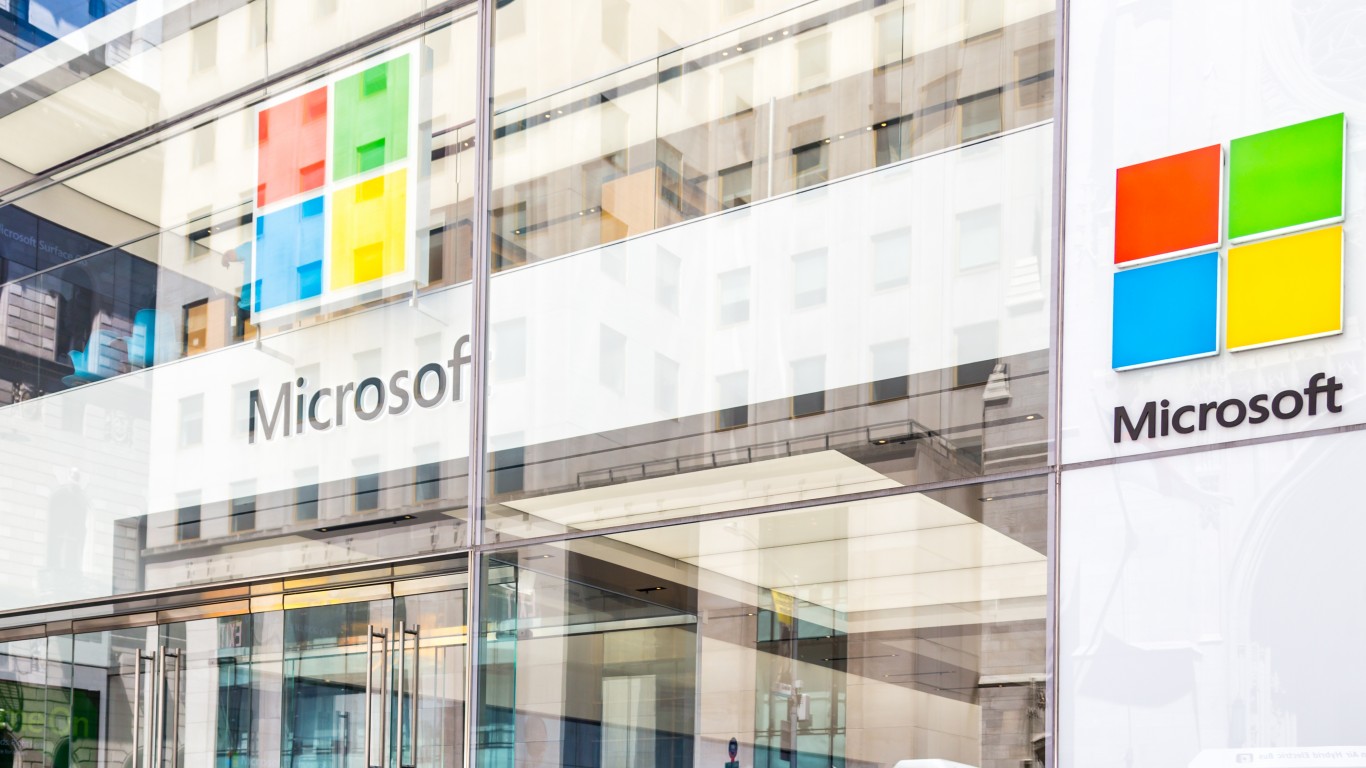
Microsoft (NASDAQ:MSFT) is OpenAI’s largest listed backer. Its shares fell $11.87, or 2.23%, to $521.08, for a market value of $3.87 trillion. On the same day, the Nasdaq Composite fell 2.60% to 26,008.86, its steepest drop since early June, amid fears about AI spending.
In after-hours trading, Microsoft then rose 0.18% to $522.00 as of 7:59 p.m. ET. That suggests the market sees a lower private price tag as a small matter for a company this size.

What OpenAI Has Signed Versus What It Is Still Asking
Nothing has been signed yet, although OpenAI is close to a funding round of up to $30 billion led by investors from the United Arab Emirates and Coatue. The round is presented as an “opportunistic” bridge ahead of a possible initial public offering (IPO).
On October 22, OpenAI told investors it aims to have signatures by the end of the following week, and the final size is still under discussion. It is also negotiating a separate deal to buy more computing capacity from the UAE.
Another report on the same day carried the headline “OpenAI Shifts Value to $1.25 Trillion as Funding Talks Finalize,” at which price OpenAI would be the most valuable private company ever. It would also sit well above the $852 billion post-money value from March. OpenAI raised $122 billion then from investors including Amazon (NASDAQ:AMZN), SoftBank and NVIDIA (NASDAQ:NVDA).
Microsoft’s Azure Contract Matters More Than Its Stake
When OpenAI restructured in October 2025, Microsoft valued its investment in OpenAI Group PBC at about $135 billion, “representing roughly 27 percent on an as-converted diluted basis.” The March round has likely diluted that share, and no updated percentage has been disclosed.
The contract matters more than the stake. OpenAI agreed to buy an extra $250 billion of Azure cloud services, and Microsoft’s rights to OpenAI’s models and products run through 2032.
Azure grew 43% in fiscal Q4 and passed $100 billion in annual revenue for the first time. Commercial remaining performance obligations, which is revenue already under contract but not yet booked, rose 84% to $678 billion.
Private Investors Are Starting to Push Back on AI Prices
Private investors pushed back on OpenAI’s price on the same day public AI stocks sold off, and OpenAI reportedly wants its commitments in place before rival Anthropic’s expected November IPO filings make the two companies easier to compare.
Anthropic is reportedly seeking as much as $2 trillion, although some investors have pushed for something closer to $1.5 trillion. Microsoft has exposure there as well. It booked a $3.2 billion gain on its Anthropic investment in fiscal Q4.
OpenAI confidentially filed IPO paperwork in June. In August, chief financial officer Sarah Friar told employees the company “will be a public company in 2027.”
Microsoft’s main risks are its reliance on one partner and the return from its AI spending. OpenAI investment losses reached $3.1 billion in fiscal Q1 2026. Fiscal 2026 capital spending of $115.95 billion pushed free cash flow down 6.46%.
What Microsoft’s OpenAI Exposure Means for Its Valuation
The OpenAI stake is about 3-4% of Microsoft’s value, while the Azure contract and the $678 billion backlog drive its earnings.
A trailing price-to-earnings ratio of 29 is reasonable for a company whose fiscal 2026 net income rose 31.34%. Microsoft offers broader AI exposure than a pure AI name. It owns stakes in both OpenAI and Anthropic and also sells the cloud capacity OpenAI has contracted to buy.


Microsoft faces a key test on October 28, when it reports fiscal first-quarter results. Watch Azure growth, OpenAI-related commitments and AI capital spending. This view would be undermined if Azure growth falls below fiscal Q3’s 40% rate or the stock closes below its September 22 level of $498.
Contact [email protected] for any questions or corrections.
Omor Ibne Ehsan is a writer at 24/7 Wall St. He is a self-taught investor with a focus on growth, cyclical, and dividend equities that have strong fundamentals, value, and long-term potential. He also has an interest in high-risk, high-reward investments such as penny stocks.