Telecom Stocks Fall as SpaceX Eyes 80,000 Cell Sites: T-Mobile Sinks 5%, AT&T Drops 4%, Verizon Slides 3%
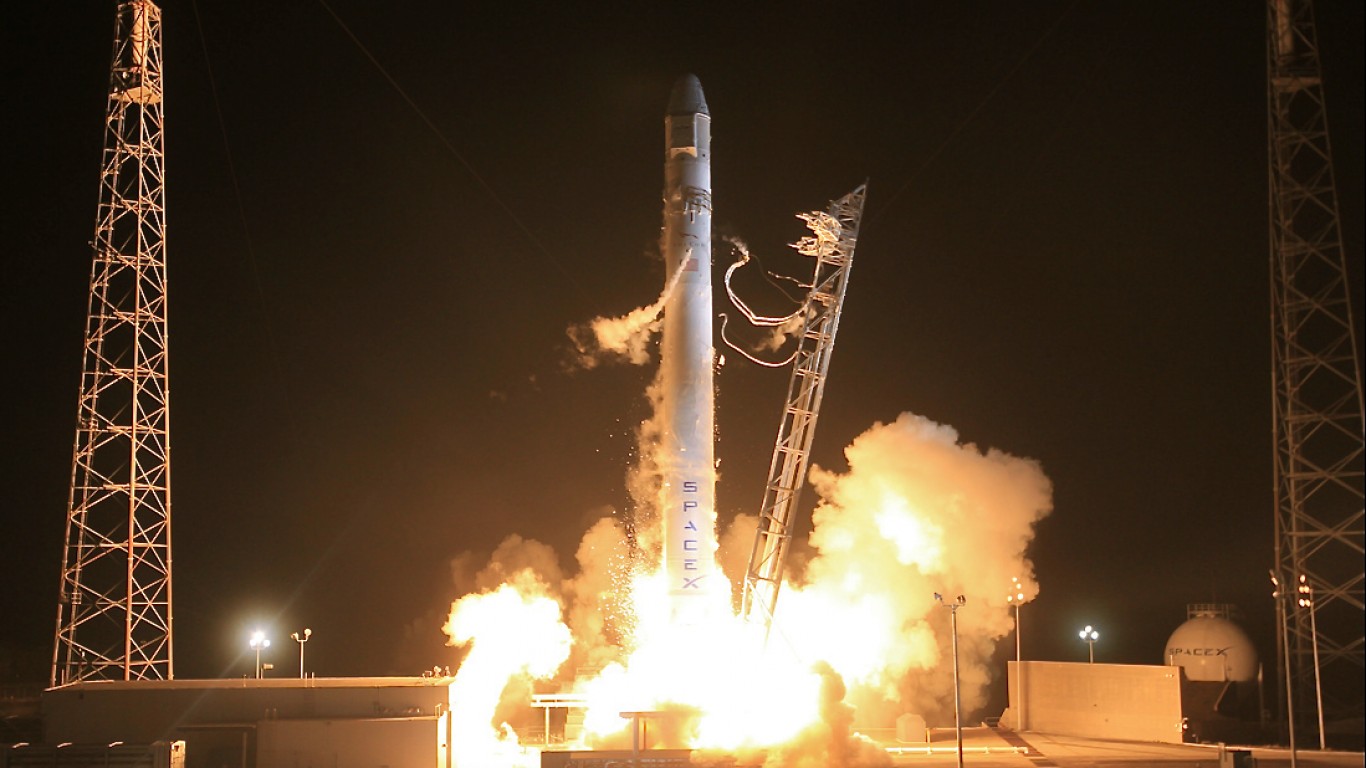
SpaceX is quietly assembling every piece it needs to become a fourth national wireless carrier, and the stocks of the three companies that would lose the most are already reacting.

A report that SpaceX (NASDAQ:SPCX | SPCX Price Prediction) wants access to 80,000 U.S. cell sites is hitting every major national wireless carrier at once. Shares of T-Mobile (NASDAQ:TMUS) fell 5% to $150.74 during morning trading, a sign of how directly the SpaceX threat lands on its wireless business.
Meanwhile, AT&T (NYSE:T) stock is down 4% to $21.79, a smaller decline that still tracks T-Mobile’s slide. Verizon Communications (NYSE:VZ) stock is trading at $43.70, down 3%, the most resilient of the national carriers.
Losses in the carriers are weighing on the sector fund that holds each of them. The Communication Services Select Sector SPDR ETF (NYSEARCA:XLC) is down 1% to $105.94; for broad-market context, the SPDR S&P 500 ETF Trust (NYSEARCA:SPY) is down 0.5% to $759.90.
Bloomberg Report Puts a Fourth Carrier in Play
Bloomberg reported, citing people familiar with the matter, that SpaceX is in talks with at least one major cell tower owner to secure access to a large network of U.S. cell sites. Such a deal would move SpaceX a step closer to building a fourth nationwide wireless carrier to take on AT&T, Verizon and T-Mobile in their home market. Starlink already serves over 13.6 million consumer subscribers worldwide, giving SpaceX an existing customer base to build from.
SpaceX laid the groundwork earlier this month by agreeing to acquire nationwide 800 MHz spectrum licenses to advance its Starlink Mobile strategy. When that agreement emerged, AT&T, T-Mobile and Verizon shares landed among the S&P 500’s top decliners. The tower talks would fill a separate gap, pairing that spectrum with the ground infrastructure a terrestrial carrier needs.
(we broke down why the tower owners come out ahead no matter which carrier wins this fight in a free report: SpaceX Is Coming for the Phone Companies, but the Tower Owners Win Either Way)
Why AT&T, Verizon and T-Mobile Are Falling Together
National networks at AT&T, Verizon and T-Mobile run on leased tower space, and each carrier makes recurring revenue from phone plans. Starlink delivers connectivity from satellites in orbit, so tower access would give SpaceX the ground-level footprint that space-based service lacks on its own. Adding towers to satellites and spectrum points to a fourth national competitor, which is why the three stocks are moving as a block.
A new nationwide rival would chase the same subscribers that AT&T, Verizon and T-Mobile already serve. That pressure on pricing and churn forms the bear case. Scale anchors the bull case, since AT&T runs its low-band spectrum on indoor building systems in high rises, hospitals and stadiums as well as on macro sites, a reach a newcomer would need years to duplicate.
AT&T CEO John Stankey has downplayed the spectrum threat, saying, “I wouldn’t over rotate on what I would call one carrier of low band spectrum.” Verizon CEO Dan Schulman has argued that satellites face hard limits in dense markets, stating, “It is basically not possible because of physics, not because of execution but because of physics for satellite to effectively compete against the terrestrial network in either mobility or broadband in urban and suburban geographies.” Tower access is exactly the piece that would help SpaceX work around that physical constraint.
T-Mobile’s position carries a twist, since the company already has a direct-to-cell partnership with Starlink. Chief executive Srini Gopalan has described direct-to-cell as “a technology that, in many ways, we worked with Starlink to invent,” and he’s also labeled it “a complementary category.” Those existing ties haven’t spared T-Mobile stock from the steepest drop in the sector.
Signed Tower Leases Would Raise the Stakes for Carriers
The next test for AT&T, Verizon and T-Mobile is whether SpaceX turns the talks into signed tower leases. A finished agreement would give SpaceX a ground network to pair with its satellites and spectrum, strengthening its case as a fourth carrier. Whether the Communication Services Select Sector SPDR ETF keeps trailing the SPDR S&P 500 ETF Trust is worth watching as the carriers digest the report.
SpaceX expects its spectrum purchase to close in the first half of 2027, giving AT&T, Verizon and T-Mobile a defined window before that piece is in place. Position sizes should stay modest until the outcome of SpaceX’s tower talks resolves.
Contact [email protected] for any questions or corrections.
David Moadel is financial writer specializing in stocks, ETFs, options, precious metals, and Bitcoin. David has written well over 1,000 articles for leading online publications, helping investors understand markets, income strategies, and risk.His work has appeared in The Motley Fool, InvestorPlace, U.S. News & World Report, TipRanks, ValueWalk, Benzinga, Market Realist, TalkMarkets, Finmasters, 24/7 Wall St., and others.With a master’s degree in education, David has taught at the elementary, high school, and college levels. That teaching background shapes his writing style: clear, educational, and practical. David has also built a loyal social-media audience by providing trustworthy financial content on YouTube, X/Twitter, and StockTwits.