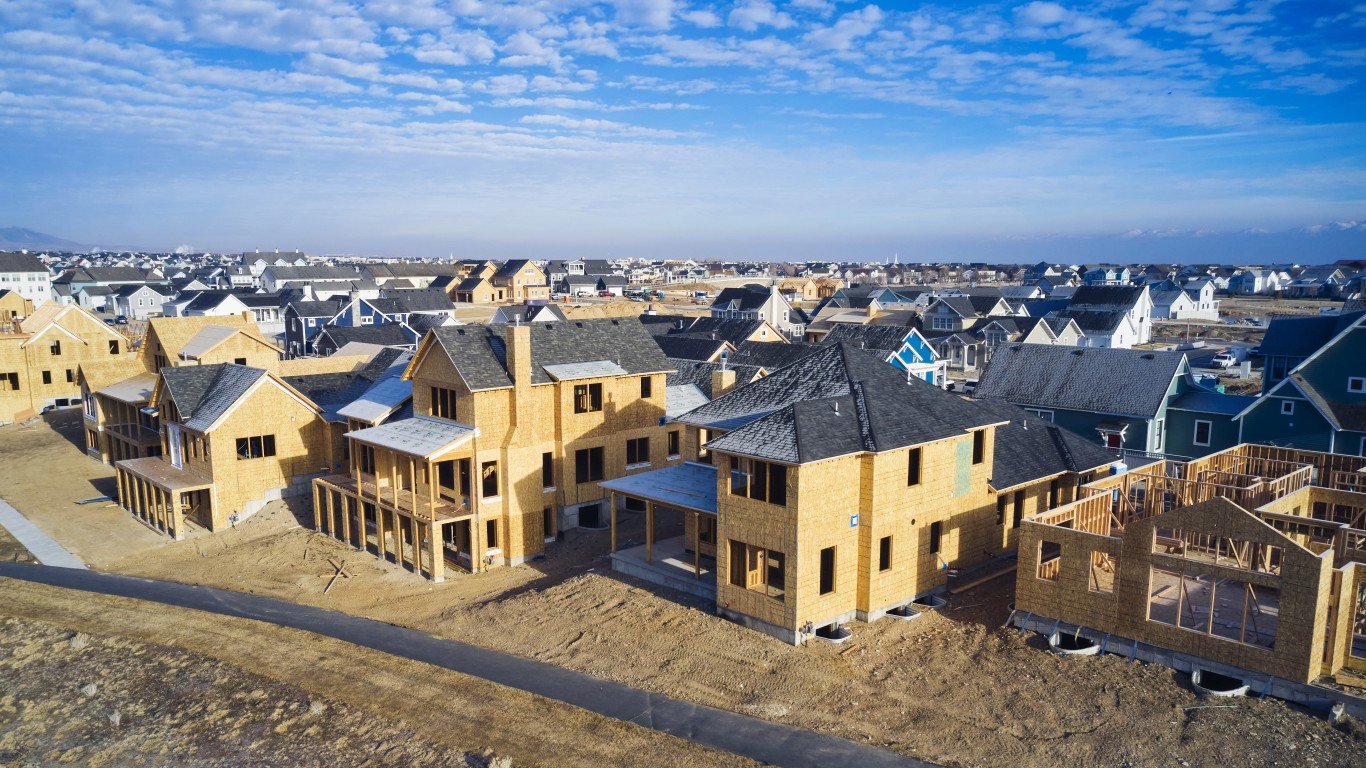
Builders Are Slashing Prices at a Record Pace as the Housing Market Freezes
Builder sentiment just hit its lowest point in over a decade, and the pain is now rippling through the companies that supply them. What Whirlpool revealed after the bell signals how bad things could get for the broader housing trade.

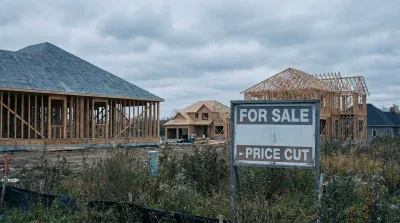
Home builders are gloomier than at any point since June 2012, and an appliance maker linked to housing has now shown what that gloom does to its suppliers.
The NAHB/Wells Fargo Housing Market Index fell 3 points to 29 in October, in a reading released October 19, 2026. A record 43% of builders cut prices, the highest share since at least 2020.
After the close on October 26, Whirlpool (NYSE:WHR | WHR Price Prediction) reported a weak third quarter. Shares closed at $26.45, down 5.91%. They then fell 8.77% after hours to $24.13, below the 52-week low of $25.73.
The builders moved far less. The iShares U.S. Home Construction ETF (BATS:ITB) slipped 0.77% to $89.87, D.R. Horton (NYSE:DHI) fell 0.65% to $146.52, and Lennar (NYSE:LEN) lost 1.11% to $83.98.
Builders are holding sales up with price cuts and incentives, and that costs them margin. Whirlpool’s quarter shows what happens further down the chain when fewer homes change hands.
Every Builder Gauge Fell in October
Current sales conditions dropped 2 points to 33, sales expectations fell to 32, and potential buyer traffic sank to 18. “Buyer traffic has fallen to its lowest level since April 2012,” chief economist Robert Dietz said. His comparison leaves out April 2020, when the pandemic began.
Chairman Bill Owens, a builder from Worthington, Ohio, said: “mortgage rates have climbed well above 7% in recent weeks.” He added that more than one-third of builders reported immigration enforcement activity in their markets, which is a risk to labor supply.
The average cut held at 6% for the seventh straight month, so cuts are spreading to more builders while their size stays the same. Incentive use reached 65%, the 19th straight month at 60% or more.
On three-month averages, the West was weakest at 26 and the Midwest highest at 40.
Pending home sales fell 7.3% in September from August and 11.3% from a year earlier, pushing the index to 66.0, its lowest on record. The 30-year fixed rate averaged 7.32% in the week of October 22, down from 7.40% the week before but far above 6.19% a year earlier.
Whirlpool’s Guidance Cuts Show How Fast Demand Faded
Net sales fell 8.8% to $3.677 billion from $4.033 billion. The ongoing loss was $0.21 a share, against a $2.09 profit a year earlier. The GAAP loss came to $3.80 a share, and ongoing EBIT fell 46.1% to $97 million.
North American sales dropped 8.3% to $2.495 billion on “soft industry demand,” yet Whirlpool still plans a 7% price increase there in the fourth quarter. Raising prices while demand falls could cost it volume.
Whirlpool now expects about $14.5 billion in 2026 sales and an ongoing loss of about $1.30 a share. On August 3, it had guided to about $15.0 billion and $2.50 to $3.00 in profit. That forecast was already lower than the $3 to $3.50 set in early May and the roughly $7 it expected before that.
“While the pace of recovery is slower than expected, these actions are setting a clear path for further improvements in 2027,” Chairman and CEO Marc Bitzer said. The release never names housing as a cause. Even so, appliance demand rises and falls with home sales and moves.
Builders Face a Margin Test
D.R. Horton, worth $40.98 billion, is expected to report before the market opens on Thursday, October 29, although the company hasn’t confirmed the date. Lennar is worth $19.98 billion, and ITB’s one-year total return is -12.38%.
Incentives keep sales volume up, but they come out of gross margin, and earnings will show how much. The Fed announces its rate decision Wednesday, October 28, and President Trump’s October 22 order targets mortgage insurance and refinance title costs.

Are Housing Stocks a Buy?
The bull case is pent-up demand, the chance of lower rates, and share prices that already reflect a weak market. The bear case is mortgage rates above 7%, buyer traffic at multi-year lows, margins squeezed by cuts and incentives, labor disruption, and high gas prices pressing on buyers.
For now, the bear case is the most likely. The case changes if the weekly 30-year rate drops back below 7% and D.R. Horton’s October 29 report shows margins holding up despite heavy incentives.
Contact [email protected] for any questions or corrections.
Omor Ibne Ehsan is a writer at 24/7 Wall St. He is a self-taught investor with a focus on growth, cyclical, and dividend equities that have strong fundamentals, value, and long-term potential. He also has an interest in high-risk, high-reward investments such as penny stocks.