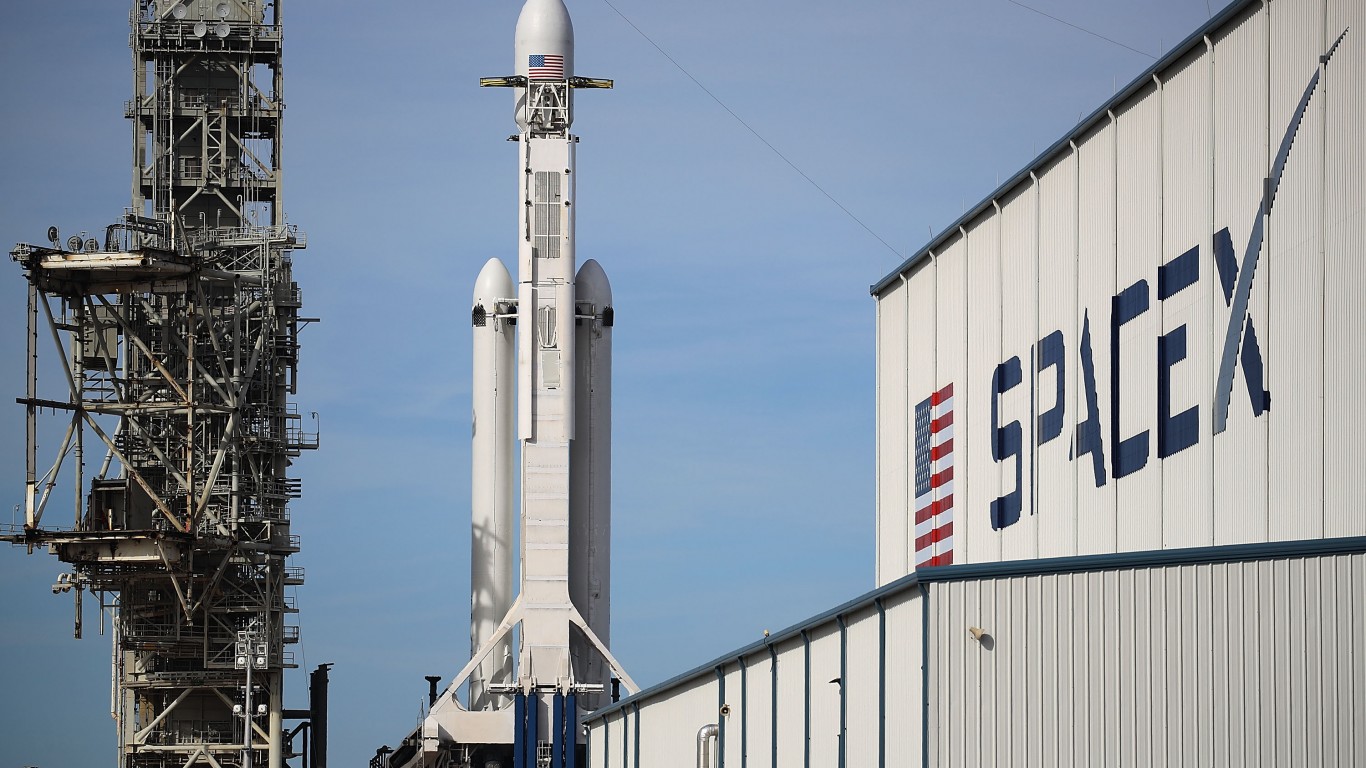
SpaceX Falls 3% Despite Fitch Holding Rating After $40B GPU Lease; Rocket Lab and AST SpaceMobile Slip 2%
SpaceX just locked in a massive GPU lease and earned a clean credit rating, yet the stock is sliding and dragging space peers down with it. The reason reveals how far SpaceX has drifted from its rocket roots.

Fitch Ratings is keeping its credit rating on SpaceX (NASDAQ:SPCX | SPCX Price Prediction) unchanged after a massive graphics processing unit (GPU) lease, yet the stock is falling and space peers are slipping alongside it. SpaceX stock is at $144, down 3%, in morning trading.

At the same time, Rocket Lab (NASDAQ:RKLB) stock is at $57, down 2%. AST SpaceMobile (NASDAQ:ASTS) stock is at $41, also down 2%.
SpaceX Commits to a $40 Billion NVIDIA Chip Lease
SpaceX announced a binding commitment. On October 26, it reached a deal with an entity managed by Apollo Global Management to lease next-generation NVIDIA (NASDAQ:NVDA) Vera Rubin chips for its terrestrial compute expansion. The lease covering GPUs and related equipment is valued at approximately $40 billion, according to Fitch Ratings. SpaceX expects the deal to close before year-end 2026, with equipment delivered in the first half of 2027. Apollo and a major Wall Street bank led the financing, with anchor commitments from several large asset managers.
Fitch Ratings said on October 28 that SpaceX’s BBB+ rating is unchanged because the lease finances compute capacity already in Fitch’s forecast. In the same commentary, Fitch Ratings put SpaceX’s cash, cash equivalents and short-term marketable securities at $89.9 billion at the end of September. Total debt at SpaceX stood at $38 billion on that date, according to Fitch Ratings. That view treats the lease as funding for growth the agency already expected.
The pressure looks broad across space stocks, which points to movement with the sector. The iShares U.S. Aerospace & Defense ETF (CBOE:ITA) is at $206, down 0.3%. The SPDR S&P 500 ETF Trust (NYSEARCA:SPY) is at $770, up 0.1%. SpaceX’s slide stands out as a space-specific move relative to both funds.
Why SpaceX Trades Like an AI Compute Company
SpaceX increasingly trades on its artificial intelligence (AI) compute business, which sets it apart from the space peers in this story. Fitch Ratings disclosed SpaceX’s Super Intelligence (SI) revenue reached $7.6 billion in Q3 2026, up from $0.8 billion a year earlier, as cloud services agreements activated. Rated compute at SpaceX rose to 1.7 gigawatts at the end of September from 0.6 gigawatts a year earlier, according to Fitch Ratings. Those cloud deals tie SpaceX to AI capacity demand. They matter more than launch schedules, and the impact reaches the power, cooling, and networking suppliers behind the data centers (we rounded up seven of them in a free report, here).

That growth comes with concentration risk tied to a single buyer. One SI customer made up for 34.5% of SpaceX’s consolidated revenue in Q3 and 24.2% year to date, up from below 10% a year earlier, per Fitch Ratings. Either party can terminate SpaceX’s cloud services contracts on 90 days’ notice, Fitch Ratings noted.
Rocket Lab stock is up 13% over the past week, even after the decline. Virgin Galactic Holdings stock is at $2.64, down 2%. Over the past week, Virgin Galactic stock is up 11%. Both names are handing back a slice of those gains alongside SpaceX.
AST SpaceMobile stock is down 34% over the past month. Each peer runs a different model. Rocket Lab builds launch vehicles and spacecraft, AST SpaceMobile is building a space-based cellular broadband network, and Virgin Galactic runs a space tourism business. Only SpaceX carries an AI compute arm among these four companies, so the peers’ declines simply track the group. Since June 12, when its price history begins, SpaceX stock is down 11%.
SpaceX’s Compute Pivot Faces Its Next Tests
The next test for SpaceX is whether the lease closes on the timeline the company laid out. Fitch Ratings forecasts SpaceX revenue approaching $50 billion in 2026 and $200 billion in 2027, figures that frame the bull case for the compute shift. The bear case centers on whether SpaceX can expand its SI customer base before that single relationship grows even more dominant, and a smooth close could ease funding questions, while a delay could weigh on sentiment.
Big Tech cloud providers report earnings this week, which could offer a fresh read on AI compute demand and add data points for SpaceX’s compute story. The Federal Reserve’s upcoming decision, due today, tends to move high-growth stocks like SpaceX in either direction. Additionally, SpaceX’s customer concentration question could remain a key point of debate in the months ahead.
Contact [email protected] for any questions or corrections.
David Moadel is financial writer specializing in stocks, ETFs, options, precious metals, and Bitcoin. David has written well over 1,000 articles for leading online publications, helping investors understand markets, income strategies, and risk.His work has appeared in The Motley Fool, InvestorPlace, U.S. News & World Report, TipRanks, ValueWalk, Benzinga, Market Realist, TalkMarkets, Finmasters, 24/7 Wall St., and others.With a master’s degree in education, David has taught at the elementary, high school, and college levels. That teaching background shapes his writing style: clear, educational, and practical. David has also built a loyal social-media audience by providing trustworthy financial content on YouTube, X/Twitter, and StockTwits.