SanDisk Is Sold Out for the Rest of the Decade, and Is Splitting Its $1,300 Stock 8-for-1
SanDisk just told investors it cannot make enough chips to meet demand through the end of the decade, yet the stock still sold off hard. A massive stock split and record margins did nothing to calm the skeptics.

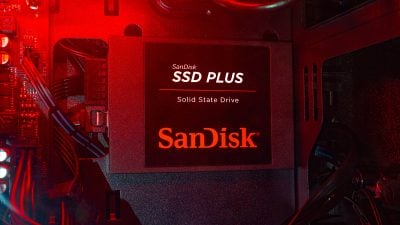
SanDisk (NASDAQ:SNDK | SNDK Price Prediction) told investors on October 29, 2026 that the demand it is negotiating under long-term supply deals is larger than everything it can make through the end of the decade. The stock still closed down 5.32%, a $74.72 drop to $1,330.05, and slipped further after hours.
The same report included a fiscal first-quarter 2027 beat and an eight-for-one forward stock split. Revenue came in at $11.031 billion, up 23% from the prior quarter and 378% from a year earlier, against the roughly $10.7 billion analysts expected.

Investors sold anyway, which shows how little they trust visibility claims from memory makers. NAND flash (the storage chip in SSDs, phones and PCs) has a long record of shortages that turn into gluts.
Shares have run from a 52-week low of $181.51 to a high of $2,354.39 and now trade well below that peak. The market is weighing multi-year customer contracts against an industry that has rarely kept such promises.
What SanDisk Has Signed Versus What It Is Negotiating
SanDisk calls its long-term supply contracts NBMs, short for “new business model,” and they include customer prepayments and deposits. At its August 2026 Investor Day, the company said it had signed NBMs with eight customers. Those deals cover about 50% of fiscal 2027 bits and about two-thirds of fiscal 2028 bits.
CFO Luis Visoso said SanDisk closed two more NBMs in the quarter. Management’s statement that “our NBM pipeline exceeds our supply throughout the end of the decade” refers to deals that are still being negotiated.
CEO David Goeckeler said customers “have underestimated the amount of NAND they need” and that “we have multiple customers coming back for a second round.” He also said SanDisk still has “to get commitments.”
How the Eight-for-One Split Works
Shareholders of record on November 9, 2026 receive seven additional shares for each share they hold. The new shares are distributed after the close on November 19, and split-adjusted trading begins November 20.
Dividing the October 29 close by eight gives roughly $166 per share. That figure is plain division, and the company’s total value remains the same after the split.
SanDisk said the split is meant to make the stock more accessible, including to employees through its ESPP (employee stock purchase plan).
Margins Are Running Well Above the 2030 Model
GAAP gross margin reached 85.0%, or 85.1% non-GAAP. Guidance for the fiscal second quarter calls for 84.5% to 85.5% non-GAAP gross margin on revenue of $12.2 billion to $12.6 billion.
Non-GAAP EPS was $49.51, and GAAP EPS was $52.60. For the second quarter, SanDisk guided non-GAAP EPS to $55.00 to $57.00 on a pre-split basis.
The fiscal 2028 through 2030 model assumes about 80% non-GAAP gross margin, about 75% operating margin, and mid-to-high teens revenue growth. Management is already planning for margins to come down from current levels.
Visoso warned that “our Q3 is normally our weakest sequential quarter” and said he expects pricing to rise only “modestly.”
Consumer Sales Show Where Pricing Hits a Limit
Datacenter revenue rose 61% from the prior quarter to $4.802 billion, the clearest sign that the AI expansion is pulling memory along with it (we highlighted seven suppliers riding that same wave, outside the chipmakers themselves, in a free report here: 7 Stocks Powering the AI Boom). Edge revenue rose 7% to $5.832 billion, which was up 320% from a year earlier.
Consumer revenue fell 29% from the prior quarter and 39% from a year earlier to $397 million. Visoso said this happened as the market “adjusts to higher pricing.” Higher prices are lifting margins, but they are already driving away some retail buyers.
What Could Decide SanDisk’s Next Move After the Split
SanDisk enters this downturn from a position of financial strength. The company has no debt and earned $8.101 billion in GAAP net income in a single quarter. Half of its fiscal 2027 bits are covered by prepaid contracts, yet investors are still treating the cycle with caution.
The main risks are rivals adding capacity, a small number of NBM customers carrying much of the exposure, and memory prices turning sharply before.

The test comes with the fiscal second-quarter earnings report. New NBMs that push fiscal 2028 coverage above two-thirds would support the thesis. If no new deals arrive and pricing flattens out, the case for sustained margins would weaken considerably.
Contact [email protected] for any questions or corrections.
Omor Ibne Ehsan is a writer at 24/7 Wall St. He is a self-taught investor with a focus on growth, cyclical, and dividend equities that have strong fundamentals, value, and long-term potential. He also has an interest in high-risk, high-reward investments such as penny stocks.