Rocket Lab’s 64% Collapse Tests Its Space Infrastructure Strategy
Rocket Lab has shed nearly two-thirds of its value since May, yet its backlog is growing faster than its revenue and its spacecraft manufacturing already dwarfs its launch business. Whether that gap between market sentiment and operational momentum can close…

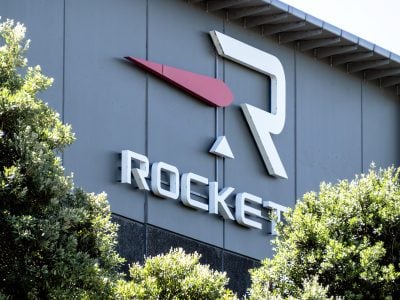
- Rocket Lab’s reported decline from $151 in May to $54.73 on October 30 raises questions about the valuation of its expanding space infrastructure business.
- The company already earns most of its revenue from Space Systems, while Neutron and the proposed Iridium acquisition could expand its role in the space economy.
- November 9 earnings will test whether operating growth and the company’s financing position can support that expansion despite Neutron’s delay.
Introduction
Rocket Lab USA (RKLB | RKLB Price Prediction) has experienced a remarkable reversal in investor sentiment. Its shares have fallen 63.75% from a reported May high of $151 to $54.73 at the October 30 close, even as the company continues to launch satellites, expand its spacecraft manufacturing operations, and pursue a larger role in satellite communications. The decline has raised an important investment question: has the market lost confidence in Rocket Lab’s underlying business, or is it reassessing the price investors were willing to pay for the company’s future growth?
The distinction matters because Rocket Lab is no longer simply a small-satellite launch company. Its Electron rocket provides established access to orbit, its Space Systems division manufactures spacecraft and components, and its proposed acquisition of Iridium Communications would add an operating satellite communications network. Neutron, the reusable medium-lift rocket now delayed into 2027, represents another step toward providing more of the infrastructure required by commercial and government customers.
Five weeks ago, the investment case centered on this transformation. Rocket Lab was developing the ability to build, launch, and ultimately operate space infrastructure rather than depend on individual launch contracts. The subsequent stock decline does not invalidate that strategy, but it changes the financial standard against which investors must evaluate it. Rocket Lab must demonstrate that its growing business can generate sufficient returns to justify the capital already raised and the additional investment required to complete Neutron and integrate Iridium.
Rocket Lab’s Business Extends Well Beyond Launch Services
Rocket Lab operates across several stages of the satellite industry. Electron provides dedicated launches for small satellites, giving customers control over deployment schedules and orbital destinations. HASTE, a derivative of Electron, serves defense customers conducting hypersonic testing. Space Systems designs and manufactures satellites, spacecraft platforms, components, and related technologies used by government and commercial operators.
These businesses are connected economically. A customer building a satellite constellation requires spacecraft, propulsion systems, flight components, launch capacity, and ultimately the ability to operate and monetize the network. Rocket Lab can supply several of those requirements within the same organization, potentially increasing its share of customer spending while reducing dependence on any one product.
The company’s second-quarter financial results demonstrate how far that transformation has progressed. Revenue reached $234.1 million, an increase of 62% year over year, while backlog climbed to $2.36 billion, up 137%. Space Systems generated approximately $189.5 million of quarterly revenue, compared with $44.6 million from Launch Services. In other words, more than four-fifths of Rocket Lab’s revenue came from activities other than launches.
That distinction is essential to understanding the stock. Investors evaluating Rocket Lab primarily on the number of Electron missions overlook the business responsible for most of its revenue. Electron provides launch credibility and access to customers, but spacecraft manufacturing is already the company’s principal revenue engine.
Iridium Could Change Rocket Lab’s Revenue Model
Rocket Lab’s proposed acquisition of Iridium Communications is strategically significant because it would extend the company into the operation of satellite communications services. Unlike launch contracts, which generate revenue around individual missions, satellite communications networks can generate continuing revenue from customers using the network.
Iridium operates a global satellite communications system serving government, maritime, aviation, industrial, and other customers. Adding that network would give Rocket Lab an established services business alongside its manufacturing and launch operations. The combination would also create opportunities to coordinate satellite development, replacement, and deployment over time.
The potential advantage is not simply greater revenue. It is a change in the composition of Rocket Lab’s business, from primarily manufacturing and project-based activities toward a combination that includes recurring communications services. Such revenue could help stabilize cash generation across periods when launch schedules or spacecraft deliveries fluctuate.
However, the acquisition carries financial consequences. Rocket Lab announced in September that it had raised approximately $1.944 billion in gross proceeds through an at-the-market equity offering involving 29.3 million shares. The company also arranged to retain Iridium’s existing $1.775 billion term-loan facility and terminated a previously arranged $3.6 billion bridge financing commitment.
The revised financing structure reduced uncertainty associated with the bridge loan, but the equity issuance increased the number of shares participating in Rocket Lab’s future earnings. Iridium’s existing debt would also remain an obligation after closing. Investors must therefore distinguish between the growth of Rocket Lab’s consolidated business and the growth in value attributable to each share.
The strategic case for Iridium is understandable. The financial case depends on the acquisition price, integration costs, debt servicing, and the cash flow the communications business can contribute. Those considerations have become more important following Rocket Lab’s substantial share-price decline.
Neutron’s Delay Tests the Infrastructure Strategy
Neutron is important because it would allow Rocket Lab to serve larger satellite missions that Electron cannot accommodate. Its planned reusable architecture could also improve launch economics if the company achieves sufficient flight frequency and controls refurbishment expenses. For customers deploying larger constellations, Neutron would broaden the range of missions Rocket Lab could perform without relying on outside launch providers.
On October 14, Rocket Lab confirmed that Neutron’s inaugural launch was moving into 2027. The announcement introduced uncertainty into a program that investors had expected to reach a major milestone in late 2026.
The delay does not directly undermine the performance of Electron or Space Systems. However, it postpones Neutron’s contribution to the integrated business model. Rocket Lab can manufacture satellites today, but it cannot yet use Neutron to launch the larger payloads for which the rocket is being developed.
This matters particularly for Iridium. Operating an established communications network could provide Rocket Lab with recurring services revenue, but owning a satellite network does not eliminate the need to replenish spacecraft or deploy future generations of satellites. The long-term advantage would come from coordinating spacecraft manufacturing, launch services, and network operations within one organization.
Neutron could strengthen that integration, although its commercial benefits remain prospective. The delay also increases the importance of the company’s existing revenue and financial resources because development spending continues before the larger rocket begins generating revenue.
Rocket Lab’s Financial Position: Growth, Backlog, and Dilution
Rocket Lab’s financial performance illustrates both the strength of its expansion and the reason investors remain concerned. Revenue grew 62% year over year in the second quarter, while backlog increased 137%. Those figures indicate that customer commitments are growing considerably faster than recognized revenue.
However, the company is simultaneously financing an acquisition, expanding manufacturing operations, and developing Neutron. Investors must consider not only whether revenue continues growing but also how much additional capital is required before that growth translates into sustainable profitability.
According to Table 1, Rocket Lab’s operating progress and financing decisions reveal a significant distinction between the expansion of the company and the financial returns available to existing shareholders.
Table 1. Rocket Lab’s Operating Growth and Financing Commitments |
||
| Financial Indicator | Reported Amoun | Investment Significance |
| Q2 2026 revenue | $234.1 million | 62% year-over-year growth |
| Space Systems revenue | $189.5 million | Approximately 81% of total revenue |
| Launch Services revenue | $44.6 million | Approximately 19% of total revenue |
| Q2 2026 backlog | $2.36 billion | 137% year-over-year growth |
| Q2 GAAP operating loss | $57.5 million | Continued operating losses |
| September equity financing | $1.944 billion | Capital raised through new shares |
| Shares issued through financing | 29.3 million | Dilution of existing shareholders |
| Iridium existing term loan | $1.775 billion | Debt expected to remain after acquisition |
The most important relationship in Table 1 is between operating growth and capital requirements. Rocket Lab has built a substantial backlog, but it continues to report operating losses while funding a major development program. Its equity financing provides capital for expansion and the proposed Iridium transaction, but it also spreads future earnings across more shares.
This distinction becomes particularly relevant when evaluating Rocket Lab’s stock valuation. At the October 30 closing price of $54.73, Rocket Lab had a market capitalization of approximately $32.75 billion against trailing annual revenue of approximately $769 million, representing roughly 42.6 times sales.
The multiple reflects expectations that Rocket Lab will become substantially larger and more profitable than it is today. Its backlog, manufacturing operations, and proposed communications business provide reasons for expecting continued growth. However, the current valuation still requires successful execution across several businesses, including Neutron, whose commercial performance has yet to be demonstrated.
Why November 9 Earnings Matter
Rocket Lab is scheduled to report third-quarter results on November 9. Management previously guided revenue to a range of $250 million to $265 million, suggesting another quarterly revenue record.
Revenue performance will provide an indication of whether Space Systems and Electron continue expanding while Neutron remains under development. Strong results would reinforce the argument that Rocket Lab’s existing business has substantial value independent of the larger rocket.
The more consequential questions involve profitability, cash requirements, and acquisition execution. Investors will want to know whether growing revenue is producing better operating leverage, whether Neutron’s revised schedule introduces additional development spending, and how management intends to manage the integration and financing of Iridium.
The market’s reaction may also depend on whether management can demonstrate that the company’s different businesses reinforce one another economically. The integrated infrastructure strategy becomes more compelling if Rocket Lab can manufacture spacecraft, launch them, and operate communications services at attractive margins. Merely participating in more segments of the space industry does not guarantee higher returns.
Investor Takeaway
Rocket Lab’s 64% stock decline should be evaluated against the business the company is building rather than Neutron’s delay alone. Electron has established a credible launch operation, Space Systems already generates most of the company’s revenue, and the proposed Iridium acquisition could introduce a substantial recurring-services business. Together, these activities support the strategic argument that Rocket Lab can become an integrated provider of space infrastructure rather than remain dependent on individual rocket launches.
The financial risks have nevertheless increased. Neutron’s postponement delays an important element of that strategy, while the Iridium transaction introduces acquisition and integration obligations alongside dilution from the September equity financing. Rocket Lab’s backlog demonstrates customer demand, but converting that demand into profitable revenue and ultimately free cash flow remains the central financial challenge.
The November 9 earnings report will provide an important test of the investment thesis. Strong revenue growth, improving margins, and credible development guidance would strengthen confidence that Rocket Lab can execute its expansion. Further schedule deterioration or rising capital requirements would make its premium valuation more difficult to defend. The stock’s decline has reduced the price investors must pay for Rocket Lab’s future, but the underlying investment decision still depends on whether the company can translate its expanding position in space infrastructure into sustainable earnings per share.
Contact [email protected] for any questions or corrections.
Dr. Robert Castellano has over 40 years of experience analyzing the high-tech industries. He is president of The Information Network (www.theinformationnet.com). He earned a PhD degree in Chemistry from Oxford University (UK). His PhD thesis advisor, John Goodenough, won the Nobel Prize in Chemistry in 2019 for the invention of the Lithium Ion Battery. He writes with George Gilder, novelist, futurist, and economist, and his team for Eagle Financial Publishing.