AI Spending Has Gone From $140 Billion to $740 Billion in 3 Years, and Ackman Is Buying
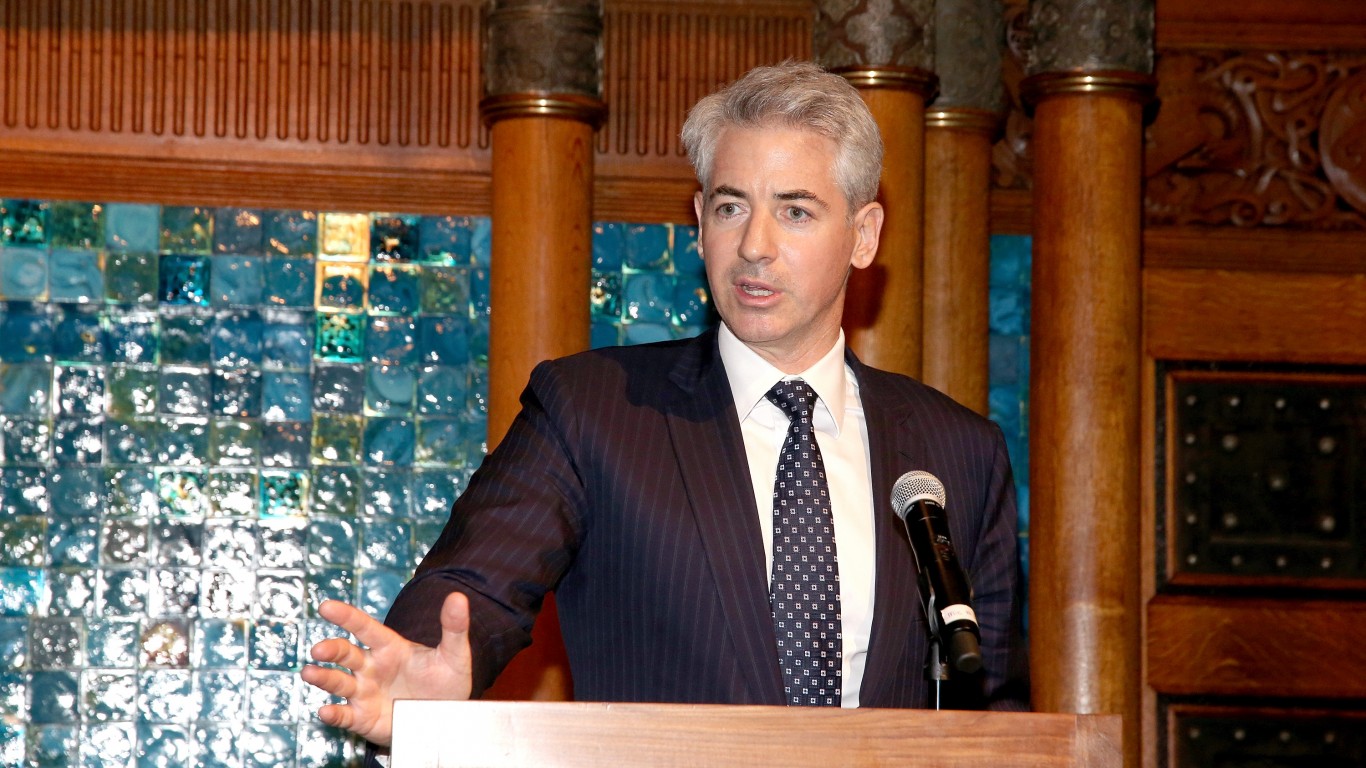
Bill Ackman is betting billions that Big Tech's ballooning data center budgets are a profit engine rather than a cash drain, but the math behind his conviction rests on assumptions that could quietly unravel long after the spending stops.


The letter was dated November 2, 2026. Pershing Square chief executive Bill Ackman and chief investment officer Ryan Israel argued that Big Tech’s capital spending boom is an offensive growth investment with attractive returns.
The letter’s figures cover combined capital spending at Microsoft (NASDAQ:MSFT | MSFT Price Prediction), Meta Platforms (NASDAQ:META), Amazon (NASDAQ:AMZN) and Alphabet (NASDAQ:GOOG, NASDAQ:GOOGL). That total rose from about $140 billion in 2023. It reached about $740 billion in 2026 on company guidance, a calculated 5.3 times, and the letter does not break out AI’s share.
Pershing owns Microsoft, Meta and Amazon, so the letter argues for Ackman’s own holdings.
On November 2, Microsoft fell 2.83% to $507.12, Meta slipped 1.34% to $606.73 and Amazon rose 2.2% to $245.63.
Spending has multiplied while these stocks trailed chipmakers, and Meta has dropped a calculated 16.3% since September 30, the quarter-end behind the letter’s return figures.
Capital Spending Now Consumes 38% of Revenue
Capital spending was nearly 12% of the group’s revenue in 2023 and an estimated 38% in 2026, per the letter. That shift pressures free cash flow, the cash left after paying for data centers and equipment.
Consensus cited by Pershing calls for another 35% increase in 2027, and about $1.5 trillion once other AI builders are included. A lot of that money flows past the chipmakers. It goes to the companies providing power, cooling, and networking for the data centers, which we pulled into a free report on seven AI infrastructure names.
The strain already shows. Meta’s free cash flow was negative $2.1 billion in the third quarter, while Microsoft still generated $18.6 billion in its latest quarter.
Pershing’s Gigawatt Math Rests on Its Own Assumptions
Pershing estimates one gigawatt of AI data center capacity costs $40 billion to $50 billion and produces $15 billion to $20 billion of annual revenue. At a 50% incremental margin, that implies a pre-tax return on invested capital of 15% to 25%.
Lower utilization, falling prices for AI computing, or chips that age faster than depreciation schedules assume would each pull that return down. Chips matter most, because roughly three-quarters of Microsoft’s latest quarterly capex went to short-lived assets, primarily CPUs and GPUs.
Pershing says revenue could run 15%-plus to 35% above consensus after three years. If it falls short, the letter argues, the companies will cut spending and free cash flow will beat consensus anyway.
That logic skips the depreciation already on the books. Capacity built in 2026 keeps charging earnings for years after spending is cut, whether or not customers fill it.
Ackman Owns All Three but Added to Only Two
By June 30, Pershing had added 552,652 Microsoft shares, a 9.8% increase to 6,206,730, and 535,201 Meta shares, up 20.1%. It cut Amazon by 25.2% to 8,563,857 shares and sold out of Alphabet.
The letter does not say Pershing added during October’s selloff, and Pershing Square Holdings’ net asset value was down 6.9% for 2026 as of October 31.
Through roughly September 30, the four hyperscalers averaged an 8% gain against 44% for the S&P 500 Semiconductor index, despite 27% EPS growth. On Pershing’s estimates, Microsoft trades at 25 times forward earnings, Meta at 22 and Amazon at 26.
Are Hyperscaler Stocks a Buy?
The bull case rests on contracted demand. Microsoft’s commercial remaining performance obligations, or contracted future revenue, grew 73% to $677 billion, and AWS backlog reached $578 billion.
The bear case is twofold. Pershing’s return math is its own estimate, while Meta is funding its expansion with negative free cash flow and a reported bond sale of at least $20 billion.
The bull case is stronger at these multiples, and Microsoft makes it best because it still produces positive free cash flow while its backlog grows. Meta’s lower multiple reflects its greater funding burden.


Ackman and Israel host a call at 9:30 a.m. ET on November 3. The third-quarter 13F is expected in November. It will show whether Pershing kept adding to Meta before its October drop, and a cut there would weaken the letter’s case.
Contact [email protected] for any questions or corrections.
Omor Ibne Ehsan is a writer at 24/7 Wall St. He is a self-taught investor with a focus on growth, cyclical, and dividend equities that have strong fundamentals, value, and long-term potential. He also has an interest in high-risk, high-reward investments such as penny stocks.