Intel’s Cash Flow Problems Are Much Bigger Than You Think
Intel just told investors to expect another year without positive free cash flow, yet bulls still see a path to triple-digit share prices. Here is what both sides are missing about the foundry bet bleeding cash beneath a deceptively strong…

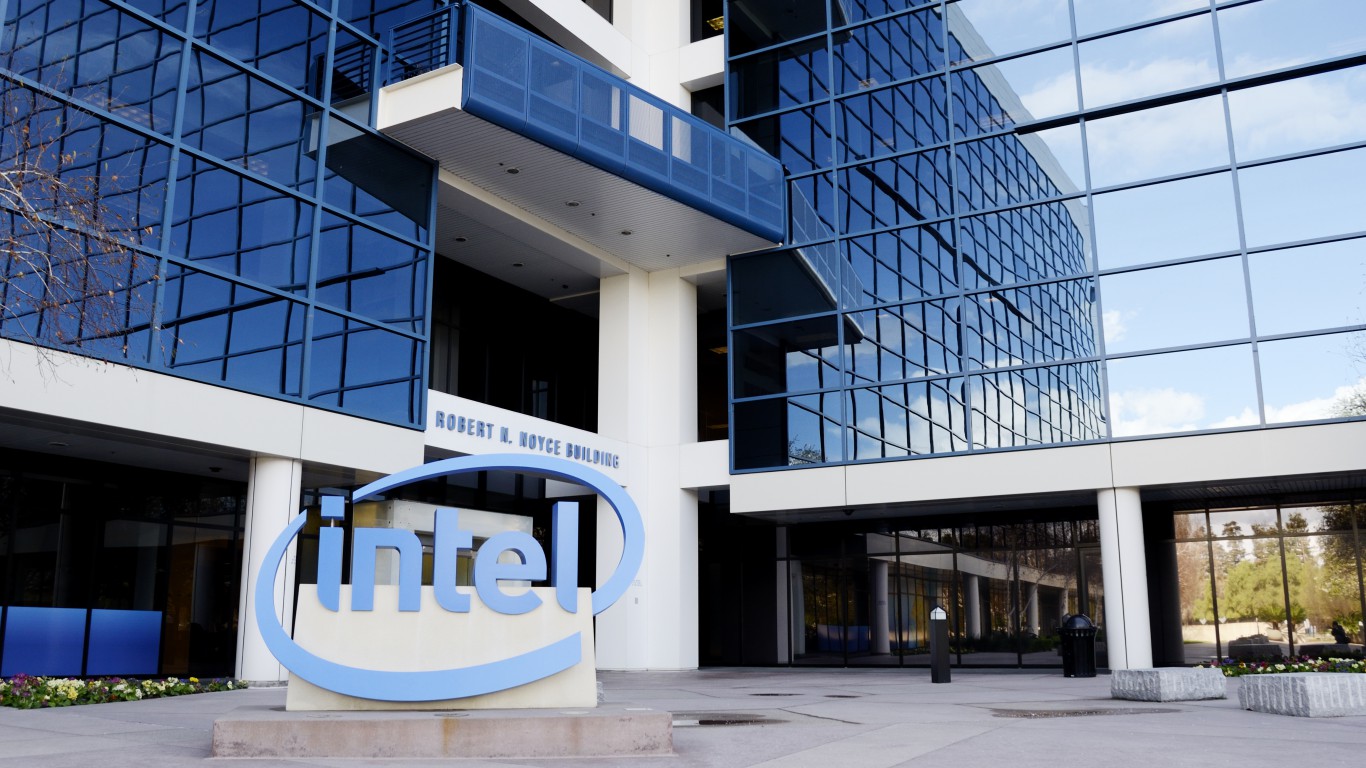
Intel (NASDAQ:INTC | INTC Price Prediction) trades at $59.97. Management just told investors that 2027 will be another year without positive free cash flow, and the stock has already lost 49.74% in a month.
Intel designs x86 processors and is spending heavily to build a contract foundry. Its latest quarter looked strong on the surface. Revenue reached $16.51B, up 20.9% YoY, and non-GAAP EPS of $0.52 beat the $0.40 consensus. Then the outlook hit. Intel guided Q4 EPS to $0.25, and CFO David Zinsner said, “I don’t think that this will be a year in which we see positive cash flow.” The shares fell 8.8% in the latest session alone.
Xeon Demand Gives Bulls a Genuine Growth Engine
Data Center and AI revenue rose 78% YoY to $7.32B, and its operating income jumped to $3.04B from $964M. Demand exceeds supply, and management sees agentic AI raising the server CPU market from $40 billion to more than $200 billion over five years.
Manufacturing is improving too. Intel 18A costs have fallen approximately 40% since Q1, and external foundry customer announcements are expected over the next two quarters. Roughly $54 billion in cash and short-term investments funds the expansion.
Foundry Losses and Rising Capex Keep Draining Cash
Intel Foundry lost $1.85B in Q3 after losing $2.1B in Q2. Annual operating cash flow has trailed capital spending in every year from 2021 through 2025. Even in a strong quarter, $5.08B of operating cash flow left only $1.64B of adjusted free cash flow, and 2027 gross capex is expected to be up strongly.
Dilution adds pressure. The $23B equity offering raising Q4 diluted shares to 5.44 billion. Interest coverage stands at -2.03. The Fab 28 incident will cost about $300 million in Q4, and management expects the PC market to contract roughly 10% in 2027.
Supply Gains Could Still Rescue the Turnaround
Several catalysts could support the turnaround. Intel 3 is expected to turn profitable in 2027, and management targets at least 20% ROI on new nodes. Zinsner called 2027 “basically a knothole” on the way to stronger cash generation. Signed external foundry customers or a Q4 gross margin above the 38.0% guide would strengthen the bull view. Another wave of foundry losses would confirm the bear view.
Analysts Lean Hold as Intel Trails the Market
Intel is priced at $59.97 versus a consensus target of $101.02, meaning 68.45% upside. Targets often lag sharp selloffs, so treat that figure as one data point. The 49 analysts covering the stock break down as follows:
- Strong Buy: 1
- Buy: 14
- Hold: 32
- Sell: 1
- Strong Sell: 1
Intel is still up 62.52% year to date, versus 10.3% for the S&P 500. Over one month it fell 49.74% while the index slid 2.27%. Forward P/E is about 31x, and beta is 2.23.
Intel Faces Mounting Pressure Until Free Cash Flow Turns Positive
At $59.97, Intel faces several near-term risks.
The downside path runs through the two quarters ahead. Q4 guidance calls for sequential declines in revenue and margin, the Fab 28 hit is expected to repeat in Q1, and PC inventory correction may extend into Q2. Each shortfall lands on a company already committed to higher 2027 spending.
The month-long drop priced in a lighter Q4. It has yet to price in a full year of cash burn that may require more dilution or debt. The stock still remains above the $32.89 52-week low.
Signed foundry customers with meaningful volume, or a clear reduction in foundry losses, would force a review. Until then, Intel is asking shareholders to fund a turnaround before it produces cash.
Contact [email protected] for any questions or corrections.
Alex Sirois is a financial writer with experience spanning both retail and institutional investing. He has written for InvestorPlace and held roles at BNY Mellon and Bernstein, giving him a perspective that bridges Main Street portfolios and Wall Street analysis.
Alex holds an MBA from George Washington University and has built his career across multiple industries, including e-commerce, education, and translation — a breadth of experience that informs how he breaks down complex financial topics for everyday investors. His writing is conversational, actionable, and grounded in long-term, buy-and-hold investing principles.
At 247 Wall St., Alex focuses on delivering analysis that is both accessible and useful, with a clear emphasis on helping readers make more informed decisions with their money.