Tesla Has Cash But It Won’t Matter for The Rest of 2026
Tesla is sitting on a record cash pile, yet the bulls and bears are locked in a brutal standoff over whether that war chest can survive a capex surge that keeps growing and margins that keep shrinking.

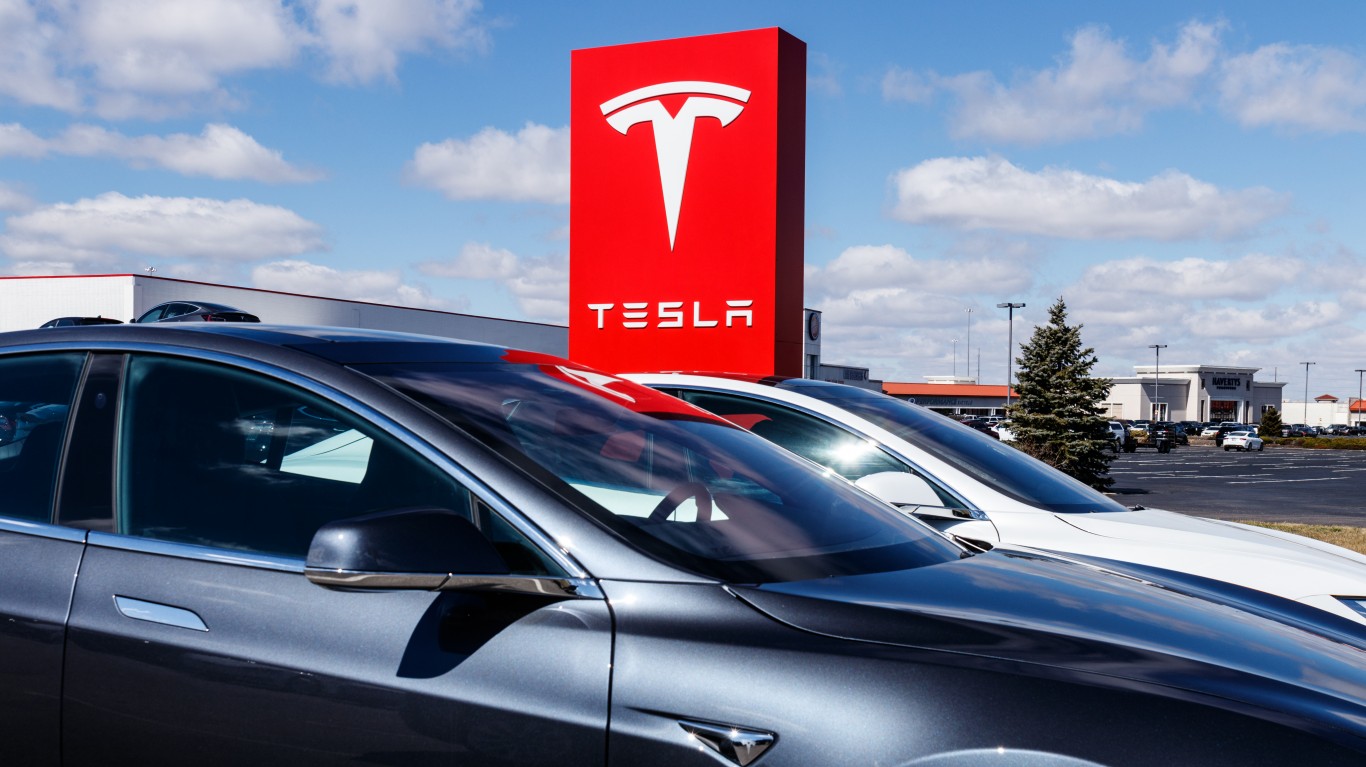
Tesla (NASDAQ:TSLA | TSLA Price Prediction) trades at $398.50. Its record cash pile does little to offset the margin squeeze and spending surge that will shape results through year-end.
Tesla sells electric vehicles, energy storage, and Full Self-Driving (FSD) software. It is also investing money into Robotaxi, the Optimus robot, and a chip fab. Its latest earnings report showed adjusted EPS of $0.48, beating the $0.4511 estimate. Revenue came in essentially flat at $28.05B, and operating income fell 55.79% to $718M.
Record Backlog and FSD Momentum Fuel Bulls
Tesla holds over $45 billion in cash and investments. It has also lined up borrowing capacity of up to $30 billion and plans no draws this calendar year. Demand looks strong. Tesla ended the quarter with its highest automotive backlog in four years, and production capacity is what limits deliveries.
Software is growing. Active FSD subscriptions reached 1.74M, up from 1.04M, and energy gross margin rose to 33.1%. Musk said Robotaxi will be “probably a big deal by Q3 or Q4 of next year.”
Spending Wave Threatens to Swamp Earnings
Shares trade at 415x trailing earnings and 164x forward. R&D rose to $2.76B from $1.63B. Free cash flow fell 61.63% to $1.53B, and current-year capex guidance stands near $20 billion. Musk put Terafab costs “certainly in the tens of billions.”
The CFO said opex growth will continue until new products are launched. Some of the energy margin came from tariff refunds and warranty true-downs. Analysts are cutting numbers too: 2027 EPS estimates saw 10 down revisions against 1 upward in the past 30 days.
Robotaxi Payoff Lands in 2027, Leaving a Gap
The core business is improving. Automotive gross margin excluding credits rose to 18.1% from 16.3%. Still, Optimus external shipments are targeted for toward the end of the following year, so the products that justify the valuation remain unproven. EU-wide FSD approval, which Musk expects by Q1, and fourth-quarter operating margins are the swing factors.
Wall Street Sees Only Modest Upside
The consensus target of $413.10 implies 3.66% upside across 44 analysts. Targets are one data point, and they carry no guarantee. Ratings break down as follows:
- Strong Buy: 5
- Buy: 15
- Hold: 22
- Sell: 2
So far this year, Tesla has fallen 11.39%, and the S&P 500 has risen 10.63%. Over one year, Tesla fell 14.92% and the index gained 10.4%.
Why Margins Will Decide Tesla’s Next Move
Tesla trades at $398.50.
For other AI names, free cash flow and the balance sheet set the story. Tesla’s $45.45 billion cushion instead funds a capex cycle that keeps growing, so earnings quality drives the stock. Fourth-quarter EPS estimates average $0.5033, which leaves little room for disappointment at these multiples.
A Buy case would need operating margin recovery plus visible Robotaxi revenue in the first half of next year. A Sell case would form if capex guidance rises again while delivery growth stalls on battery supply. Musk himself said Robotaxi won’t “move the needle this quarter.”
Analysts see limited upside, and the stock trades at 164x forward earnings before the spending peaks. Tesla’s cash protects the downside, but margins will set the stock’s direction through year-end.
Contact [email protected] for any questions or corrections.
Alex Sirois is a financial writer with experience spanning both retail and institutional investing. He has written for InvestorPlace and held roles at BNY Mellon and Bernstein, giving him a perspective that bridges Main Street portfolios and Wall Street analysis.
Alex holds an MBA from George Washington University and has built his career across multiple industries, including e-commerce, education, and translation — a breadth of experience that informs how he breaks down complex financial topics for everyday investors. His writing is conversational, actionable, and grounded in long-term, buy-and-hold investing principles.
At 247 Wall St., Alex focuses on delivering analysis that is both accessible and useful, with a clear emphasis on helping readers make more informed decisions with their money.