A 4-Year Inflation Warning Just Returned — and It Could Hit American Families Next
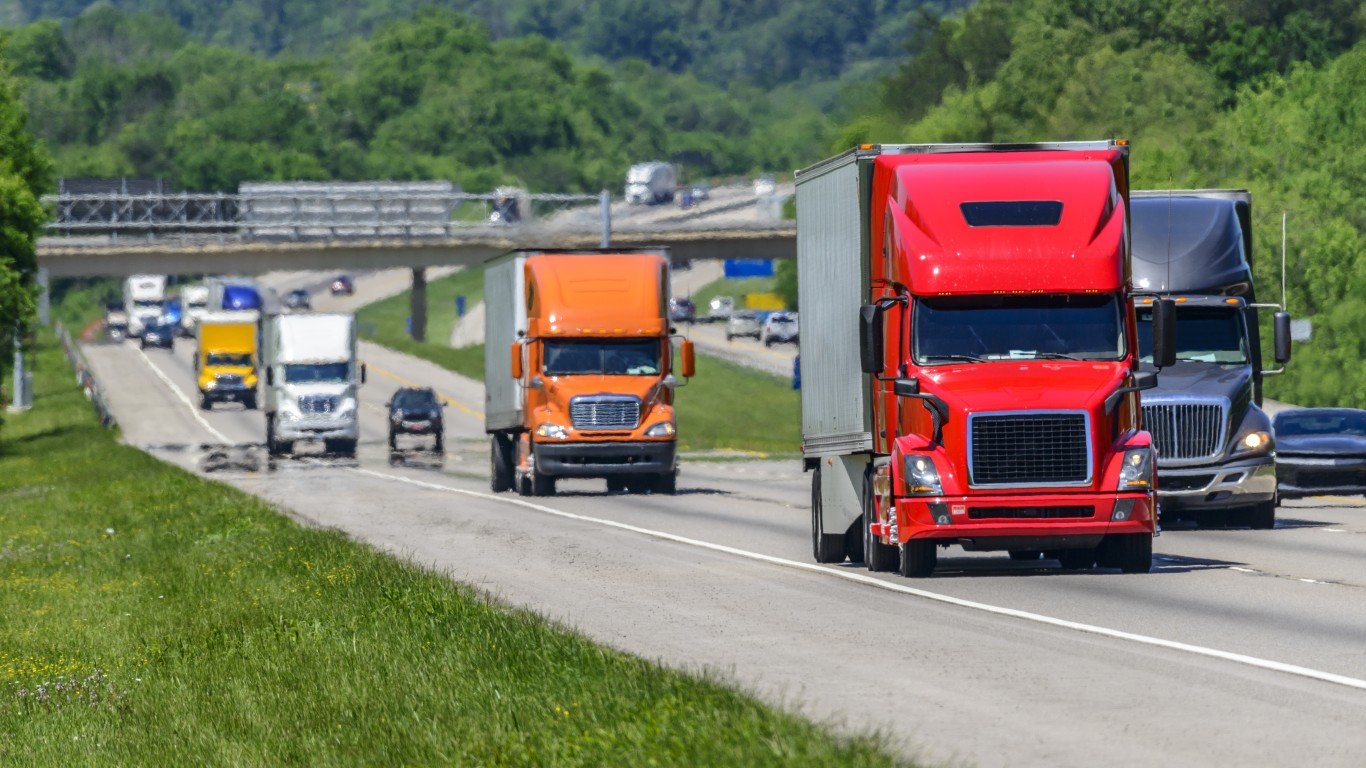
A monthly logistics gauge just climbed to a level not seen since the 2022 price surge, and the trucks that haul your groceries are quietly disappearing. Three signals will show whether your next shopping bill pays the price.

This post may contain links from our sponsors and affiliates, and Flywheel Publishing may receive compensation for actions taken through them.
Shippers signing new truckload contracts this fall are paying an average of 13.11% more than they paid under the deals being replaced. That number comes from the October Logistics Managers’ Index, released Tuesday, November 3. Over the next six months it may tell families more about their budgets than the next Consumer Price Index report will.
The index is manage by Zac Rogers, an associate professor of supply chain management at Colorado State University. It tracks business costs before they show up on store shelves. Its combined logistics cost index runs from zero to 300, and it reached 257.5 in October. That is the highest reading since March 2022, when the supply chain shock from the war in Ukraine began driving the worst inflation surge in a generation.
Costs Are Rising in Every Part of the Supply Chain
The LMI is a diffusion index. A reading above 50 means a cost or activity is expanding, and the higher the number, the more companies are reporting increases. October’s results show pressure in trucking, warehousing and inventory at the same time.
| Measure | Oct. 2025 | Oct. 2026 |
|---|---|---|
| Overall LMI | 57.4 | 70.7 |
| Inventory Costs | 73.2 | 88.8 |
| Transportation Prices | 61.7 | 88.0 |
| Warehousing Prices | 67.7 | 80.7 |
| Transportation Capacity | 54.5 | 38.0 |
Inventory costs hit their highest level since March 2022. Retailers are restocking for the holidays faster than their upstream suppliers and are competing for limited warehouse space and trucks.
Diesel Is Shrinking the Trucking Fleet
Trucking is the main reason this pressure could last. The Energy Information Administration reported that diesel averaged $6.292 a gallon on November 2. That is $2.539 more than a year earlier, a jump of about 67.7%. In California, diesel averaged $8.076. The New York Times reported this week that soaring diesel costs are bankrupting small trucking companies.
Here is how that driving into prices. Each carrier that shuts down takes trucks off the road, and transportation capacity has now contracted for 11 consecutive months. With fewer trucks competing for holiday freight, the carriers that remain can charge more and lock those rates into contracts that run for months. If diesel falls, the higher rates stay on the books until the lost capacity comes back, and rebuilding a fleet takes time.
Families Are Already Stretched
The timing could hardly be worse. Consumer prices rose 3.7% from a year earlier in September, including a 0.6% gain in that month alone. Core Personal Consumption Expenditures inflation, the Fed’s preferred measure, came in at 3.1%, well above the 2% target. Regular gasoline averages $4.15 a gallon, 36.8% higher than a year ago. The University of Michigan’s consumer sentiment index is at 48.1, close to the bottom of its historical range.
Freight costs are built into nearly everything sold at retail, from groceries to furniture. Retailers paying more to ship and store goods must either absorb the cost or raise prices. With shoppers already pulling back, most will likely do some of each. That places margins at retailers and consumer goods companies at risk first.
Three Signals That Will Show Whether Prices Follow
The logistics data stop short of proving that consumer inflation will speed up. Companies could absorb the costs, demand could weaken or trucking capacity could recover. Three readings will show which way this goes. First is November’s LMI transportation capacity reading: a move back above 50 would mean the fleet is stabilizing.
Second is whether retailers and consumer goods companies point to renewed shipping costs on upcoming earnings calls. Third is goods prices in the next few CPI reports. If freight costs show up there by early 2027, the comparison to 2022 will have proved accurate.
Contact [email protected] for any questions or corrections.
After two decades of patrolling the dark corners of suburbia as a police officer, Rich Duprey hung up his badge and gun to begin writing full time about stocks and investing. For the past 20 years, he’s been cruising the markets looking for companies to lock up as long-term holdings in a portfolio while writing extensively on the broad sectors of consumer goods, technology, and industrials. Because his experience isn’t from the typical financial analyst track, Rich is able to break down complex topics into understandable and useful action points for the average investor. His writings have appeared on The Motley Fool, InvestorPlace, Yahoo! Finance, Money Morning, and, of course, 24/7 Wall St. He has been featured in both U.S. and international publications, including MarketWatch, Financial Times, Forbes, Fast Company, and USA Today.