Diesel Prices Just Shattered $6 a Gallon — Here’s Why Your Grocery Bill Could Be Next
Diesel just crossed a threshold that economists say could quietly reshape what Americans pay for nearly everything, and the timing could not be worse for the Federal Reserve.


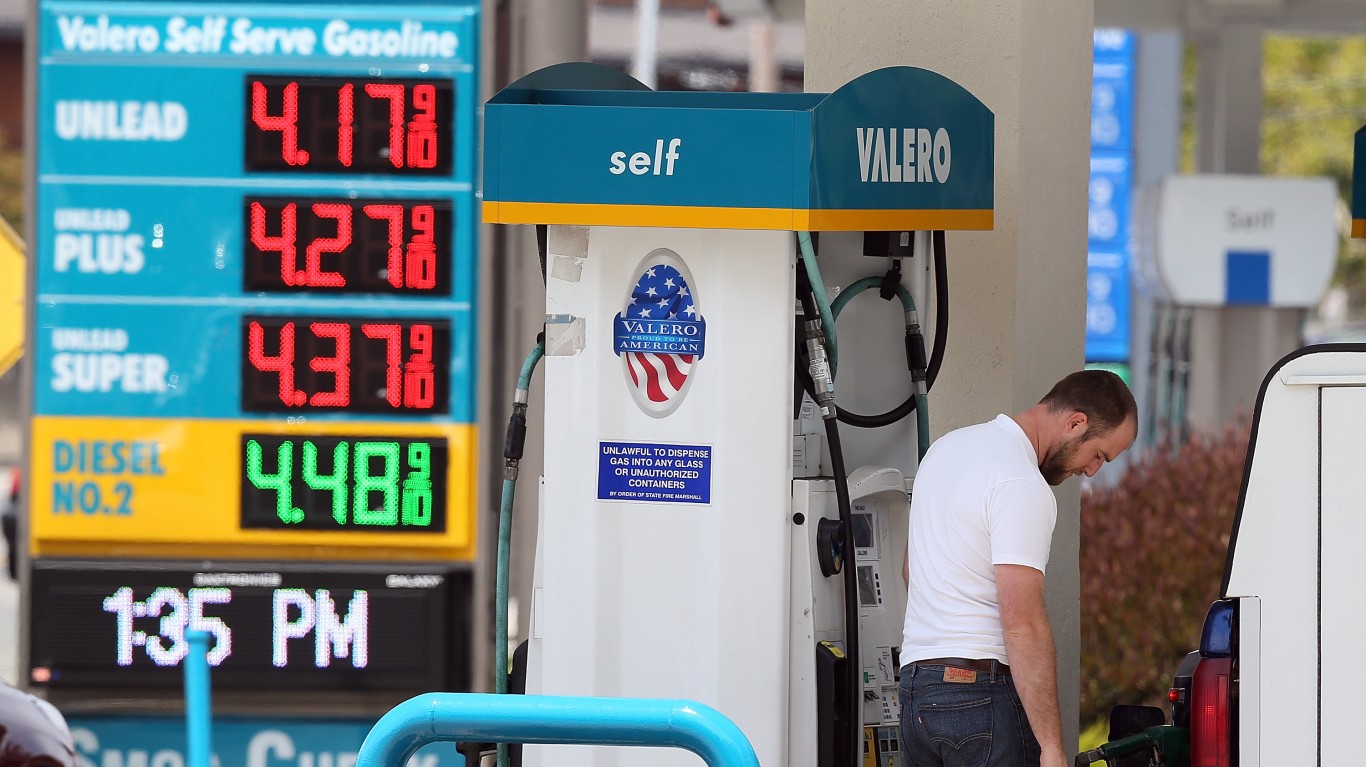
Diesel prices have officially crossed a threshold that should make investors and consumers nervous. The national average surged to about $6.05 a gallon on Friday, setting an all-time record and marking a stunning escalation from roughly $3.70 a year ago.
That matters for far more than the millions of Americans who fill diesel-powered vehicles. Diesel is the fuel that keeps much of the economy moving, powering long-haul trucks, trains, farm equipment, construction machinery and other heavy-duty transportation. When its price explodes, the added cost eventually works its way into the prices of goods and services.
And that could be particularly uncomfortable right now because inflation is already proving stubborn.
The Diesel Shock Hasn’t Fully Reached Consumers
The latest Consumer Price Index showed inflation running at 3.4% annually in August, well above the Federal Reserve’s 2% target. Gasoline prices jumped 3.9% during the month and were up 27.4% from a year earlier. Core inflation, which excludes food and energy, also accelerated 0.3% in August.
The danger with diesel is that its impact can take longer to show up in consumer prices.
A trucking company can absorb a fuel increase temporarily, but it cannot do so indefinitely. Eventually, higher fuel and freight costs have to be reflected in shipping rates and the prices charged by retailers. Groceries are particularly vulnerable because food may be transported multiple times before reaching a consumer’s shopping cart.
That creates an uncomfortable feedback loop: higher energy costs push up transportation expenses, businesses pass those costs along, and consumers face higher prices. The timing could hardly be worse.
Oil Isn’t the Only Problem
The diesel spike is being driven by a combination of geopolitical turmoil and supply constraints. The conflict involving Iran has disrupted energy markets and shipping through the Strait of Hormuz, one of the world’s most important oil chokepoints. Crude prices have consequently pushed back above $100 a barrel at times, while concerns about refinery and fuel supplies have added another layer of pressure.
Diesel demand also tends to increase as the economy moves toward the fall harvest, winter heating season, and holiday shipping period. That means the market could be facing stronger demand at precisely the moment supply is under pressure.
There is already evidence that economists are taking the threat seriously. Fifth Third’s chief U.S. economist Bill Adams recently said record diesel prices could influence the Federal Reserve’s thinking, while wholesale diesel futures have continued climbing. The next Fed FOMC meeting is in just five days, Sept. 16.
For investors, that’s the bigger issue.
Key Takeaway
The Federal Reserve can’t produce more oil or reopen the Strait of Hormuz, but it can respond to persistent inflation by raising interest rates higher. That’s an especially important consideration after today’s inflation report sent market expectations for a September rate hike sharply higher.
A temporary gasoline spike is one thing. A sustained increase in diesel that spreads through transportation, food, and industrial costs is considerably more troubling because it risks keeping inflation elevated even after the initial energy shock fades.
Investors should watch diesel prices just as closely as they watch the CPI. The $6 milestone isn’t simply another painful number at the pump. It could be an early warning that another round of inflation is moving through the economy and grocery bills will begin soaring.
Contact [email protected] for any questions or corrections.
After two decades of patrolling the dark corners of suburbia as a police officer, Rich Duprey hung up his badge and gun to begin writing full time about stocks and investing. For the past 20 years, he’s been cruising the markets looking for companies to lock up as long-term holdings in a portfolio while writing extensively on the broad sectors of consumer goods, technology, and industrials. Because his experience isn’t from the typical financial analyst track, Rich is able to break down complex topics into understandable and useful action points for the average investor. His writings have appeared on The Motley Fool, InvestorPlace, Yahoo! Finance, Money Morning, and, of course, 24/7 Wall St. He has been featured in both U.S. and international publications, including MarketWatch, Financial Times, Forbes, Fast Company, and USA Today.