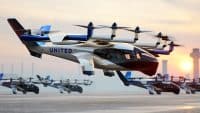
Joby Gains 4% on Revenue Beat and Raised Outlook; Archer Aviation Falls 5%, EHang Sinks 7%
While rivals Archer and EHang slide, Joby is climbing on the strength of an unlikely engine: a ride-booking business it bought. But a pile of debt, big losses, and a certification clock that keeps ticking could still ground the rally.

This post may contain links from our sponsors and affiliates, and Flywheel Publishing may receive compensation for actions taken through them.
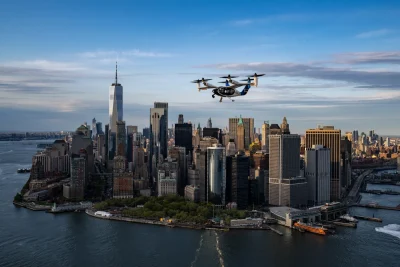
A record quarter at the Blade passenger business is lifting Joby Aviation (NYSE:JOBY | JOBY Price Prediction) as the electric air taxi developer pushes into the final stage of federal certification. Joby stock is at $5.24, up 4% early in the session, per Stocktwits. Joby posted its Q3 2026 results after the close on November 4.
Joby reported revenue of $55 million, mostly from Blade, topping the $40.42 million analysts expected. That’s a 144% jump from a year earlier. Joby also raised its full-year 2026 revenue outlook to $135 million to $140 million, up from $115 million to $125 million, pointing to Blade’s strong performance.

Blade Revenue and Certification Progress Power Joby’s Rally
Joby’s loss of $0.22 per share was smaller than the $0.2519 loss analysts expected. Behind that result sat a $49.8 million non-cash gain from reassessing warrants, earnout shares and contingent consideration. Without those items, which also included $3.48 million in acquisition transaction costs, the quarter would have shown a larger loss.
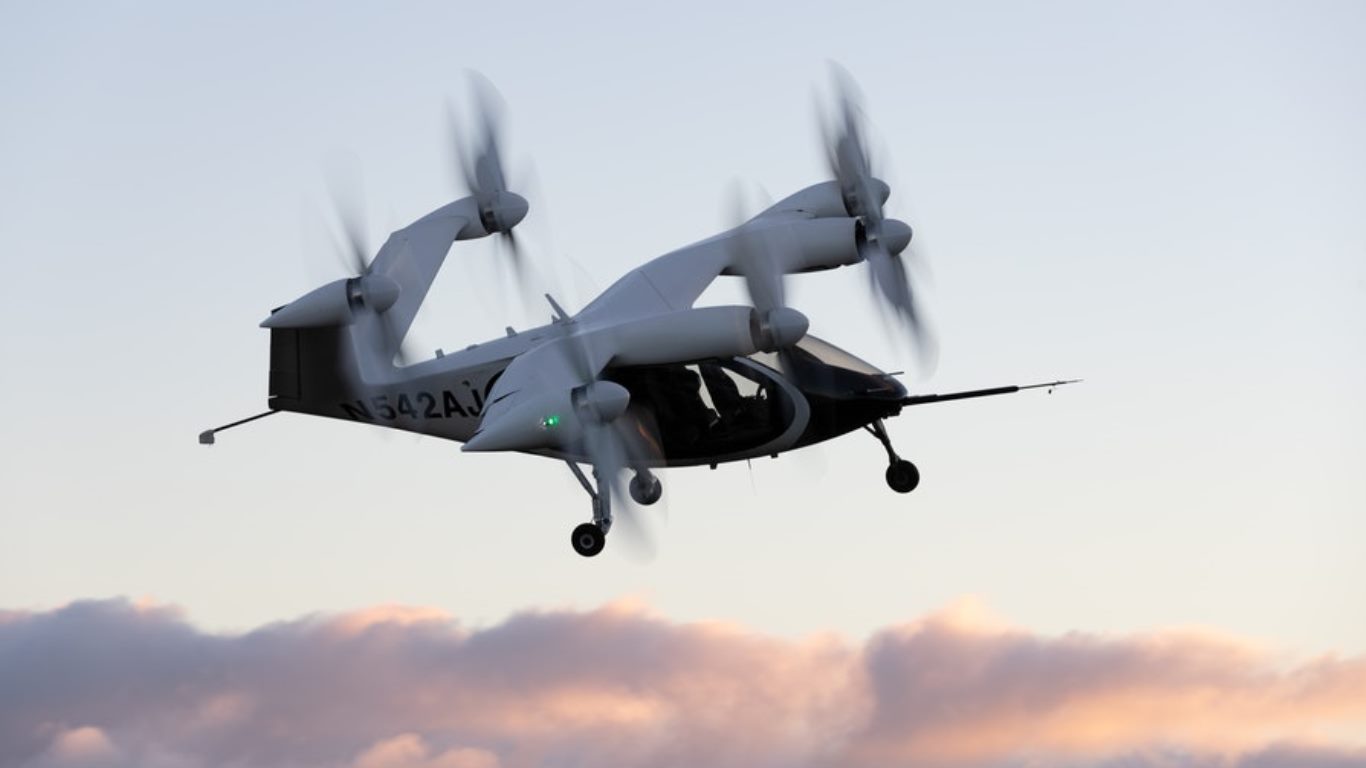
Federal Aviation Administration (FAA) certification runs in five stages, and Joby has finished the first three. As of October 30, Joby said it had completed 83% of its fourth-stage work, while the FAA had completed 78%. Founder and CEO JoeBen Bevirt stated, “This quarter, we made important progress on the fifth and final stage of certification, completing a wide range of ‘for credit’ testing with the FAA.”
On the production side, Joby noted 17 aircraft are now being built, and Blade flew more than 44,000 passengers in Q3, a quarterly record. Quarterly net loss came to $212 million, smaller than a year earlier. Sitting on $2.2 billion in cash, cash equivalents and short-term investments as of September 30, Joby still expects second-half cash use of $385 million to $415 million.
Defense work adds another thread, as Joby disclosed on November 4 that its autonomy-focused U.S. Air Force contracts expanded to nearly $37 million. The flight had zero disengagements. During Q3, Joby’s J208 Superpilot aircraft flew 3,199 miles coast to coast, in what the company believes was the first fully autonomous flight of a civilian aircraft across the U.S. Resonant Sciences, a defense technology firm Joby agreed to acquire, would become the company’s dedicated defense business, with closing expected in early 2027.
Archer and EHang Hold Steady as Joby Breaks Away
Archer Aviation (NYSE:ACHR) stock is at $3.90, down 5%. Meanwhile, EHang Holdings (NASDAQ:EH) stock is at $3.78, down 7%. With both of Joby’s best-known electric vertical takeoff and landing (eVTOL) rivals trading down, investors appear to be rewarding Joby’s own results and certification progress.
Back on August 10, Archer reported Q2 2026 results that included a $6 million litigation settlement weighing on its per-share loss. EHang’s latest quarterly update came August 25. The company withdrew its full-year 2026 revenue guidance after a late-June piloted aircraft accident in China made regulators more cautious about passenger approvals. Broader tech sentiment is shaky on worries about tighter artificial intelligence (AI) regulation after Democrats won Congress, yet Joby is trading on its own results.
How Joby’s Business Model Sets It Apart From Archer and EHang
Joby runs a vertically integrated model, building its own aircraft, propulsion and autonomy systems while operating Blade, which generates nearly all of its current revenue and provides the company with paying customers, local partnerships and operating experience it plans to carry into electric air taxi service. Flights in Texas and Florida under the White House-backed eVTOL Integration Pilot Program (eIPP) could give Joby an early path toward passenger operations.
Archer is expanding into defense and autonomy through its planned purchase of Wisk Aero, Insitu and SkyGrid from Boeing (NYSE:BA), a deal expected to close by year-end. Autonomous aircraft define EHang’s approach, with the company leaning on its first-of-their-kind certifications in China and on overseas regulatory sandboxes to market.
Joby’s Rally Now Hinges on Type Certification
Joby’s next test is whether FAA pilot training and its own flight testing stay on track for Type Inspection Authorization (TIA) flight testing in the first half of 2027. The bulls can point to record Blade demand, a higher revenue outlook and a deep cash buffer. Leverage is the downside: Joby carries $702.6 million in long-term debt, its losses remain large and certification timing could slip.
Closing the Resonant Sciences deal adds integration risk for Joby, and the Air Force work depends on government funding. It may make sense to stay cautious while the timing of Joby’s type certification remains unresolved.
Contact [email protected] for any questions or corrections.
David Moadel is financial writer specializing in stocks, ETFs, options, precious metals, and Bitcoin. David has written well over 1,000 articles for leading online publications, helping investors understand markets, income strategies, and risk.His work has appeared in The Motley Fool, InvestorPlace, U.S. News & World Report, TipRanks, ValueWalk, Benzinga, Market Realist, TalkMarkets, Finmasters, 24/7 Wall St., and others.With a master’s degree in education, David has taught at the elementary, high school, and college levels. That teaching background shapes his writing style: clear, educational, and practical. David has also built a loyal social-media audience by providing trustworthy financial content on YouTube, X/Twitter, and StockTwits.