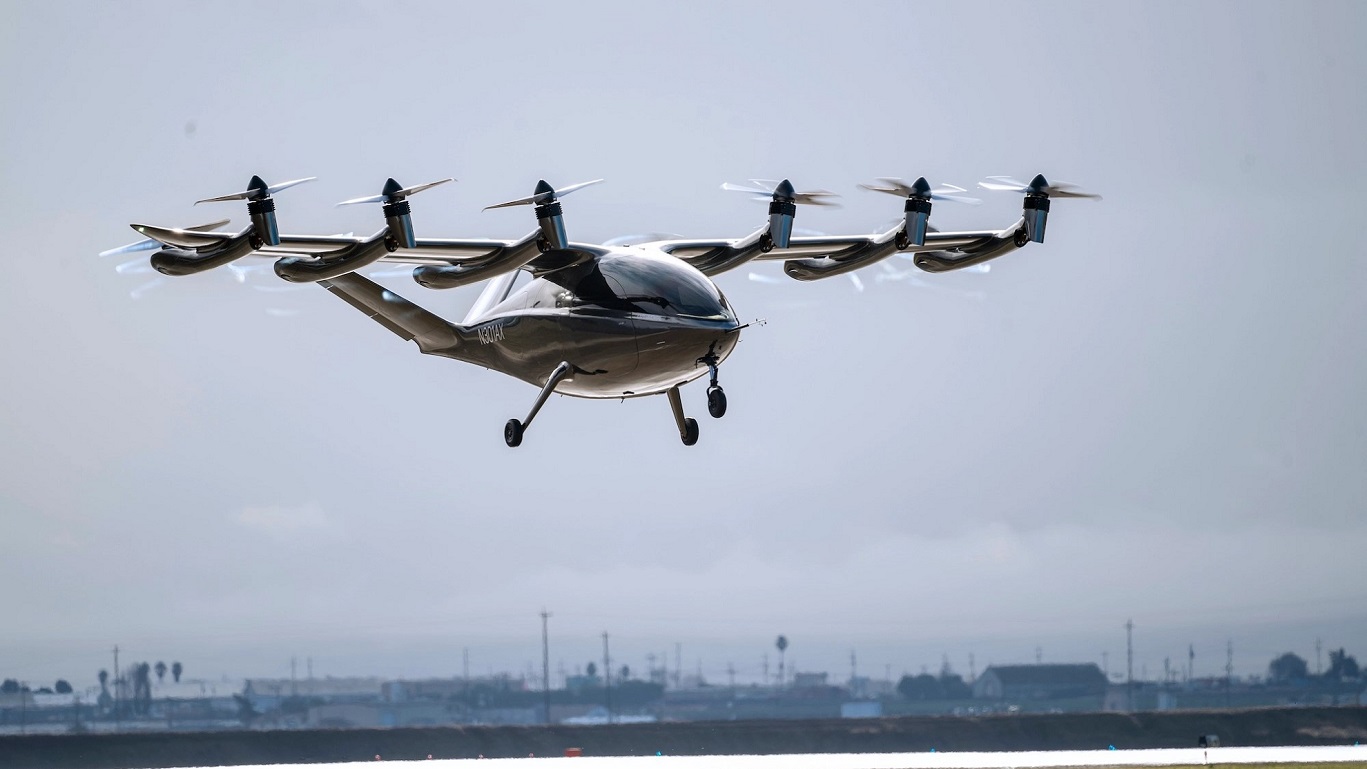
Joby Aviation Falls 6% as Air Taxi Selloff Deepens; Archer Aviation Drops 4%, EHang Slides 2%

This post may contain links from our sponsors and affiliates, and Flywheel Publishing may receive compensation for actions taken through them.

The air taxi selloff is deepening, and Joby Aviation (NYSE:JOBY | JOBY Price Prediction) is taking the biggest hit among the group’s best-known names. Joby stock is at $4.43 in morning trading, down 6%. That price sits below $4.61[1], the past year’s lowest close, set on October 14, after the stock closed at $4.72 on November 16.
Joby stock’s 2026 decline now reaches 66% year to date (YTD). The pressure lands on a company spending heavily on certification, aircraft production and a defense acquisition while its electric air taxis haven’t entered commercial service.

Growth Stock Selling Exposes Joby’s Funding Math
The stock is extending a selloff that swept the air taxi group on November 16 amid broad weakness in speculative growth stocks. Selling pressure is building ahead of the upcoming earnings report from NVIDIA (NASDAQ:NVDA).
In the 12 months to September 30[1], Joby posted $149 million of revenue against an operating loss of $979 million. Most of the company’s Q3 2026 revenue came from Blade, its existing helicopter passenger business, which flew a record more than 44,000 passengers[2].
On its November 4[1] call, Joby said it raised approximately $128 million by selling new shares in Q3. Management also lifted its full-year revenue guidance to $135 million[1] to $140 million. Ahead sits a $450 million[3] cash payment Joby expects to make for defense electronics firm Resonant Sciences early next year.
Chief Financial Officer Rodrigo Brumana stated on the Joby call that the cash cushion extends far: “However you run the numbers, it takes you well beyond the initial launch of commercial operations, which is under the eIPP banner next year.”[3] The program he cited, the White House-backed eVTOL Integration Pilot Program, may let mature air taxi makers carry passengers before full certification.
Archer and EHang Fall Less Than Joby
Archer Aviation (NYSE:ACHR) stock is at $3.58, down 4%, a lighter drop than Joby’s. The YTD loss for Archer stock stands at 52%.
In its November 9[4] report, Archer disclosed its all-stock purchase of Wisk, Insitu and SkyGrid from Boeing (NYSE:BA) was close to completion, with one of nearly 20 approvals[5] outstanding. The company ended Q3 with $1.4 billion[5] in cash, cash equivalents and short-term investments.
EHang Holdings (NASDAQ:EH) stock is at $3.34, down 2%. That leaves EHang stock down 75% YTD, the steepest decline of the three.
When EHang reported on August 25[6], it withdrew its 2026 revenue guidance of RMB600 million after a late-June piloted light-sport aircraft accident in China, unrelated to EHang’s aircraft, made regulators cautious. Chinese approval for public ticket sales hasn’t arrived, and the company’s upcoming earnings could show whether that pause is easing.
How Joby, Archer and EHang Plan to Make Money
Joby runs as an operator, looking to layer its electric air taxis onto Blade’s existing passenger routes in markets such as New York. The company is also building a defense arm around U.S. Air Force autonomy contracts and the Resonant deal. Certification work on Joby’s aircraft sits in the final stage of the Federal Aviation Administration (FAA) process.
Archer plans to focus on selling aircraft in the early years after certification while operating part of a fleet itself. Defense work anchors Archer’s nearer term, from powertrain supply for Anduril’s Omen drone to the Insitu surveillance drone unit that the company gains from Boeing.
EHang flies pilotless aircraft on fixed, centrally monitored routes and already holds Chinese type, production and airworthiness certificates. Growth for EHang now leans on overseas sandboxes in Thailand and Hong Kong, a fast-track program in Sri Lanka, plus firefighting, logistics and drone light shows.
Dilution Question Hangs Over Joby’s Road to Launch
Joby’s open question is how much more dilution shareholders take before air taxi service starts, since a lower share price means each new stock sale gives up a bigger slice of the company. The Bulls can point to Joby’s cash, cash equivalents and short-term investments of about $2.2 billion[3] at the end of Q3, plus the raised guidance and Blade’s record traffic. Deep operating losses and the coming Resonant payment give the Bears reason to expect more share sales (sizing a speculative position like Joby before it generates real revenue is its own discipline, and we laid out the rules in a free guide here: Small Stakes, Big Swings).
Joby now faces the question of whether Type Inspection Authorization (TIA) flight testing, in which FAA pilots fly the aircraft themselves, begins in the first half of next year[3] as the company expects. Joby Chief Policy Officer Gregory Bowles noted historical TIA campaigns have run six to 18 months[3], leaving room for delays. How the dilution question at Joby settles could shape the stock’s path from here.
Contact [email protected] for any questions or corrections.
David Moadel is financial writer specializing in stocks, ETFs, options, precious metals, and Bitcoin. David has written well over 1,000 articles for leading online publications, helping investors understand markets, income strategies, and risk. His work has appeared in 24/7 Wall St., The Motley Fool, InvestorPlace, U.S. News & World Report, TipRanks, ValueWalk, Benzinga, Market Realist, MarketScreener, TalkMarkets, Finmasters, and others. With a master’s degree in education, David has taught at the elementary, high school, and college levels. That teaching background shapes his writing style: clear, educational, and practical. David has also built a loyal social-media audience by providing trustworthy financial content on YouTube, X/Twitter, and StockTwits.