Wall Street’s Fear Gauge Jumped More Than 11 Points In A Day. Buffett’s Most Famous Rule Says It Might Be Time To Get Greedy. Here’s Where The Market Has Historically Gone Over The Next 6 Months.
Stocks cratered and the VIX exploded in a single session, yet Buffett's rule hides one overlooked word that changes how it applies. Bespoke's look at 19 similar panics reveals a surprising split between the next month and the months after.

This post may contain links from our sponsors and affiliates, and Flywheel Publishing may receive compensation for actions taken through them.

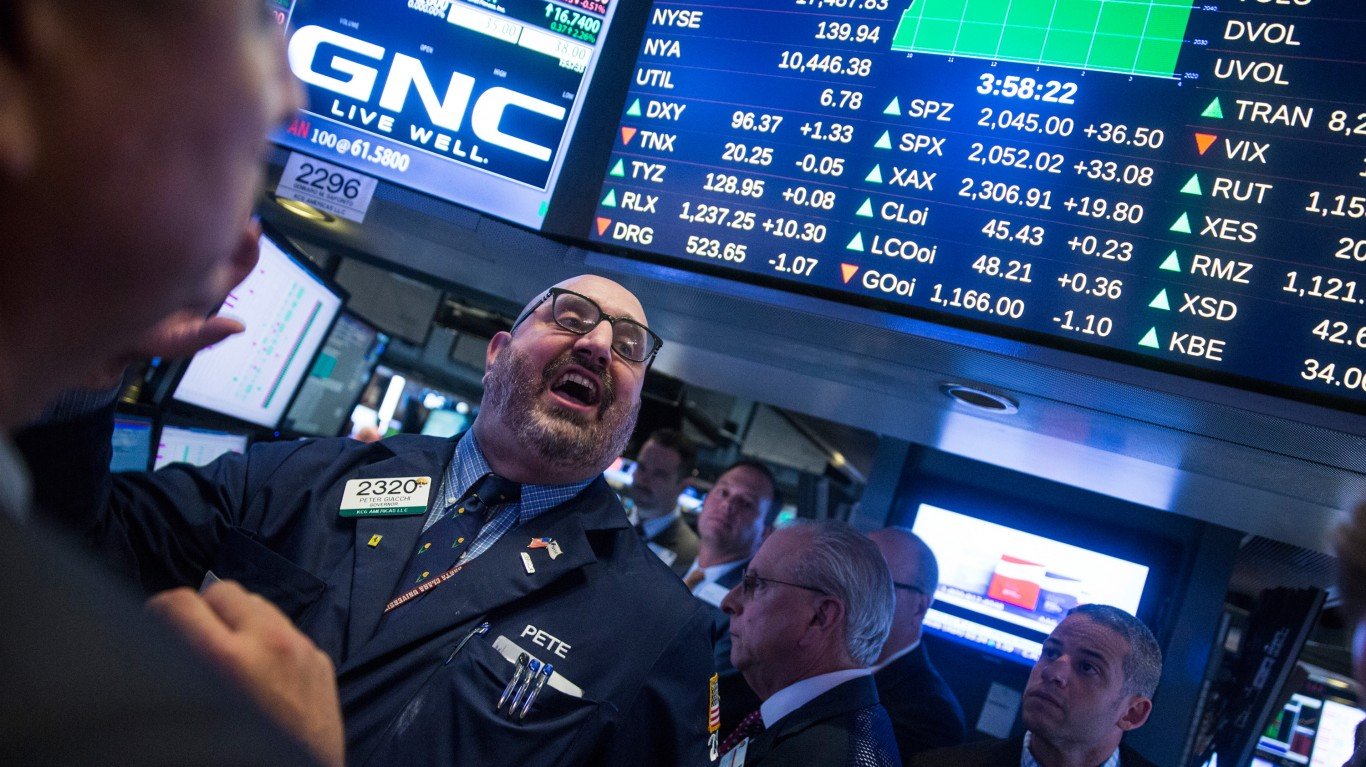
On Thursday, Wall Street’s fear gauge had its sharpest one-day move in about a year and a half. The Cboe Volatility Index, or VIX, closed at 28.18 on Nov. 5. That was up 11.57 points from 16.61 on Wednesday. The VIX uses S&P 500 option prices to measure how much volatility traders expect over the next 30 days, which is why it’s called the fear gauge. CNBC, citing Bespoke Investment Group, reported that it was the VIX’s biggest one-day move since the April 2025 “Liberation” week for tariffs.
Stocks fell hard alongside it. The SPDR S&P 500 ETF (NYSEARCA:SPY) dropped 4.41% on Thursday. Hedgeye said the S&P 500 posted its largest single-day decline since April 3, 2025, and the NASDAQ 100 fell 6.5%.
Buffett’s Rule Has One Word Most People Skip
Warren Buffett’s best-known line on market psychology comes from his 1986 letter to shareholders: “Our goal is more modest: we simply attempt to be fearful when others are greedy and to be greedy only when others are fearful.”
Most people quote a shorter version that drops the word “only.” That word makes the rule more conservative. In Buffett’s version, greed is the exception and needs widespread fear to justify it. The same section also limits how far the rule goes. On fear and greed, he wrote that “we never try to anticipate the arrival or departure of either disease.” He added that he had “no idea” whether the market would go “up, down, or sideways in the near- or intermediate term future.”
What 19 Past Fear Spikes Show About the Next Six Months
CNBC’s Oliver Renick cited Bespoke research covering the 19 times since 1990 that the VIX rose at least five points from a starting level under 20. Three months after those spikes, the median S&P 500 return was 4.2%, and the index was higher 68% of the time. At 6 months, the median return was 4.8%, with gains 79% of the time.
The first month was rockier. The median one-month return was 2.1%, but the average was negative 0.4%. Large falls after a spike in 1990 and another on Feb. 24, 2020, as the Covid selloff began, pulled the average down.
Bespoke co-founder Paul Hickey explained the pattern this way: “These types of sharp spikes from placid levels are like a line of thunderstorms coming through in summer. The sky quickly darkens and wind gusts, but the loudest thunder and brightest lightning doesn’t last long.”
Keep the limits in mind: nineteen events is a small sample, and 2020 showed that a spike can be the start of something much bigger. Past results don’t guarantee what happens this time.
Options Traders Were Still Positioned for More Pain
Buffett’s rule depends on other investors being afraid, and Thursday’s options trading showed plenty of fear. CNBC, citing SpotGamma, reported that traders in the VanEck Semiconductor ETF (NASDAQ:SMH) were still leaning bearish into the close. Of 900,000 total options traded, 670,000 were puts. Puts are contracts that gain value when the underlying asset falls. Puts also made up for $1.5 billion of the $1.7 billion in total premium. Heavy put buying in chip stocks points to real worry about some of the market’s largest names.
What Long-Term Investors Can Take From a Fear Spike
- Fear spikes have usually faded. In Bespoke’s data, stocks were higher six months later in most cases.
- The next few weeks can still be rough. A negative average one-month return means some of these episodes got worse before they got better.
- Discipline matters more than timing. Buffett said himself that he never tried to predict when fear would arrive or leave.
For an ordinary long-term investor, the useful lesson is perspective. In the weeks ahead, keep an eye on whether the VIX moves back toward calmer levels or keeps climbing. Also watch whether options traders in chip stocks keep favoring puts. Buffett’s rule cuts both ways, and we put the full strategy for riding a mania and knowing when to step aside in a free handbook here: The Bubble Survivor’s Handbook.
Contact [email protected] for any questions or corrections.
AJ spent 10 years writing about financial markets at The Motley Fool. His coverage centers on technology stocks and the broader macroeconomic trends, from interest rates to geopolitics, that shape where markets are headed next. AJ is drawn to the stories where big-picture economics and individual companies collide.